
About
Muchukunda — Ikshvaku King, the Long-Sleeping Sovereign
Muchukunda · Muchukundo
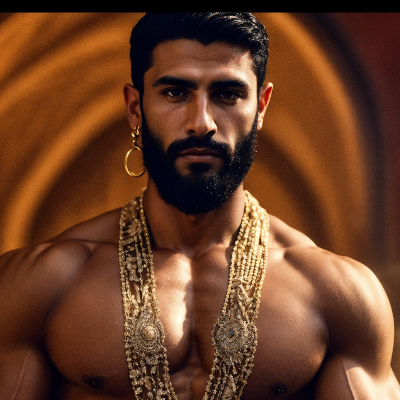
Muchukunda is a king of the solar Ikshvaku dynasty, recorded principally in the Bhagavata Purana and referenced in the Vishnu Purana and the Mahabharata. He is the son of Mandhata — the celebrated chakravartin emperor of the Ikshvaku line, born miraculously from the body of his father Yuvanashva — and of Bindumati, a princess of the Yadu lunar dynasty and daughter of the chakravartin Shashabindu. Among the three sons of Mandhata and Bindumati, Muchukunda is distinguished by one of the most singular episodes in Puranic narrative: after rendering long and faithful service to the gods in their wars against the demons, he was granted a boon of uninterrupted sleep, and was awakened only in the age of Sri Krishna, at which time he destroyed the demon Kalayavana with the fire of his gaze. His story is narrated at length in the Bhagavata Purana's tenth skandha.
✦ The Name
The name Muchukunda does not yield a straightforward Sanskrit compound etymology in the primary sources, and the texts themselves do not offer an explicit gloss on its meaning. The element muchu or mucu is not a standard Sanskrit root in common usage, and kunda means a pit, a pool, or a round vessel. Some later commentators have proposed connections to the idea of liberation or release, but no authoritative derivation is given within the canonical Puranic or epic texts.
✦ Lineage
- Father: Mandhata — emperor of the Ikshvaku solar dynasty, son of Yuvanashva, renowned as one of the greatest chakravartins of ancient India; born from his father's body after Yuvanashva accidentally drank consecrated water prepared for a fertility ritual
- Mother: Bindumati — princess of the Yadu lunar dynasty, daughter of Shashabindu, the chakravartin king of the Yadu line descended from Yadu, son of the emperor Yayati
- Brother: Purukutsa — king of the Ikshvaku line, who descended to the Naga underworld, destroyed the Gandharvas there at the Nagas' request, and married the Naga princess Narmada; the main Ikshvaku dynastic succession continued through Purukutsa's son Trasadasyu
- Brother: Ambarisha — king of the Ikshvaku line, son of Mandhata and Bindumati, recorded in the genealogical catalogues of the Bhagavata and Vishnu Puranas
✦ Service to the Gods and the Boon of Sleep
The Bhagavata Purana records that Muchukunda rendered sustained and invaluable military service to the gods — the devas — during their prolonged wars against the demons, the asuras. For a very long period, Muchukunda fought alongside the gods, protecting them and contributing decisively to their defence. When the god Kartikeya — the son of Shiva, born to lead the divine armies — eventually became the commander of the gods' forces and took over the military responsibilities that Muchukunda had been fulfilling, Muchukunda was released from his service.
The gods, wishing to honour Muchukunda and recognising that so much time had passed during his service in the divine realm that his entire royal lineage, his family, and all those he had known in the human world would long since have perished, offered him any boon he desired — with the exception of liberation, which they explained was beyond their power to grant. Muchukunda, exhausted by his long service, asked for one thing only: undisturbed sleep. The gods granted this boon and declared that anyone who disturbed his sleep would be instantly burned to ash by fire emerging from Muchukunda's body. Muchukunda then descended to the earth and entered a great cave, where he slept for an immense span of time spanning multiple ages.
✦ The Awakening and the Death of Kalayavana
Muchukunda's awakening is narrated in the Bhagavata Purana's tenth skandha, in the context of Sri Krishna's encounters with his enemies. Kalayavana was a powerful demon king who could not be slain by any of the Yadava warriors and who had laid siege to the city of Mathura. Sri Krishna, unable to fight Kalayavana directly at that moment without causing harm to his own people, employed a stratagem: he fled on foot from the demon, drawing him in pursuit, and led him to the cave in which Muchukunda lay sleeping.
Kalayavana entered the cave and, seeing a figure lying in the darkness, mistook the sleeping Muchukunda for Krishna. He kicked the sleeping king to wake him. Muchukunda opened his eyes, and the moment his gaze fell upon Kalayavana, the demon was instantly incinerated by the fire that blazed from Muchukunda's body — the power of the boon granted by the gods now fulfilling its purpose. After the demon's destruction, Sri Krishna appeared before Muchukunda in his divine form. Muchukunda, recognising that he stood in the presence of the supreme being, offered reverent praise. Krishna acknowledged Muchukunda's great merit accumulated through his ages of service to the gods and his patient sleep, and blessed him. Muchukunda then departed the cave, went on pilgrimage, and the Bhagavata Purana states that he ultimately attained liberation.
✦ Theological Significance
Muchukunda's narrative carries a clear theological dimension within the Bhagavata Purana's framework of devotional religion. His eventual encounter with Sri Krishna and his recognition of the divine presence before him are presented as the fruit of a lifetime — indeed multiple lifetimes — of virtuous conduct, selfless service, and patient endurance. The Bhagavata Purana presents his attainment of liberation as the culmination of this long arc of merit and divine grace. His story also serves a narrative function in the Krishna cycle, providing the mechanism by which the otherwise unkillable Kalayavana is destroyed without Krishna having to fight him directly.
✦ References
- Bhagavata Purana, Skandha 9, Chapter 6: Lists Muchukunda as a son of Mandhata and Bindumati within the Ikshvaku dynastic genealogy.
- Bhagavata Purana, Skandha 10, Chapter 51: Narrates the full episode of Muchukunda's sleep, the boon granted by the gods, the destruction of Kalayavana, his encounter with Sri Krishna, and his attainment of liberation.
- Vishnu Purana, Book 4, Chapters 2–3: Records Muchukunda within the Ikshvaku genealogical succession as a son of Mandhata.
- Mahabharata, various parvas: References Mandhata's sons including Muchukunda in the context of the solar dynasty's history.
- Vettam Mani, Puranic Encyclopaedia (1975): Entry on Muchukunda summarises his episode, his boon of sleep, the killing of Kalayavana, and his genealogical position as son of Mandhata.