
About
Shubhradanti — Celestial Female Elephant, Consort of Pushpadanta
Shubhradanti · Shubradanti
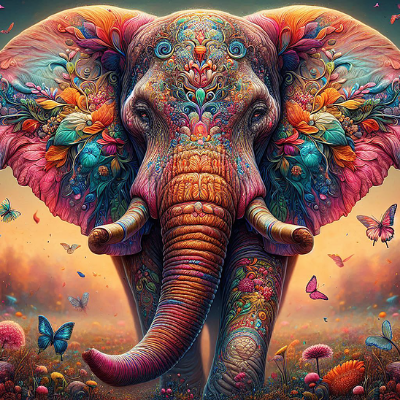
Shubhradanti is the sixth of the eight female celestial elephants who are the consorts and siblings of the Ashtadiggajas. She is a daughter of Iravati, who is the daughter of Bhadramada, one of the ten daughters of Krodhavarsha, a wife of Kashyapa the great progenitor sage. Shubhradanti is paired with Pushpadanta, the sixth of the eight male Ashtadiggajas and guardian of the north-western direction. She is named in enumerations of the dik-gaja consorts in the Matanga-Lila. No individual narrative episodes are recorded for her in the primary sources.
✦ The Name
Shubhradanti is a compound of shubhra, meaning bright, pure, or white, and danti, meaning tusked or one possessing tusks, yielding the meaning she of the bright or pure tusks or the white-tusked one. The name is a physical descriptor emphasising the brilliance and purity of her tusks, a quality of great beauty in the Sanskrit aesthetic tradition as applied to elephants. The name thus parallels in a feminine register the emphasis on tusk-beauty found in her consort's name Pushpadanta, the flower-tusked one.
✦ Lineage
- Paternal great-grandfather: Kashyapa — the foremost progenitor sage
- Paternal great-grandmother: Krodhavarsha — daughter of Daksha, wife of Kashyapa
- Grandmother: Bhadramada — one of the ten daughters of Krodhavarsha
- Mother: Iravati — daughter of Bhadramada; mother of all sixteen dik-gaja elephants
- Siblings (female): Abhramu, Kapila, Pingala, Anupama, Tamrakarni, Angana, and Anjanavati
- Siblings (male): Airavata, Pundarika, Vamana, Kumuda, Anjana, Pushpadanta, Sarvabhauma, and Supratika
- Consort: Pushpadanta — the sixth of the eight male Ashtadiggajas, guardian of the north-western direction
✦ References
- Primary Sources
- Matanga-Lila (attributed to Nilakantha): Names Shubhradanti as the sixth of the eight female dik-gaja elephants and records her pairing with Pushpadanta.
- Secondary Sources
- Mani, Vettam. Puranic Encyclopaedia. Motilal Banarsidass, 1975: Brief reference to Shubhradanti in the context of the dik-gaja consort enumerations.