
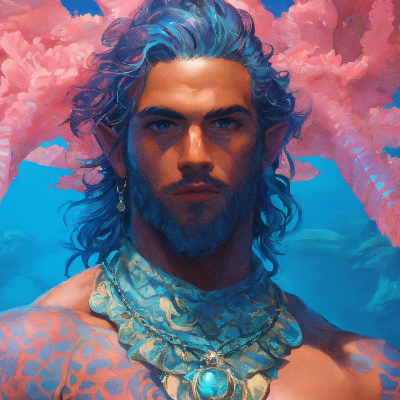
About
Trasadasyu — Ikshvaku King, the Demi-God Granted by Indra and Varuna
Trasadasyu · Trasaddasyu · Paurukutsa (patronymic: son of Purukutsa) · Gairikshita (descendant of Girikshit)
Trasadasyu is a king of extraordinary renown appearing in both the Rigveda — among the oldest compositions of the Sanskrit literary tradition — and in the later Puranic dynastic catalogues of the Bhagavata Purana and the Vishnu Purana. He is the son of Purukutsa, a king of the solar Ikshvaku dynasty and son of the celebrated chakravartin Mandhata, and of Narmada, a princess of the Naga people of the subterranean world. His birth is not recorded as the result of ordinary generation alone: the Rigveda states explicitly that his mother, the spouse of Purukutsa, offered sacrificial oblations to the gods Indra and Varuna, and that these two gods granted her Trasadasyu in response — describing him as a demi-god and a slayer of enemies. In the Rigveda he is celebrated as a chieftain of the Puru people and one of the most powerful sovereigns of his age; in the Puranas he is placed in the Ikshvaku solar dynastic succession as the link between Purukutsa and the next generation of the line. The question of whether the Rigvedic Trasadasyu and the Puranic Trasadasyu are the same figure, and whether they belong to the Ikshvaku or the Puru dynastic tradition, is a matter of genuine complexity in the primary sources, addressed fully below.
✦ The Name
The name Trasadasyu is a compound of trasada, derived from the root tras meaning to cause to tremble or to instil fear, and dasyu, referring to enemies, robbers, or those beings opposed to the Vedic order. The compound Trasadasyu thus means one who makes the dasyus tremble or terror of the enemies — a name of unmistakably martial and royal character. The patronymic Paurukutsa, meaning son of Purukutsa, is also applied to him in some passages. The epithet Gairikshita — meaning descendant of Girikshit — appears in the Rigveda in connection with Trasadasyu, indicating a lineage reaching back to an ancestor named Girikshit, though the full genealogical chain connecting Girikshit to Purukutsa and Trasadasyu is not elaborated in the Vedic texts themselves.
✦ Lineage
- Father: Purukutsa — king of the Ikshvaku solar dynasty, son of the chakravartin Mandhata and his wife Bindumati, a princess of the Yadu lunar dynasty; descended to the Naga underworld at Vishnu's direction, destroyed the Gandharvas afflicting the Nagas, and received the Naga princess Narmada as his wife in reward
- Mother: Narmada — a princess of the Naga people, sent from the subterranean world to summon Purukutsa and guide him into the Naga realm; after her marriage to Purukutsa she offered sacrificial oblations to Indra and Varuna, and through their divine boon received Trasadasyu as her son; her name is also borne by the great sacred river of central India
- Paternal grandfather: Mandhata — one of the most celebrated chakravartins of the Ikshvaku line, born miraculously from the body of his father Yuvanashva; his sovereignty is said to have extended across the earth and the heavens
- Paternal grandmother: Bindumati — princess of the Yadu lunar dynasty, daughter of the chakravartin Shashabindu, descended from Yadu, son of the emperor Yayati
- Son: Sambhuta — recorded in the Bhagavata Purana and Vishnu Purana as the next generation of the Ikshvaku line after Trasadasyu, through whom the solar dynastic succession continued toward figures including Anaranya, Trishanku, Harishchandra, Sagara, and Bhagiratha
✦ Birth by Divine Boon: The Sacrifice to Indra and Varuna
The Rigveda — in Mandala IV, hymn 42 and Mandala VII, hymn 19 — records that the spouse of Purukutsa performed a sacrifice with oblations offered in homage to Indra and Varuna. In response to this act of worship, the two gods granted her King Trasadasyu, who is described in the hymns as a demi-god and a slayer of enemies. This Rigvedic testimony is the oldest surviving account of Trasadasyu's origins and frames his very existence as the product of divine intervention. Unlike other kings of the Puranic dynastic lists who are born by natural succession, Trasadasyu enters the world through the direct agency of two of the most powerful deities of the Vedic pantheon: Indra, the king of the gods and lord of storms and warfare, and Varuna, the sovereign of cosmic order and moral law. The description of Trasadasyu as a demi-god in these hymns reflects the tradition that his birth was invested with a divine quality not shared by ordinary mortal kings.
This birth narrative is entirely absent from the briefer Puranic genealogical catalogues of the Bhagavata Purana and the Vishnu Purana, which record Trasadasyu simply as the son of Purukutsa by Narmada without elaborating the circumstances of his birth. The Rigvedic material thus provides an essential supplementary layer to the Puranic account, and the two traditions must be read together for a complete picture of Trasadasyu's significance.
✦ Trasadasyu in the Rigveda: The Puru Chieftain
In the Rigveda's Mandala IV, Trasadasyu is identified as the chieftain of the Purus — the great Vedic tribal confederation of the lunar dynastic tradition — during the period when that Mandala was being composed. He is credited with military campaigns of exceptional range: he is said to have lived on the western side of the Sindhu river while the hymns of Mandala IV were being composed, but also to have extended his reach into the land of the Seven Rivers, where he defeated the Anu-Druhyu and Yadu-Turvasha confederacies. In celebration of this victory, the Rigveda records that he conducted an Ashvamedha — the horse sacrifice, the supreme Vedic rite of royal sovereignty — with his horse Dadhrika. The Rigveda of Mandala IV further states that through a prior Ashvamedha performed with the horse Daurgaha, his son Trasadasyu himself was born — though the relationship between this statement and the account of Narmada's sacrifice to Indra and Varuna is not reconciled within the Vedic text itself, and may reflect the layered character of the hymnic tradition.
✦ The Two Purukutsa-Trasadasyu Pairs: A Critical Textual Problem
The most significant textual complexity surrounding Trasadasyu is the existence of what scholars — most notably the historian F. E. Pargiter and the Rigvedic chronologist Shrikant Talageri — have identified as two distinct Purukutsa-Trasadasyu pairs in the Vedic and Puranic traditions, which the Puranas tend to conflate within a single genealogical list.
The first pair is the one recorded in the Bhagavata Purana and the Vishnu Purana: Purukutsa the son of Mandhata, and his son Trasadasyu born of Narmada. This pair belongs to the Ikshvaku solar dynasty. Pargiter, however, identifies the Rigvedic Purukutsa — the celebrated Vedic king associated with the Puru tribal confederation — not with the Ikshvaku son of Mandhata but with a second and later Purukutsa who was a contemporary of Ashvamedha Bharata, placing the Rigvedic pair in the Puru lunar tradition rather than the Ikshvaku solar line. On this reading, the Rigvedic Trasadasyu, chieftain of the Purus, is a different figure from the Puranic Trasadasyu, son of Mandhata's Purukutsa.
Talageri's analysis offers an alternative interpretation: that the Purukutsa and Trasadasyu known to the Vedic literature and to the Puranas represent the Ikshvaku pair — descendants of Mandhata — who operated in the northwestern regions during Mandhata's campaigns, and who therefore do not appear in the Ramayana's strictly eastern Ayodhya dynastic list. On this view, the apparent Puru affiliation of the Rigvedic Trasadasyu reflects the political reality of a western Ikshvaku prince ruling over Puru-affiliated tribal territory rather than evidence of a separate lunar-dynasty pair. The Vayu Purana's list of rajarshi kings, which places a Purukutsa after the Bharata descendants Sankrti and Kapi, is cited in some analyses as evidence supporting the existence of a second, later Purukutsa of Puru association.
Neither the Puranic nor the Vedic sources themselves resolve this question explicitly. The Puranas record the Ikshvaku genealogical list without acknowledging the possible existence of a second pair; the Rigveda presents Trasadasyu as a Puru chieftain without engaging the question of his solar or lunar dynastic affiliation. The matter therefore remains a subject of scholarly analysis rather than textual resolution, and both the Pargiter and Talageri positions represent reasoned interpretations of genuinely ambiguous source material.
✦ Connection to the Wider Genealogy
Within the Puranic framework, Trasadasyu stands at a point of remarkable genealogical convergence. Through his father Purukutsa he descends from the solar Ikshvaku line in the sequence Manu Vaivasvata — Ikshvaku — through successive kings — Yuvanashva — Mandhata — Purukutsa — Trasadasyu. Through his paternal grandmother Bindumati he carries the blood of the lunar Yadu dynasty in the sequence Soma — through successive kings — Yayati — Yadu — through successive kings — Shashabindu — Bindumati. Through his mother Narmada he is connected to the Naga lineage of the subterranean world. And through his birth by the boon of Indra and Varuna as recorded in the Rigveda, he carries a divine sanction that sets him apart from the ordinary succession of mortal kings. His son Sambhuta continued the Ikshvaku line, which passed through subsequent generations — Anaranya, who was slain by Ravana; Trishanku, who was elevated bodily to heaven through the power of the sage Vishvamitra; Harishchandra, celebrated for his absolute truthfulness; Sagara; Bhagiratha, who brought the river Ganga from heaven to earth; and ultimately the ancestors of Sri Rama of the Ramayana.
✦ References
- Rigveda, Mandala IV, Hymn 42, verses 8–9: Records the sacrifice of Purukutsa's spouse to Indra and Varuna and their granting of Trasadasyu as a demi-god and slayer of enemies; the foundational Vedic source for Trasadasyu's divine birth.
- Rigveda, Mandala VII, Hymn 19, verse 3: A further Rigvedic reference situating Trasadasyu in relation to his parentage and the divine origin of his birth through his mother's sacrifice.
- Rigveda, Mandala IV (multiple hymns): Identifies Trasadasyu as chieftain of the Purus, records his military campaigns including the defeat of the Anu-Druhyu and Yadu-Turvasha confederacies, and mentions the Ashvamedha with the horse Dadhrika performed in celebration of his victories.
- Bhagavata Purana, Skandha 9, Chapter 6: Records Trasadasyu as the son of Purukutsa in the Ikshvaku dynastic succession and names Sambhuta as his son, establishing his position as the generational link between Purukutsa and the continuation of the solar line.
- Vishnu Purana, Book 4, Chapters 2–3: Places Trasadasyu in the same position within the Ikshvaku genealogical catalogue, recording the line from Purukutsa through Trasadasyu to Sambhuta and the subsequent Ikshvaku kings.
- Vayu Purana (genealogical and rajarshi sections): Contains the list of rajarshi kings that places a Purukutsa after the Bharata descendants Sankrti and Kapi, providing material for the scholarly debate about the two Purukutsa-Trasadasyu pairs.
- F. E. Pargiter, Ancient Indian Historical Tradition (1922): Identifies two distinct Purukutsa-Trasadasyu pairs in the tradition and argues that the Rigvedic Purukutsa is not the Ikshvaku son of Mandhata but a later figure contemporary with Ashvamedha Bharata.
- Shrikant G. Talageri, Purukutsa-Trasadasyu and the Internal Chronology of the Rigveda (blog article, 2022): Argues that the Vedic and Puranic Purukutsa-Trasadasyu pair are the same Ikshvaku figures, western descendants of Mandhata operating outside the eastern Ayodhya dynastic list, and critiques the Puru identification of the Rigvedic pair.
- Wikipedia, Puru (Vedic tribe): Summarises the Rigvedic material on Trasadasyu as Puru chieftain, his military campaigns, and the Ashvamedha traditions associated with him.
- Vettam Mani, Puranic Encyclopaedia (1975): Entry on Trasadasyu situates him within the Ikshvaku succession and notes the correspondence between the Puranic figure and the Rigvedic king of the same name.
- Dharmapedia, article on Purukutsa and Trasadasyu: Brings together the Rigvedic testimony on the sacrifice to Indra and Varuna, the granting of Trasadasyu as a divine boon, and the scholarly debate on the two Purukutsa-Trasadasyu pairs.