
About
Andhaka — Son of Satvata, Progenitor of the Andhaka Clan
Andhaka · Andhaka I · Andhakavamsha (as a derived clan name)
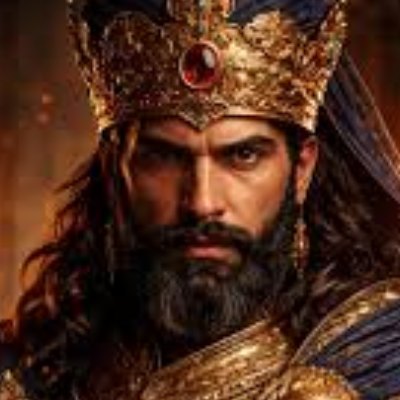
Andhaka is a son of Satvata — the patriarch of the Satvata branch of the Yadava lineage — and of his queen Kaushalya, recorded in the Bhagavata Purana, the Vishnu Purana, the Brahmanda Purana, the Vayu Purana, the Matsya Purana, and the Harivamsha as one of the principal sons from whom the major Satvata sub-clans descended. He is the progenitor of the Andhaka clan, one of the most politically significant branches of the Yadava confederacy, whose line eventually produced Devaki — the mother of Krishna — and Ugrasena and his son Kamsa, the adversary whom Krishna slew. Andhaka's immediate sons by his wife, a daughter of the king of Kashi, were Kukura, Bhajamana, Shama, and Kambalabarhisha, of whom Kukura founded the Kukura sub-clan and whose descendants after many generations produced the line of Ahuka, Devaka, and Ugrasena. Andhaka is thus the common ancestor of both the mother of Krishna and the tyrant against whom Krishna defined himself at the outset of his career, making his genealogical position one of the most dramatically significant in the entire Yadava tradition. He must be distinguished from a later king of the same name — a descendant of his own line through Bhima son of Satvata — who is recorded in the Harivamsha as ruling Mathura and being contemporary with Kusha, son of Rama. Both figures carry the name Andhaka but are separated by several generations.
✦ The Name
The Sanskrit name Andhaka is derived from andha, meaning blind or dark, with the suffix -ka. In Puranic literature the name is shared by multiple figures, most prominently the Asura Andhaka — a demon born blind, whose myth of conflict with Shiva is narrated across the Matsya Purana, the Shiva Purana, and the Linga Purana — and the Yadava king Andhaka, son of Satvata, who is a wholly separate figure with no mythological connection to the Asura. The Wisdomlib Andhaka definition entry distinguishes at least eight different bearers of this name across the Puranic corpus. Within the Yadava genealogy itself the name occurs at multiple generational positions, which has led to some conflation in secondary sources. The clan name Andhaka — or Andhakavamsha — derived from this progenitor, designated all his descendants collectively and is used as a group identifier throughout the Mahabharata.
✦ Lineage
- Father: Satvata — patriarch of the Satvata branch of the Yadava lineage, descended from Kroshtu through the long chain passing through Vrijinivant, Svahi, Rushanku, Citraratha, Shashabindu, and many subsequent kings down through Vidarbha, Kratha, Kunti, Vrishni, Nirvriti, Dasharha, Madhu, Kuruvasa, Purudvant, and Jantu; a contemporary of Rama of the Solar dynasty according to the Harivamsha tradition.
- Mother: Kaushalya — the principal queen of Satvata, identified in the Harivamsha (Chapter 37), the Matsya Purana (44.47), and the Vayu Purana (96.1–2) as the mother of Andhaka and his brothers.
- Brothers: Bhajamana (also Bhajina), Devavridha, Vrishni, and in some recensions Divya and Mahabhoja — the other sons of Satvata and Kaushalya, each progenitor of a separate Satvata sub-line. Of these, Vrishni's line eventually produced Vasudeva and Krishna directly.
- Wife: A daughter of the king of Kashi — named in the Harivamsha (Chapter 37) as Kashya's daughter; in the Brahma Purana (Chapter 13, verse 45) she is identified as the daughter of Kanka, king of Kashi. The Linga Purana (Chapter 69) calls her simply the daughter of the king of Kashi. These variant epithets refer to the same woman, identified by her paternal origin.
- Sons: Four sons are consistently named across the primary sources. The Harivamsha (Chapter 37, verse 17) gives them as Kukura, Bhajamana, Shama, and Kamvalabarhisha. The Brahma Purana (Chapter 13, verses 45–48) gives them as Kukura, Bhajamana, Shashaka, and Balabarhis. The Linga Purana (Chapter 69, verse 32) gives them as Kukura, Bhajamana, Shuci, and Kambalabarhis. The names Shama, Shashaka, and Shuci in these three sources are variant spellings for the same son, as are Kamvalabarhisha, Balabarhis, and Kambalabarhis. The four sons thus consistently attested are Kukura, Bhajamana, Shama, and Kambalabarhisa.
✦ The Four Sons and Their Significance
Kukura was the eldest son of Andhaka and the progenitor of the Kukura sub-clan. His line ran through Vrishni, Kapotaroman, Tittiri, Punarvasu, and Abhijit, whose twin sons Ahuka and Ahuki became celebrated figures. Ahuka's sons by a princess of Kashi were Devaka and Ugrasena. From Devaka came seven daughters, the eldest of whom was Devaki — the mother of Krishna. From Ugrasena came nine sons, of whom the eldest was Kamsa, the tyrannical king of Mathura whom Krishna slew. The entire drama of Krishna's birth, imprisonment of his parents, and ultimate killing of Kamsa thus has its genealogical root in Andhaka through his eldest son Kukura. The Vayu Purana confirms that the Yadava ruler Ugrasena belonged to the Kukura sub-clan descended from Andhaka.
The second son Bhajamana gave rise to the sub-line from which Kritavarma descended — the Andhaka warrior who fought on Duryodhana's side in the Kurukshetra War and is one of only three survivors of the Kaurava forces. Despite his Andhaka lineage he is consistently referred to in the Mahabharata as a Bhoja as well, illustrating the overlapping clan identities common among the Satvata sub-groups. The genealogy of this line through Bhajamana — Viduratha — Rajadhideva — Sura — Sonasva — Samin — Pratiksatra — Svayambhoja — Hridika — Kritavarma is preserved in the Jadaun history sketch drawing on Puranic sources.
The third and fourth sons — Shama and Kambalabarhisa — do not appear as progenitors of separately named sub-clans in the surviving primary texts, and their lines are not traced in any detail in the genealogical sections of the Puranas consulted. Their inclusion in the list of Andhaka's sons is consistent across sources but no further genealogical or narrative material is attached to them.
✦ Andhaka as a Mahabhoja
The Wisdomlib Andhaka definition entry, drawing on the Matsya Purana (44.48–61) and the Vishnu Purana (4.14.12), records that Andhaka is described as a Mahabhoja — a great Bhoja — who married the daughter of Kanka and fathered four sons including Kukura. The designation Mahabhoja in this context is not a separate royal title but a clan identification, reflecting the broader Puranic usage in which all Satvata sub-groups — Andhakas, Vrishnis, Kukuras — were collectively called Bhojas as a term for their Kshatriya standing. The Purankosh entry on the Andhaka community confirms this explicitly, noting that Andhaka, Vrishni, Kukura, and others of the primary Satvata lineage were generally called Bhojas in the broader sense, while individual sub-clans maintained their own designations.
✦ The Andhaka Clan in the Mahabharata Period
By the Mahabharata era, the Andhakas had become one of the four great sub-groups of the Satvata Yadava confederacy, the others being the Vrishnis, the Kukuras, and the Bhojas. The Mahabharata's Shanti Parva (81.25) refers to the Kukuras, Bhojas, Andhakas, and Vrishnis together as a sangha — a republican corporation or tribal oligarchy — with Krishna as the Sanghamukhya, the presiding elder of the confederation. Panini's Ashtadhyayi (4.1.114) attests the Andhakas as a Kshatriya clan with a sangha form of government, providing one of the earliest non-Puranic references to the group. The Drona Parva of the Mahabharata (141.15) classifies the Andhakas as Vratyas — those who deviated from Vedic orthodoxy — a characterisation applied to several Yadava sub-groups and reflecting their semi-peripheral position in the Brahmanical social order. The Andhaka army at the time of the Kurukshetra War was led by Kritavarma — descended through Bhajamana — on the Kaurava side. Ugrasena, the restored king of Mathura who was reinstated by Krishna after Kamsa's death, was the Andhaka overlord at Dwaraka during Krishna's time, as confirmed by the Bhagavata Purana.
✦ Textual Variants and the Two Andhakas
The Puranic tradition preserves two distinct figures named Andhaka within the Yadava lineage, and secondary sources often conflate them. The first — the subject of this profile — is Andhaka the son of Satvata and Kaushalya, the direct progenitor of the clan. The second is a later Andhaka who appears in the Harivamsha tradition (95.5242–8) as the son of Bhima son of Satvata — thus a grandson of Satvata through a different line — who succeeded his father to the throne of Mathura and was a contemporary of Kusha, son of Rama. This second Andhaka is the king who ruled Mathura in the post-Ramayana era. The Jadaun history sketch makes the distinction explicit through its pedigree list: Satvata — Bhima — Andhaka I — Raivat — Rksa — Visvagarbha — Vasu — Andhaka II — Dhrishnu, with the second Andhaka being the one who married the daughter of the Kashi king Drdhasva and had sons including Kukura and Bhajamana in this secondary tradition. This creates a genuine divergence: the Harivamsha (Chapter 37) and the Brahma Purana make Andhaka the direct son of Satvata and father of Kukura, while the extended pedigree in the Jadaun history sketch places several intermediate kings between Satvata and the Andhaka who fathered Kukura. Both traditions agree that the clan is named after an Andhaka and that Kukura, father of the line leading to Devaki and Ugrasena, is his son; the disagreement is in how many generations separate that Andhaka from Satvata himself.
✦ Connection to the Wider Genealogy
Andhaka occupies a position of immense genealogical consequence as one of the four or five sons of Satvata from whom the entire Satvata confederacy branched. His line through Kukura produced Devaki, the mother of Krishna, and Kamsa, Krishna's adversary — making his branch both the maternal ancestry of the supreme deity and the source of the principal obstacle to his birth. His line through Bhajamana produced Kritavarma, one of the few Mahabharata War survivors on the Kaurava side, and the Svayambhoja kings of Mrittikavati. The Andhakas as a community were dominant at Dwaraka alongside the Vrishnis and Kukuras throughout the Mahabharata period, and Ugrasena their elder king held nominal seniority in the Yadava assembly. When Krishna addressed the Syamantaka jewel affair and summoned all the Yadavas, it was a Yadu elder named Andhaka — representing the clan's leadership — who gave the explanation about the protective power of Shvaphalka's presence, as recorded in the Vishnu Purana's narrative of that episode.
✦ References
Primary Sources
- Harivamsha, Adi Parva, Chapter 37 (Account of Vabhru's Family), verse 17: The clearest primary statement of Andhaka's sons; names Kukura, Bhajamana, Shama, and Kamvalabarhisha as born to Andhaka by Kashya's daughter; also names Andhaka as one of Satvata's sons born of Kaushalya at verses 1–2.
- Brahma Purana, Chapter 13 (Family of the Vrishnis), verses 45–48: Names Kukura, Bhajamana, Shashaka, and Balabarhis as sons of Andhaka by the daughter of Kanka king of Kashi; traces the Kukura sub-line through Vrishti, Kapotaroman, Tittiri, Punarvasu, and Abhijit to Ahuka, Devaka, and Ugrasena.
- Linga Purana, Chapter 69 (Shrikrishna, his birth and life), verse 32: Names Kukura, Bhajamana, Shuci, and Kambalabarhis as sons of Andhaka by the daughter of the king of Kashi; traces the Kukura line to Ahuka, Devaka, Devaki, and Ugrasena.
- Bhagavata Purana, Ninth Canto, Chapter 24, verse 6 and subsequent: Names Andhaka as a son of Satvata born of Kaushalya; the Andhaka community is attested at Bhagavata Purana 1.11.11 and 1.14.25 as one of the Satvata clans defending Dwaraka.
- Vishnu Purana, Book 4, Chapter 13: Names Andhaka as one of Satvata's sons; his Mahabhoja designation and four sons including Kukura are given at Vishnu Purana 4.14.12; the Syamantaka episode featuring the Yadu elder Andhaka is at Book 4, Chapter 13.
- Brahmanda Purana, III.71.1 and Vayu Purana, 96.2: Both corroborate Andhaka as a son of Satvata and as the progenitor of the Andhaka clan; the Vayu Purana confirms Ugrasena's Kukura descent from Andhaka's line.
- Mahabharata, Shanti Parva (81.25); Drona Parva (141.15); Ashtadhyayi of Panini (4.1.114): These sources collectively attest the Andhakas as a republican clan of the Kshatriya gotra, label them Vratyas, and identify them as part of the Yadava sangha led by Krishna.
Secondary and Reference Works
- Wisdomlib.org, "Andhaka: 28 definitions" entry: Compiles attestations across Bhagavata, Brahmanda, Vayu, Vishnu, and Matsya Puranas; records the Mahabhoja designation; distinguishes the Yadava king Andhaka from the Asura Andhaka and other bearers of the name.
- Wisdomlib.org, "Kukura: 20 definitions" entry: Attests Kukura as son of Andhaka across Bhagavata Purana (9.24.18), Harivamsha, Brahmanda Purana, Matsya Purana, and Vayu Purana; traces the Kukura sub-line to Ugrasena.
- Purankosh (Mahabharat-Puran Kosh), "Andhaka" entry: Confirms Kukura as the eldest son of Andhaka, Kritavarma as descended from Andhaka's second son, and the general Bhoja designation applied to all Satvata sub-groups including the Andhakas.
- Wikipedia, "Yadava" article: Attests the Andhakas, Vrishnis, Kukuras, Bhojas, and Surasenas as the principal Satvata clans; confirms the Panini and Mahabharata references to the Andhakas as a sangha; notes that the Andhakas were the descendants of Bhajamana son of Andhaka grandson of Satvata per the Puranas.
- Historyofjadon.info, "Yadu-Vansh History" article: Records the extended pedigree distinguishing Andhaka I (son of Satvata) from a later Andhaka II reached through several intermediate kings, providing the two-Andhaka framework drawn from Puranic genealogical sources.