
About
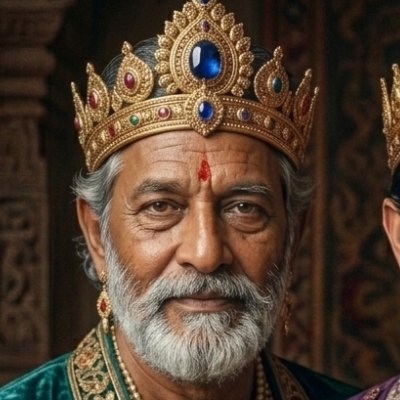
Kukura — Yadava Clan Progenitor, Son of Andhaka
Kukura · Kukuravamsha-adi
Kukura is a figure recorded in the Puranic genealogies of the Yadava lineage as a son of Andhaka, who was himself a descendant of the Yadu line — the celebrated kshatriya lineage traced ultimately to Yadu, son of the lunar-dynasty king Yayati and his wife Devayani. Kukura is significant primarily as the founding ancestor of the Kukura branch of the Yadavas, a sub-clan that is listed among the principal divisions of the broader Yadava confederation. His name appears in the Bhagavata Purana and the Harivamsa in the context of the detailed genealogical enumeration of the Yadu dynasty, where the branching of the clan into its many sub-lineages is systematically set out.
✦ The Name
The name Kukura is Sanskrit and is generally understood to denote a dog or to carry an association with that animal. In the Puranic genealogical lists the name functions primarily as a dynastic label: the clan descended from this figure came to be known as the Kukuras, one of the recognised subdivisions of the Yadava people. No elaborate etymology or symbolic interpretation of the name is provided in the primary texts beyond its use as a lineage-marker.
✦ Lineage
- Father: Andhaka — a Yadava prince and an important node in the genealogy of the Yadu dynasty, himself recorded as a son of Ugrasena's lineage in some accounts, and as a descendant of the Madhu-Vrishni segment of the Yadavas in others. He is the ancestor of several Yadava sub-clans.
- Paternal great-lineage: The Yadu dynasty, founded by Yadu — eldest son of the lunar king Yayati and Devayani, daughter of the sage Shukracharya. The Yadavas as a whole derive their name and identity from this Yadu.
- Son / Descendant (clan founder): Kukura gives his name to the Kukura branch of the Yadavas. The Bhagavata Purana lists descendants continuing from him through this branch.
✦ Role in the Yadava Genealogy
The Yadava confederation as presented in the Puranas was not a single undifferentiated group but a collection of related clans, each traced to a distinct ancestral figure within the broader Yadu lineage. The Bhagavata Purana's ninth and tenth skandhas, along with the Harivamsa, enumerate these branches with care. Kukura is named as the progenitor of one such branch — the Kukuras — who appear alongside other well-known Yadava sub-groups such as the Vrishnis, the Andhakas, the Bhojas, and the Dasharhas. The Kukura clan is thus a lateral branch of the same extended family that produced Krishna, who belonged to the Vrishni segment of the Yadavas. The genealogical lists position Kukura as a means of accounting for the origin of this distinct but related clan within the confederation.
✦ Textual Variants and Inconsistencies
The genealogical lists of the Yadavas across the Puranas are notoriously complex and show variation from text to text. The precise placement of Andhaka himself — and therefore of his son Kukura — differs depending on which Purana is consulted. The Bhagavata Purana and the Harivamsa do not always agree on the exact generational position of Andhaka within the Yadu tree, and minor discrepancies in the names of intervening ancestors appear between these two major sources. The Vishnu Purana similarly contains Yadava genealogical material that does not always align precisely with the Bhagavata's account. Kukura as a named individual receives no independent narrative episode in any of these texts; he appears solely as a name in a genealogical chain, which limits the scope for variant accounts specific to him personally.
✦ Connection to the Wider Genealogy
Kukura sits within the Yadu dynasty, which is one of the two great branches of the lunar dynasty (Chandravamsha) of Indian epic and Puranic tradition. The lunar line descends from Chandra (the moon god) through Budha, Pururavas, Ayus, Nahusha, and Yayati. From Yayati's son Yadu the entire Yadava lineage flows. Andhaka, Kukura's father, represents one of the intermediate branching points within this vast genealogical tree. The Kukura clan that descends from Kukura is geographically and culturally associated with the Mathura-Dwaraka region of the Yadava homeland and is counted among the clans that formed part of the Yadava political confederation in the late Dvapara Yuga as described in the Mahabharata and the Puranas.
✦ References
- Bhagavata Purana, Ninth Skanda, chapters 23–24: The principal source for the detailed genealogy of the Yadu dynasty, including the branching of the clan and the naming of Kukura as a son of Andhaka and progenitor of the Kukura sub-clan.
- Harivamsa (Harivamsha Parva), chapters 37–40: Provides a parallel and partially overlapping Yadava genealogy, naming the sub-clans of the Yadu line including the Kukuras, with some variation from the Bhagavata's account.
- Vishnu Purana, Book Four, chapters 12–14: Contains Yadava genealogical lists that name Andhaka and related figures, offering a third version of the lineage against which the Bhagavata and Harivamsa accounts may be compared.
- Mahabharata, Adi Parva and Sabha Parva: References to the Yadava clans including the Kukuras in the context of the broader political landscape of the Dvapara Yuga, though without detailed genealogical elaboration of Kukura personally.
- Puranic Encyclopaedia by Vettam Mani (1975): A modern Sanskrit reference work that consolidates Puranic genealogical data and identifies Kukura as a son of Andhaka within the Yadu lineage summary.