
About
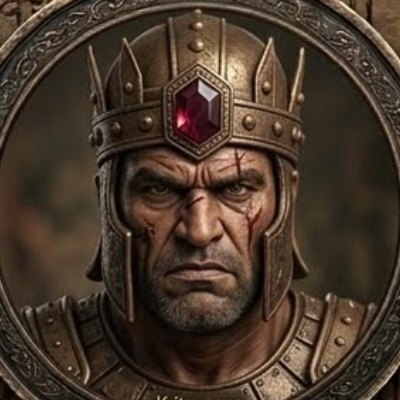
Kritavarma — Yadava Chief of the Satvata Clan, Kaurava Ally, and Survivor of Kurukshetra
Kritavarma · Kritavarman · Hridika · Hridikasuta · Hraidikyah · Satvata Yadava
Kritavarma is a Yadava chief of the Satvata branch of the wider Yadava clan grouping, the son of Hridika, and one of the most consequential secondary figures in both the Mahabharata and the Bhagavata Purana. He is distinguished in the epic tradition as the Yadava commander who fought on the side of the Kauravas at the war of Kurukshetra — a division within the Yadava confederation in which Krishna himself sided with the Pandavas — and as one of only three survivors on the Kaurava side at the war's conclusion, alongside Ashvatthama, the son of Drona, and Kripa, the son of Sharadvata. He participates in the night massacre of the Pandava camp carried out by Ashvatthama after the war's effective conclusion, an episode narrated in the Sauptika Parva of the Mahabharata. He appears again prominently in the Bhagavata Purana's account of the destruction of the Yadava clan at Prabhasa, where a quarrel in which he is directly implicated ignites the internecine violence that annihilates the Yadava confederacy. His son Bali married Charumati, the daughter of Krishna and his principal wife Rukmini, as recorded in Bhagavata Purana 10.61.24. Kritavarma appears in the Mahabharata across multiple parvas, in the Bhagavata Purana, the Vishnu Purana, and the Harivamsa, making him one of the more textually documented figures of the Yadava secondary cast.
✦ The Name
The name Kritavarma is a Sanskrit compound of krita, meaning done, accomplished, or made, and varma, meaning armour, shield, or protective covering, yielding the sense of one who has made his armour or one whose armour is accomplished — carrying the connotation of a warrior fully prepared and protected. The name appears in both the forms Kritavarma and Kritavarman across different passages and recensions of the primary texts; these are grammatical variants of the same name rather than distinct identities. His patronymic Hridika or Hridikasuta — meaning son of Hridika — is used as an identifying epithet in several Mahabharata passages. The form Hraidikyah appears in certain verses as a further patronymic variant. Hridika, his father, is identified in the Puranic genealogical lists as a member of the Satvata branch of the Yadava lineage, making Kritavarma a distant kinsman of Krishna, who belongs to the Vrishni branch of the same wider Yadava descent group.
✦ Lineage
- Father — Hridika: A Yadava of the Satvata branch, named in the Puranic genealogical lists as the father of Kritavarma. Hridika does not receive individual narrative development in the primary sources beyond his function as the progenitor of Kritavarma's line.
- Clan — Satvata: One of the principal sub-lineages of the Yadava descent group, tracing ancestry from the ancient king Yadu. The Satvata branch is distinct from the Vrishni branch — to which Krishna, Balarama, and their immediate family belong — though both share the common Yadava patrilineal ancestry. The Satvatas are identified across the Puranic texts as a warrior clan of established standing within the Yadava confederacy.
- Son — Bali: Named in Bhagavata Purana 10.61.24 as the husband of Charumati, the only named daughter of Krishna and Rukmini. Through this marriage Kritavarma becomes the father-in-law of Krishna's daughter, connecting the Satvata and Vrishni branches of the Yadava lineage through the next generation.
✦ Kritavarma's Alliance with the Kauravas
The Udyoga Parva and the Bhishma Parva of the Mahabharata establish that when the war between the Pandavas and the Kauravas became inevitable, the Yadava confederacy was effectively divided. Krishna, aligning himself personally with the Pandavas as charioteer and counsellor to Arjuna, also offered Duryodhana the choice between his personal presence unarmed and his Narayani Sena — his standing army. Duryodhana chose the army. Kritavarma is identified in the Mahabharata as the Yadava commander who led this Narayani Sena on behalf of the Kauravas, and he is counted among the principal commanders of the Kaurava forces throughout the eighteen days of battle. He is named in the lists of Kaurava warriors across the Bhishma Parva, the Drona Parva, and the Karna Parva, and is shown engaging in combat on multiple occasions, though he does not receive the extended individual treatment given to the supreme warriors of either side.
The Mahabharata does not elaborate at length on the internal Yadava politics that led Kritavarma to the Kaurava side while Krishna went to the Pandavas. The text presents the division as a function of the offer Krishna made — Duryodhana chose the army, and Kritavarma commanded it — without examining whether Kritavarma himself had personal political sympathies with the Kaurava cause or was simply fulfilling his role as the commander of the forces that Duryodhana had chosen. His conduct during the war is that of a loyal Kaurava commander rather than a figure of divided loyalty.
✦ The Night Massacre and Survival
Following the death of Duryodhana on the eighteenth day of battle — effectively ending the Kaurava cause — Ashvatthama, the son of the preceptor Drona, conceived a plan of retribution against the Pandavas and their allies. In the Sauptika Parva of the Mahabharata, Ashvatthama, together with Kritavarma and Kripa, entered the Pandava encampment at night while its occupants slept. Ashvatthama carried out the massacre of those within the camp, killing the Panchalas, the sons of Draupadi, and a great many others. The Mahabharata records that in this enterprise Kritavarma and Kripa stood at the gate of the camp rather than entering it, preventing any escape while Ashvatthama acted within. The precise moral weight assigned to the roles of Kritavarma and Kripa in this episode — as guards at the gate of a camp being massacred — is a point the Mahabharata does not resolve with explicit judgment, but the association with the act is unambiguous.
Kritavarma, along with Ashvatthama and Kripa, survived the war. These three are the only survivors named on the Kaurava side. After the massacre and its aftermath — including the confrontation between Ashvatthama and the Pandavas over Ashvatthama's use of the Brahmastra weapon against the womb of Uttara, the daughter-in-law of Arjuna — Kritavarma disappears from the Mahabharata's main narrative. His subsequent movements and his return to the Yadava world are not narrated in the epic itself.
✦ Kritavarma at the Destruction of the Yadavas
The Bhagavata Purana's eleventh book and the Mahabharata's Mausala Parva both narrate the destruction of the Yadava clan at Prabhasa, a sacred tirtha on the western coast. The occasion of this destruction was a curse laid by the sages Vishvamitra, Kanva, and Narada — or in some recensions by Vishvamitra and his companions alone — upon a group of Yadava youths who had mocked them by disguising the young man Samba as a pregnant woman and asking the sages to prophesy the nature of the child. The sages, perceiving the deception, cursed Samba to produce an iron club that would become the instrument of the Yadava clan's self-destruction. The club was produced, was ground to powder and thrown into the sea, but its fragments eventually grew as reeds on the shore at Prabhasa. When the Yadavas gathered at Prabhasa, they drank wine, and a quarrel broke out among them.
Kritavarma is directly implicated in the ignition of this quarrel. The Bhagavata Purana records that Satyaki — a Yadava warrior of the Vrishni branch who had fought on the Pandava side at Kurukshetra and was a devoted follower of Krishna — reproached Kritavarma openly at the gathering for his role in the night massacre of the sleeping Pandava camp. Satyaki condemned Kritavarma as a man who had committed an act unworthy of a Kshatriya. Kritavarma responded in kind, turning the reproach back upon Satyaki by raising the circumstances of Satyaki's own killing of Bhurishravas — a Kaurava warrior — at Kurukshetra under conditions that Kritavarma characterised as dishonourable. The exchange escalated; Satyaki struck Kritavarma and killed him. This killing ignited the broader violence among the assembled Yadavas, who took sides and fell upon one another, seizing the iron-reed clubs that had grown from the ground powder of the cursed club. The resulting internecine slaughter destroyed the Yadava clan, fulfilling the curse of the sages.
The Mausala Parva of the Mahabharata narrates the same destruction with broadly consistent details, though the specific exchange between Satyaki and Kritavarma and the precise sequence of events that triggered the violence vary somewhat between the two accounts. Both texts agree that Kritavarma was killed by Satyaki and that this killing was the spark that ignited the wider massacre.
✦ Textual Variants and Inconsistencies
The Bhagavata Purana and the Mausala Parva of the Mahabharata are broadly consistent on the main facts of Kritavarma's death at Prabhasa and his role in the ignition of the Yadava destruction, but they differ in the granularity of the exchange between Satyaki and Kritavarma and in the framing of the moral responsibility for what follows. The Bhagavata Purana gives the exchange a more developed narrative shape, with Satyaki's reproach of Kritavarma over the night massacre as the explicit provocation. The Mausala Parva's account is somewhat compressed in comparison.
Some recensions of the Mahabharata's lists of Kaurava commanders give varying degrees of prominence to Kritavarma across the eighteen days of battle, and not all passages that enumerate the principal warriors on either side include him by name in every instance. This is a feature of the Mahabharata's compositional nature — with its layered accretion of material across recensions — rather than a substantive inconsistency about Kritavarma's role, which is consistent across all major versions.
✦ Character and Significance
Kritavarma occupies an uncomfortable moral position in the tradition. He is a Yadava — a member of the same broad clan as Krishna — who fought against Krishna's chosen allies and participated, even at the gate rather than within, in one of the most condemned acts of the epic: the night massacre of sleeping men. The Bhagavata Purana's Prabhasa episode amplifies this discomfort by having Satyaki articulate a direct moral indictment of Kritavarma for that participation, and by making Kritavarma's response and his subsequent death the trigger for the annihilation of his entire clan. He is thus a figure whose choices at Kurukshetra echo forward catastrophically into the post-war world, making him in the Puranic construction one of the instruments — however unwitting — of the curse's fulfilment and the Yadava clan's end.
At the same time, the texts do not present Kritavarma as a figure of simple villainy. His alliance with the Kauravas was a function of the political arrangement Krishna himself had set in motion by offering Duryodhana the Narayani Sena. His conduct in the war was that of a commander fulfilling his obligations. His role in the night massacre — standing guard rather than killing — is morally ambiguous rather than unambiguously criminal, and the Mahabharata does not pronounce explicit judgment upon him for it in the way it does upon Ashvatthama. The tradition preserves this complexity without resolving it neatly.
✦ Connection to the Wider Genealogy
Through his father Hridika, Kritavarma belongs to the Satvata branch of the Yadava lineage, sharing with Krishna and the Vrishni branch a common patrilineal ancestry from the ancient king Yadu. Through his son Bali's marriage to Charumati — the daughter of Krishna and Rukmini — the Satvata and Vrishni branches are joined in the next generation, making Kritavarma the paternal grandfather of any children born of that union, though no such children are named in the primary sources. The irony of this genealogical connection is considerable: Kritavarma, whose choices at Kurukshetra placed him in opposition to Krishna's allies and whose death at Prabhasa ignited the destruction of the Yadava world, is simultaneously the man whose son married Krishna's own daughter.
✦ References
Primary Sources
- Mahabharata, Udyoga Parva: Establishes the division of Yadava forces before Kurukshetra, with Duryodhana choosing the Narayani Sena and Kritavarma identified as its commander on the Kaurava side.
- Mahabharata, Bhishma Parva, Drona Parva, and Karna Parva: Names Kritavarma among the active Kaurava commanders across the eighteen days of battle, with references to his participation in various engagements.
- Mahabharata, Sauptika Parva: Narrates the night massacre of the Pandava camp by Ashvatthama, with Kritavarma and Kripa identified as standing guard at the gate while Ashvatthama acted within.
- Mahabharata, Mausala Parva: Contains the account of the destruction of the Yadavas at Prabhasa, including the quarrel between Satyaki and Kritavarma and Kritavarma's death at Satyaki's hands as the trigger for the wider massacre.
- Bhagavata Purana, Skandha 10, Chapter 61, Verse 24: Records the marriage of Bali, son of Kritavarma, to Charumati the daughter of Krishna and Rukmini, establishing the genealogical connection between the Satvata and Vrishni branches.
- Bhagavata Purana, Skandha 11: Narrates the Prabhasa episode and the destruction of the Yadava clan, with the exchange between Satyaki and Kritavarma developed in greater narrative detail than in the Mausala Parva.
- Vishnu Purana, Book 5: Contains references to Kritavarma within the genealogical and narrative passages relating to the Yadava clan and the events surrounding the end of Krishna's earthly sojourn.
- Harivamsa, Vishnu Parva: Names Kritavarma within the Yadava genealogical and clan lists, providing supplementary context for his position within the Satvata branch.
Modern Reference Works
- Mani, Vettam — Puranic Encyclopaedia (1975): Provides a consolidated account of Kritavarma's career across the Mahabharata and the Bhagavata Purana, covering his Kaurava alliance, his role in the night massacre, his death at Prabhasa, and his son Bali's marriage to Charumati.
- Wisdomlib.org — definition and concept entries for Kritavarma: Aggregates references to Kritavarma across multiple primary texts and is useful for cross-checking the range of his appearances and the variant patronymic forms.
- Wikipedia — article on Kritavarma: Offers a general narrative synthesis and orientation to the primary source passages; used here only as a secondary reference, with all factual claims verified against primary texts.