
About
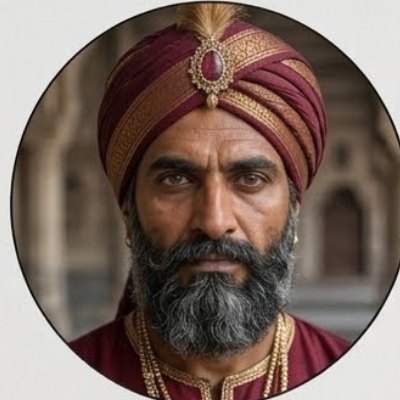
Kambalabarhisha — Son of Andhaka, Progenitor of a Branch of the Andhaka Clan
Kambalabarhisha · Kambalabarhis · Kamvalavarhisha · Kambalavarhish · Kambalabarhiṣa
Kambalabarhisha is the fourth son of Andhaka — himself a son of Satvata and Kaushalya — born by a princess of the Kashya line, the daughter of Dridhasrava. He is the youngest of the four sons of Andhaka, his brothers being Kukura, Bhajamana, and Shami, and he is described in the Harivamsha as a dynast of the Andhaka clan. His line produced three sons — Devavan, Asamauja, and Naasamauja — and the episode of Asamauja's childlessness and subsequent adoption forms the closing narrative of the Harivamsha's account of the Andhaka genealogy. Kambalabarhisha appears in the Harivamsha (Harivamsha Parva, 1.37.17 and 1.38.7–9), the Vishnu Purana (IV.14.5), the Linga Purana (Chapter 69), and — in a secondary reference through his grandson Devabahu — the Bhagavata Purana (IX.24.27).
✦ The Name
Kambalabarhisha is a Sanskrit compound of two elements: kambala, meaning a woollen blanket or garment, and barhisha, an archaic Vedic term for sacrificial grass (kusha or darbha), or in compounds can carry the sense of splendour or feathers. The compound may thus suggest one who is adorned with sacrificial grass, one who wears a woollen garment in a ritual context, or a more poetic martial or priestly epithet combining both resonances. The name has the character of a compound title or ceremonial designation rather than a simple personal name. Several transliteration forms appear across sources — Kambalabarhisha, Kambalavarhish, Kamvalavarhisha — all representing the same name.
✦ Lineage
- Father: Andhaka — son of Satvata and Kaushalya; progenitor of the Andhaka branch of the Satvata-Yadava lineage.
- Mother: Daughter of Dridhasrava of the Kashya dynasty — mother of all four of Andhaka's sons in the Harivamsha account.
- Brothers: Kukura (eldest) — whose line produced Ugrasena, Kamsa, and Devaka; Bhajamana — whose line produced Viduratha and ultimately Hridika and Kritavarma; Shami (or Shuchi in the Vishnu Purana) — no recorded descendants.
- Son (eldest): Devavan — described in the Harivamsha (1.38.7) as a learned man. No further descendants of Devavan are recorded in the primary sources.
- Son (second): Asamauja — described in the Harivamsha (1.38.7) as valiant. He died without natural issue, and the Andhaka patriarch gave him three sons in adoption to continue his line.
- Son (third): Naasamauja — named alongside Asamauja in Harivamsha (1.38.7). No descendants are recorded for Naasamauja in any primary source consulted.
✦ The Asamauja Adoption Episode
The Harivamsha (1.38.8) records a brief but structurally significant episode in the Andhaka genealogy: Asamauja, son of Kambalabarhisha, remained without issue and was therefore given three adopted sons by an Andhaka patriarch. The three adopted sons were Sudamshtra, Charuruupa, and Krishna. The Harivamsha specifies that these three were sons of an Andhaka — meaning a member of the broader Andhaka clan — though the text does not identify which specific Andhaka patriarch was their biological father. The episode closes the Harivamsha's account of the Andhaka dynastic succession, noting that these and many other members of the Andhaka family have been described, and that whoever meditates daily upon the Andhaka family will multiply their own lineage.
The Padma Purana (Chapter 13) preserves a variant of the same episode with altered names. In that account, the son of Kambalabarhisha had two sons named Asamauja and Samauja, and it was Samauja who had three well-known and very religious sons named Sudamsha, Suvamsha, and Krishna. The Padma Purana's version thus inverts the issueless figure — making Asamauja the one without children and Samauja the one with three sons — and changes the names of the three adopted or natural sons from Sudamshtra, Charuruupa, and Krishna (Harivamsha) to Sudamsha, Suvamsha, and Krishna (Padma Purana). These two accounts cannot be fully harmonised and represent distinct textual traditions of the same genealogical episode.
✦ Textual Variants and Inconsistencies
Three textual issues require documentation for Kambalabarhisha.
Parentage: The Harivamsha (1.37.17), the Vishnu Purana (IV.14.5), and the Linga Purana are consistent in making Kambalabarhisha a son of Andhaka (son of Satvata). However, the Garuda Purana (Chapter 139) records a strikingly different placement, stating that Kukkura and Kambalabarhisha were sons of Bhajamana — making them grandsons of Andhaka rather than sons. This is a direct contradiction of the Harivamsha, Vishnu Purana, and Linga Purana, all of which agree that Kambalabarhisha was a son of Andhaka in the same generation as Kukura and Bhajamana. The Garuda Purana passage appears to represent a textual error or conflation, possibly arising from the close narrative proximity of the Kukura and Bhajamana lines in the Harivamsha chapters.
The adoption episode: As noted above, the Harivamsha and Padma Purana give divergent accounts of Kambalabarhisha's grandsons and the adoption arrangement. The Harivamsha presents Asamauja as issueless and gives three sons of an unnamed Andhaka to him in adoption; the Padma Purana attributes the three sons (with different names) to Samauja, a brother figure.
Devabahu: The Bhagavata Purana (IX.24.27) and Brahmanda Purana (III.71.141) record a son of Hridika named Devabahu, whose son was Kambalabarhisa. This Kambalabarhisa — a great-grandson of Hridika and thus a figure many generations later than the Kambalabarhisha son of Andhaka — is a distinct individual. The shared name in two different generations of the same broad Andhaka clan is a recurring source of confusion in secondary literature and in the Purana Index, which lists both figures. They must not be conflated: the son of Andhaka belongs to the founding generation of the Andhaka clan, while the grandson of Devabahu belongs to the generation immediately following the Kurukshetra War.
✦ Connection to the Wider Genealogy
Kambalabarhisha represents the fourth and final founding branch of the Andhaka clan. Of Andhaka's four sons, the lines of Kukura and Bhajamana are the most extensively documented in the Puranic record — producing Ugrasena, Kamsa, and Devaki through Kukura's line, and Hridika, Kritavarma, and Shatadhanva through Bhajamana's. Kambalabarhisha's line is genealogically shorter in the surviving texts: his sons Devavan, Asamauja, and Naasamauja, and the three figures adopted into Asamauja's line, represent the full extent of recorded descendants before the tradition falls silent. Nevertheless the Harivamsha's closing statement about the Andhaka family — that meditating on this lineage multiplies one's own descendants — is placed immediately after describing Kambalabarhisha's household, suggesting that his line occupied a position of symbolic closure in the Andhaka genealogical recitation.
✦ References
- Harivamsha, Harivamsha Parva, 1.37.17: Names Kambalabarhisha as the fourth son of Andhaka by the Kashya princess, alongside Kukura, Bhajamana, and Shami.
- Harivamsha, Harivamsha Parva, 1.38.7–9: Describes Kambalabarhisha as a dynast of the Andhaka clan; names his three sons Devavan, Asamauja, and Naasamauja; records the adoption of three sons (Sudamshtra, Charuruupa, and Krishna) given to the issueless Asamauja by an Andhaka patriarch.
- Vishnu Purana, IV.14.5 (H. H. Wilson translation): Lists Kambalavarhish as the fourth son of Andhaka, consistent with the Harivamsha.
- Linga Purana, Chapter 69: Names Kambalabarhis among the four sons of Andhaka in the Satvata-Yadava genealogy.
- Garuda Purana, Chapter 139 (Dutt translation): Erroneously names Kukkura and Kambalabarhisha as sons of Bhajamana rather than sons of Andhaka, in contradiction to the Harivamsha, Vishnu Purana, and Linga Purana.
- Padma Purana, Chapter 13: Preserves a variant of the Asamauja adoption episode with altered names — Asamauja and Samauja as sons of Kambalabarhisha's son, and Sudamsha, Suvamsha, and Krishna as the three sons of Samauja — diverging from the Harivamsha account in both the identity of the issueless figure and the names of the three heirs.
- Bhagavata Purana, IX.24.27: Records a later Kambalabarhisa as the son of Devabahu (son of Hridika) — a distinct individual of the same name in a much later generation of the Andhaka clan.
- Cologne Digital Sanskrit Dictionaries, Purana Index, s.v. Kambalabarhisha and Devabahu: Modern reference noting both figures of the name Kambalabarhisha and the genealogical entry for Devabahu as son of Hridika and father of Kambalabarhisa.