
About
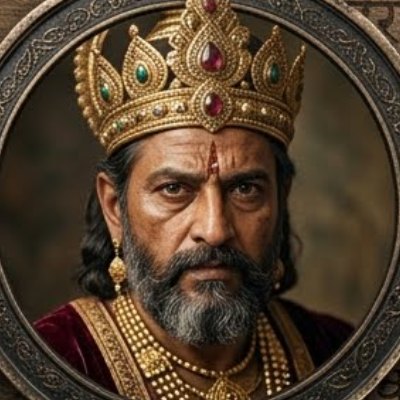
Viduratha — Chariot Warrior of the Andhaka Line
Viduratha · Rathimukhya
Viduratha is a Yadava king of the Andhaka branch of the Satvata line, identified in the Harivamsha and the Garuda Purana as the son of Bhajamana, himself a descendant of Andhaka son of Satvata. He is described in the Harivamsha as the foremost of chariot warriors, and his son Rajadhideva continued the lineage that ultimately produced the great Yadava warrior Kritavarma. Viduratha appears principally in the Harivamsha (Harivamsha Parva, chapter 38) and the Garuda Purana.
✦ The Name
The name Viduratha is a Sanskrit compound: vidu (wise, skilled) and ratha (chariot), meaning approximately "he of the skilled chariot" or "the wise charioteer." The Harivamsha epithet Rathimukhya, meaning foremost among chariot fighters, reinforces this martial identity. The name recurs elsewhere in the epics and Puranas for different figures, most notably a king whose daughter Mudavati appears in a separate episode in the Harivamsha; these should not be confused with the Viduratha of the Andhaka lineage.
✦ Lineage
- Father: Bhajamana — a Yadava king, son of Andhaka (son of Satvata), from whom the Andhaka clan descended. The Harivamsha (1.38.1) and Garuda Purana both name Bhajamana as Viduratha's father.
- Son (Harivamsha account): Rajadhideva — described as a valiant king who was Viduratha's heir and through whom the dynastic succession passed. Rajadhideva fathered eight sons and two daughters.
- Son (Garuda Purana account): Shura — the Garuda Purana (Chapter 139) records that the son of Viduratha was Shura, who was the father of Shami, differing from the Harivamsha by omitting Rajadhideva as an intermediate generation and naming Shura directly as Viduratha's heir.
✦ Textual Variants and Inconsistencies
The principal textual inconsistency concerning Viduratha is the disagreement between the Harivamsha and the Garuda Purana over his son. The Harivamsha (1.38.1) states that Viduratha's son was Rajadhideva, who in turn had eight powerful sons including Shami. The Garuda Purana (Chapter 139) compresses the genealogy by recording that Viduratha's son was Shura and that Shura was the father of Shami — omitting Rajadhideva from the succession. It is possible that the Garuda Purana's account represents a condensed version of the same genealogy, with Rajadhideva elided, or that an intermediate ancestor was lost in transmission. The Harivamsha account, being the more expansive of the two, is treated as the fuller record. An alternative-context Viduratha in the same Harivamsha — a king whose city is threatened by the demon Kujrimbha and whose daughter Mudavati is captured — is an entirely distinct figure and should not be conflated with the Andhaka dynastic Viduratha.
✦ Connection to the Wider Genealogy
Viduratha occupies the second position in the direct patrilineal succession from Bhajamana. Through his son Rajadhideva, and further through Rajadhideva's son Shami, the line descended to Pratiksatra, then Svayambhoja, then Hridika, whose eldest son Kritavarma led the Narayani Sena at the Kurukshetra War on the side of the Kauravas. Viduratha's line thus forms the dynastic backbone of the Andhaka clan's most prominent branch in the period of the Mahabharata war.
✦ References
- Harivamsha, Harivamsha Parva, 1.38.1: Names Viduratha as son of Bhajamana, describes him as the foremost of chariot warriors, and names Rajadhideva as his son.
- Garuda Purana, Chapter 139 (Dutt translation): Records Viduratha as son of Bhajamana and states that his son was Shura, who was the father of Shami, condensing the genealogy relative to the Harivamsha.
- Wisdomlib, s.v. Viduratha: Modern reference consolidating Puranic attestations and distinguishing multiple figures of the same name.