
About
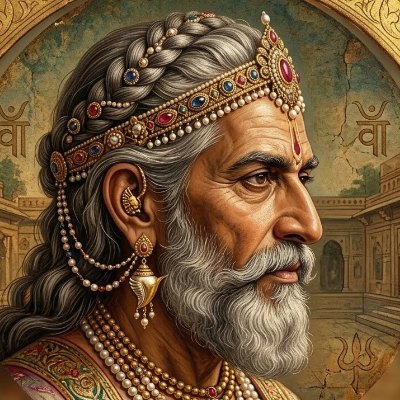
Shini I — Vrishni Warrior, Son of Anamitra, Patriarch of the Shaineya Line
Shini · Shini Vrishni · Sini · Civi · Shaineya (patronymic of his descendants)
Shini I is a Vrishni Yadava warrior, son of Anamitra — who was the son of Vrishni I, the youngest son of Satvata — and the patriarch of the Shaineya line. He is the most celebrated figure of this name in the epic literature, principally remembered for fighting and defeating King Somadatta of the Bahlika kingdom at the svayamvara of Devaki, on behalf of his kinsman Vasudeva. This act of martial loyalty began a multi-generational blood feud that found its culmination in the Kurukshetra War, when Shini I's grandson Satyaki slew Bhurishravas — Somadatta's son — on the fourteenth day of battle. Shini I is attested in the Harivamsha (Harivamsha Parva, Chapter 34), the Vishnu Purana (Book IV, Chapter XIV), the Bhagavata Purana (Navama Skandha, Chapter XXIV), and most prominently in the Mahabharata (Drona Parva, Sections CXLIII and following), where Sanjaya narrates the origin of the Shini-Somadatta enmity to Dhritarashtra.
✦ The Name
The name Shini (also romanised as Sini) is of uncertain etymology in the primary texts; no explanation of its meaning is offered in the Harivamsha or Vishnu Purana. The Mahabharata's Drona Parva (Section CXLIII) also refers to this figure as Civi in at least one manuscript tradition, as the table of contents to that Parva records "Somadatta's humiliation by Civi at the self-choice of Devaki." This may reflect a scribal variant or a clan designation rather than an alternate personal name. The patronymic Shaineya, meaning "descendant of Shini," is applied extensively to Satyaki (Yuyudhana) throughout the Mahabharata and Puranas, serving as his most common battle epithet. Satyaki is described in the Mahabharata as "the grandson of Sini" on multiple occasions, and the Drona Parva warriors address him directly as such.
✦ Lineage
- Paternal grandfather: Vrishni I — youngest son of Satvata and Kaushalya; patriarch of the Vrishni clan; father of Anamitra by his wife Gandhari, and of Yudhajit and Devamidhusha by his wife Madri.
- Father: Anamitra — son of Vrishni I by Gandhari; described in the Harivamsha as highly powerful; his son Nighna begat Satrajit and Prasena (of the Syamantaka jewel episode); Shini I is the most celebrated of Anamitra's sons in the epic tradition.
- Son: Satyaka — father of Satyaki (Yuyudhana); a Vrishni chief whose sons became the most prominent Shaineya warriors.
- Grandson: Satyaki, also known as Yuyudhana — the celebrated Vrishni warrior who fought on the Pandava side at Kurukshetra; a close companion of Krishna and Arjuna; killed Bhurishravas, son of Somadatta, on the fourteenth day of the Kurukshetra War, completing the inter-generational vengeance.
- Further descendants (Harivamsha Ch. 34; Vishnu Purana Book IV Ch. XIV): From Satyaki came Asanga, from Asanga came Bhumi (or Jaya), and from Bhumi came Yugandhara — with whom the Shaineya direct line ended.
✦ The Svayamvara of Devaki and the Feud with Somadatta
The most significant narrative episode associated with Shini I is his combat at the svayamvara of Devaki, the daughter of the Yadava king of the Kukura-Andhaka line who would become the mother of Krishna. The Mahabharata (Drona Parva, Section CXLIII) records that many princes competed for Devaki at her svayamvara. Shini, fighting on behalf of his kinsman Vasudeva who desired Devaki in marriage, defeated Somadatta, king of the Bahlika kingdom, in single combat. Shini is said to have seized Somadatta by the hair, thrown him to the ground, and kicked him before all the assembled kings — a profound and public humiliation. The account of Shini's victory is narrated by Sanjaya to Dhritarashtra in the context of explaining why Bhurishravas, Somadatta's son, harboured such relentless enmity toward Satyaki at Kurukshetra.
Unable to endure the dishonour, Somadatta performed severe austerities and obtained a boon from Mahadeva (Shiva) that he would have a son capable of avenging his humiliation by defeating a descendant of Shini in battle. Bhurishravas was born as the fulfilment of this boon. The Wikipedia article on Bhurishravas confirms the sequence: Sini's victory and Somadatta's humiliation led to Somadatta's penance and Shiva's boon, culminating in Bhurishravas's birth with the specific destiny to defeat a descendant of Shini.
✦ The Culmination at Kurukshetra
The feud initiated at Devaki's svayamvara reached its conclusion on the fourteenth day of the Kurukshetra War. Satyaki, fighting in the Pandava army, and Bhurishravas, fighting in the Kaurava army, met in direct combat. Bhurishravas, empowered by his father's divine boon, defeated the exhausted Satyaki and dragged him across the battlefield. Arjuna, urged by Krishna who knew of the family feud and its significance, intervened and cut off one of Bhurishravas's arms. Bhurishravas, enraged at this act, sat down in the warrior's praya observance — a form of fasting to death with arms laid down. The weaponless Satyaki then rose and, ignoring the protests of the assembled warriors and despite censure from Krishna and Arjuna themselves, slew Bhurishravas while he sat in the praya observance. The Mahabharata presents Satyaki's act as both the inevitable fulfilment of inter-generational destiny and a deed of questionable dharmic propriety that prompted heated debate among the warriors present.
✦ Textual Variants and Inconsistencies
The principal variant regarding Shini I concerns his father's identity. The Vishnu Purana (Book IV, Ch. XIII) gives Shini as a son of Sumitra (an alternative form of Anamitra) — the same branch as the Harivamsha, merely using the name Sumitra instead of Anamitra. The Bhagavata Purana (9.24.14–15) places Anamitra and Shini as sons of Yudhajit directly, making Shini a brother of Vrishni II rather than Anamitra's son. The Matsya Purana (per Wilson's Vishnu Purana footnote) lists Shini as one of five sons of Anamitra alongside Nighna, Yudhajit, Vrishabha, and Kshatrapati. The Mahabharata itself does not specify Shini I's parentage within the text of the svayamvara episode; it identifies him only as a Vrishni. The lineage Vrishni I — Anamitra — Shini I — Satyaka — Satyaki is the sequence given in the Harivamsha (Ch. 34) and is the most commonly cited arrangement in secondary scholarship.
There is additionally a second figure named Shini within the Vrishni genealogy — Shini II — recorded in the Harivamsha and Puranic sources as positioned in the Yudhajit branch of the family (the same branch that produced Vrishni II, Shvaphalka, and Akrura), rather than in the Anamitra branch. The two figures share a name but belong to parallel branches of the Vrishni family: Shini I is in the Anamitra-Gandhari line of Vrishni I, while Shini II is in the Yudhajit-Madri line. They are distinct individuals separated by their parentage and their narrative associations. The famous Shini of epic literature — the warrior at Devaki's svayamvara — is Shini I, the son of Anamitra.
✦ Theological and Narrative Significance
Shini I's significance in the tradition is threefold. First, his act of martial loyalty to Vasudeva at Devaki's svayamvara directly enabled the marriage that would eventually produce Krishna, making Shini I an indirect instrument of the divine plan for Krishna's birth. Second, his humiliation of Somadatta inaugurated one of the few inter-generational feuds in the Mahabharata that is explicitly narrated as the cause of a specific battle encounter — the Satyaki-Bhurishravas duel at Kurukshetra. Third, his grandson Satyaki's killing of Bhurishravas raises the complex dharmic question of whether vengeance fulfilled through destiny excuses conduct that violates the warrior code, a question the Mahabharata leaves deliberately unresolved.
✦ Connection to the Wider Genealogy
Shini I belongs to the Anamitra branch of the Vrishni clan, descending from Vrishni I through Anamitra (Gandhari's son). He is thus a collateral relative of both the Devamidhusha branch (which produced Vasudeva and Krishna) and the Yudhajit branch (which produced Vrishni II, Shvaphalka, and Akrura). His act at Devaki's svayamvara connects the Anamitra-Shaineya branch directly to the defining event of the Devamidhusha branch — the marriage of Vasudeva and Devaki — making the Shini-Satyaki line an integral part of the broader narrative of Krishna's world despite its genealogical distance from Krishna's direct paternal line.
✦ References
- Mahabharata, Drona Parva, Section CXLIII (Sacred Texts Archive; Wisdomlib summary) — primary source for the svayamvara episode and the Shini-Somadatta encounter; Sanjaya narrates the origin of the feud to Dhritarashtra; records Somadatta's penance to Mahadeva and the birth of Bhurishravas as consequence.
- Mahabharata, Drona Parva, Sections CXXXIX and CXLVI (Sacred Texts Archive) — primary source recording the combat between Satyaki ("grandson of Sini") and Bhurishravas, Arjuna's intervention, and Satyaki's slaying of Bhurishravas; refers to Satyaki throughout as "grandson of Sini."
- Harivamsha, Harivamsha Parva, Chapter 34 (trans. M. N. Dutt, Wisdomlib) — primary source for the genealogical sequence Anamitra — Shini — Satyaka — Satyaki (Yuyudhana) — Asanga — Bhumi — Yugandhara.
- Vishnu Purana, Book IV, Chapter XIV (trans. H. H. Wilson, 1840) — gives Shini in the Anamitra (Sumitra) branch of the Vrishni genealogy.
- Vishnu Purana, Book IV, Chapter XIII, footnote 435 (Wilson) — records the Matsya Purana variant listing Shini as one of five sons of Anamitra.
- Bhagavata Purana, Navama Skandha, Chapter XXIV, verses 14–15 (Vedabase) — places Anamitra and Shini as sons of Yudhajit in the Bhagavata recension; a variant arrangement not followed by the Harivamsha or Vishnu Purana.
- Wikipedia, "Bhurishravas" — secondary reference; records the Shini-Somadatta encounter at Devaki's svayamvara and the resulting multi-generational feud clearly.
- Wisdomlib, "Satyaki" and "Bhurishravas" entries — secondary references confirming the genealogical chain and the Kurukshetra resolution of the feud.
- Purankosh (purankosh.in), "Anamitra" entry — secondary reference recording the Matsya Purana's five-son variant for Anamitra including Shini alongside Nighna, Yudhajit, Vrishabha, and Kshatrapati.