
About
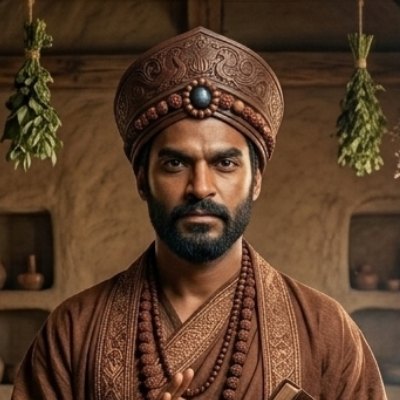
Shringavan — Sage of the Kaushika Line, Husband of Vriddhakanya
Sringavat · Shringavat · Galavaputra
Shringavan is a sage of minor but precise narrative significance in the Mahabharata, appearing exclusively in the fifty-second chapter of the Shalya Parva, the ninth book of the epic. He is identified in the text as a rishi and the son of the sage Galava — himself a celebrated ascetic of the Kaushika lineage, regarded across various sources as a son or devoted disciple of the great sage Vishvamitra. Shringavan's sole recorded action is his acceptance of the marriage proposal of Vriddhakanya, the aged maiden daughter of the sage Kunigarga of the Garga lineage, under a precisely framed compact of one night. Following the marriage, Vriddhakanya was transformed into a radiant young woman and ascended to heaven. Shringavan, receiving half her accumulated penances as his agreed share of the compact, found himself unable to bear the memory of her beauty and the brevity of their union, and eventually cast off his own body to follow her. His story is narrated by Vaishampayana to the king Janamejaya as part of the account of Balarama's pilgrimage along the Sarasvati river. Shringavan appears in no other primary source.
✦ The Name
The name Shringavan — rendered as Sringavat in the Ganguli translation of the Mahabharata — is a Sanskrit name meaning one who possesses a horn or peak, a form associated with ascetic potency and distinction in the Puranic and epic traditions. The patronymic Galavaputra, son of Galava, serves as his primary identifier within the genealogical context of the episode. He is not addressed by any epithet or sobriquet beyond his personal name and his filial designation throughout the chapter.
✦ Lineage
- Paternal grandfather (through Galava's lineage): Vishvamitra — one of the most celebrated sages in the entire epic and Puranic tradition, a king of the Kaushika clan who attained brahminhood through extraordinary austerities. The Harivamsha identifies Galava as Vishvamitra's son. The Mahabharata's Udyoga Parva also treats Galava as closely associated with Vishvamitra — as devoted student and disciple — and the Devibhagavata Saptamaskanda records the origin of the name Galava from an episode in which Vishvamitra's wife nearly sold the child with a cord around his neck, and prince Satyavrata freed him. Whether the relationship is that of biological son or beloved disciple of the deepest order, Galava belongs unambiguously to the Vishvamitra-Kaushika lineage.
- Father: Galava — a sage whose fame rests primarily on the extended narrative in the Udyoga Parva of the Mahabharata, in which he sought to repay his guru Vishvamitra with the impossible gurudakshina of eight hundred moon-white horses each with one black ear. Assisted by his friend Garuda and through the mediation of the princess Madhavi — daughter of King Yayati — Galava eventually fulfilled his obligation and retired to the forest. He is also mentioned as a visitor to Yudhishthira's court, as a presence in Indra's celestial assembly, and in several other brief references across the Mahabharata. He is presented consistently as a brahmin sage of austere practice and determined character.
- Wife: Vriddhakanya — the daughter of the sage Kunigarga of the Garga lineage, who had been created through her father's ascetic power rather than through ordinary birth. She had spent her entire life in solitary forest penance and had grown old without marrying. Shringavan accepted her hand under the compact of one night, duly conducted the marriage with fire-ritual observances, and was transformed by the experience of her celestial beauty on that single night.
✦ The Episode: The Compact of One Night
The narrative in which Shringavan appears is set in motion by Vriddhakanya's predicament. Having been informed by the sage Narada that an unmarried woman could not reach the highest celestial regions regardless of the merit she had accumulated through asceticism, the aged maiden went before a concourse of rishis and made a public declaration: she would give half her entire accumulation of penances to whichever sage would accept her hand in marriage. At this assembly, Shringavan came forward. He agreed to marry her, but under a specific condition of his own devising: he would take her hand, but she would live with him for one night only. This was not a casual or improvisatory arrangement. The text presents it as a compact — a formal agreement entered into between two parties of equal standing, each contributing something and each receiving something in return.
Vriddhakanya agreed to the terms. Shringavan then proceeded to conduct the marriage according to full Vedic ordinance: he poured libations on the sacred fire and accepted her hand with all the rites properly observed. The emphasis in the text on the lawful conduct of the ceremony — the fire-ritual, the prescribed ordinances — is deliberate. This was not an informal arrangement but a marriage in every recognised sense, conferring upon Vriddhakanya the full ritual standing of a wife. On the night of the marriage, Vriddhakanya was transformed: the aged body in which she had lived fell away and she became a young woman of incomparable radiance, clothed in celestial attire and adorned with divine ornaments and garlands. Shringavan, beholding her beauty in this transformed state, was filled with great joy and passed the one night of the compact in her company.
✦ The Aftermath: Grief and Departure
When morning came, Vriddhakanya ascended to the celestial regions she had long earned. Shringavan was left alone. The text describes him as becoming very cheerless, dwelling constantly upon the memory of her beauty. He had entered the compact with full understanding of its terms — one night, no more — and in consequence of that compact he received half her accumulated penances as his agreed share. Yet the text records that he accepted even this extraordinary gain only with difficulty. The spiritual merit of a lifetime of severe ascetic practice, freely transferred to him, was not sufficient to reconcile him to what he had seen and lost in the span of a single night.
Unable to remain in the world, Shringavan cast off his own body. The text specifies with precision the motive: he was moved by sorrow and compelled by her beauty. He followed her from the mortal realm, choosing death not as a spiritual act of renunciation in the classical sense but as the only available response to an attachment forged in a single night and made permanent by its very brevity. The phrase the text uses — casting off his body, following her — places his departure in the category of those who voluntarily relinquish life, a recognised if uncommon mode of death in the epic tradition.
The text closes the episode by calling the history it has recounted the story of the old maid, designating her rather than Shringavan as the primary subject. Yet Shringavan's role is not incidental. He is the one who sets the conditions, conducts the ritual, receives the transfer of merit, and pays the consequence. His character — willing, precise, compassionate in his offer, undone by what he consented to witness — is one of the more concentrated portraits in the Shalya Parva's embedded narrative tradition.
✦ Textual Note
Shringavan is attested by name in a single primary text: the Mahabharata, Shalya Parva, Chapter 52, in the Ganguli translation rendered as Sringavat. The Manuscrypts.com study of Galava cites his presence at Mahabharata Shalyaparva Chapter 52 verse 14 as the son of Galava who married Vriddhakanya, confirming the verse-level reference in the source text. No further mention of Shringavan occurs in any of the eighteen Mahapuranas, the Upapuranas, the Ramayana, or other Mahabharata parvas examined for this profile. This profile is accordingly proportionate to the sole primary attestation available.
✦ Connection to the Wider Genealogy
Shringavan stands within the Kaushika lineage through his father Galava and his grandfather Vishvamitra. Vishvamitra was a king of the Kaushika royal clan who, through the power of his accumulated tapas, attained the status of brahmarshi — the highest grade of sage — making his descendants members of a lineage that combined royal and brahmin heritage. Galava, as Vishvamitra's son, continued this lineage as a brahmin sage. Through Shringavan's one-night marriage to Vriddhakanya, the Kaushika-Vishvamitra lineage intersected for a single night with the Garga lineage — itself descending from Angirasa through Brihaspati and Bharadvaja to Garga and thence to Kunigarga, Vriddhakanya's father. The tirtha on the Sarasvati river associated with this episode, visited by Balarama during his pilgrimage, preserves the memory of this intersection as a point in the sacred geography of the Mahabharata.
✦ References
Primary Sources
- Mahabharata, Shalya Parva, Chapter 52 (Ganguli translation, 1883–1896): The sole primary source for Shringavan. Identifies him as a rishi and son of Galava, records his proposal of the one-night compact to Vriddhakanya, the lawful fire-ritual marriage, his joy at her celestial beauty on that night, his subsequent grief, his receipt of half her penances under the compact, and his eventual voluntary departure from life in sorrow at her loss.
- Mahabharata, Udyoga Parva, Chapters 104–121 (Ganguli translation): The primary source for the character of Galava, Shringavan's father — including the gurudakshina episode with Vishvamitra, the Madhavi narrative, and Galava's own ascetic life and lineage.
- Harivamsha, Adi Parva, Chapter 12: Identifies Galava as the son of Vishvamitra and records the origin of his name from the cord around his neck in childhood, establishing the Kaushika lineage from which Shringavan descends.
Modern and Secondary Reference Works
- Manuscrypts.com, "Galava": Confirms with verse-level reference (Mahabharata Shalyaparva Chapter 52, verse 14) that Shringavan, who married Vriddhakanya, was the son of the sage Galava, and provides context for Galava's own lineage and narrative significance in the Mahabharata.
- Pradip Bhattacharya, "The Complete Shalya Parva" (pradipbhattacharya.com, 2019): Scholarly analysis situating the Vriddhakanya and Shringavan episode within the broader structure of Balarama's Sarasvati pilgrimage and noting its deliberate theological pairing with the contrasting episode of Shandilya's celibate daughter in Chapter 54.
- Wikipedia, "Madhavi (princess)" and "Galava" entries: Supply background on Galava's parentage, his relationship with Vishvamitra, and the Udyoga Parva narrative in which Galava's character and lineage are most fully elaborated, informing the genealogical context of Shringavan's identity as Galava's son.