
About
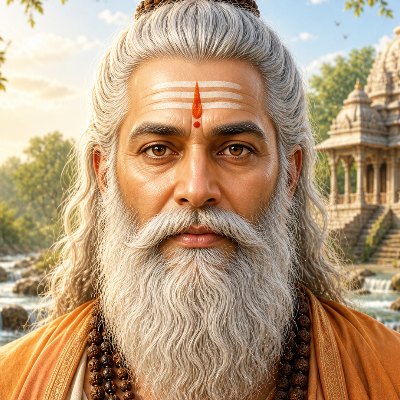
Kunigarga — Ascetic of the Garga Line, Father of Vriddhakanya
Kuni-Garga · Kuni Gargya · Kunigarga Muni
Kunigarga is a sage of the Garga lineage whose sole narrative appearance in the primary textual tradition occurs in the fifty-second chapter of the Shalya Parva, the ninth book of the Mahabharata. He is introduced by the narrator Vaishampayana as a rishi of abundant energy and great renown, whose principal distinction in the text is the extraordinary manner in which he brought a daughter into existence — not through ordinary generation but through the focused power of his accumulated austerities. His daughter, known as Vriddhakanya, the aged maiden, is the protagonist of the chapter; Kunigarga himself departs the narrative almost immediately after his daughter's creation, ascending to heaven upon beholding her. He belongs to the Garga gotra, the lineage founded by the sage Garga, who was the son of the Saptarshi Bharadvaja, one of the seven great seers of the Vedic tradition, and of Susheela, a Kshatriya woman. Within the tradition, the name Kunigarga identifies him as a member or descendant of the Garga clan; whether this places him as a direct son of Garga or a later descendant within the same lineage is not explicitly stated in the primary text, which presents him simply as a celebrated figure of the Garga family. His account is narrated as part of the tale of the sacred tirthas along the Sarasvati river visited by Balarama during his pilgrimage, which forms the Sarasvati Parva embedded within the Shalya Parva.
✦ The Name
The name Kunigarga is a compound. The element Garga identifies his gotra affiliation, situating him within the lineage of the sage Garga. The element Kuni functions as a personal distinguisher within that lineage. In the Ganguli translation of the Mahabharata, the name is hyphenated as Kuni-Garga, indicating its compound character. Some secondary scholarly references render it as Kuni Gargya, using the patronymic form Gargya — meaning one of Garga's descent — in place of the gotra name Garga directly. Both forms refer to the same figure as presented in Shalya Parva Chapter 52. The dual rendering reflects the convention in Vedic Sanskrit by which a son or descendant of Garga could be called either Garga (bearing the clan name) or Gargya (bearing the patronymic derived from it). The text itself uses Kuni-Garga as a single compound name for this sage throughout the episode.
✦ Lineage
- Ancestral lineage: Kunigarga belongs to the Garga gotra, the lineage founded by the sage Garga, son of Bharadvaja and Susheela. Bharadvaja was one of the seven great seers known as the Saptarshis, a Vedic sage of the highest authority and the son of Brihaspati, who was himself the son of the primordial sage Angirasa. The full patrilineal chain from Angirasa through Brihaspati to Bharadvaja to Garga is consistently attested in gotra tradition. Kunigarga's position within this descent — whether he is a son of Garga directly or a later descendant through an intermediate generation — is not specified in the Shalya Parva text, which treats him as a celebrated member of the Garga family without elaborating his precise generational position.
- Daughter: Vriddhakanya — a maiden of exceptional beauty, created by Kunigarga through the power of his tapas rather than through ordinary birth, who became the subject of the narrative episode in Shalya Parva Chapter 52. The name Vriddhakanya, meaning the aged maiden or the elderly virgin, was acquired over the course of her long life of unmarried asceticism.
✦ The Creation of Vriddhakanya and Kunigarga's Ascent
The account of Kunigarga is narrated in the Mahabharata by Vaishampayana to the king Janamejaya in response to a question prompted by the pilgrimage of Balarama along the Sarasvati river. During that pilgrimage, Balarama visited a tirtha associated with an aged maiden, and the king's inquiry into the origin of that tirtha elicits the narrative.
Vaishampayana describes Kunigarga as a rishi of abundant energy and surpassing fame. Having performed the most rigorous of austerities over a prolonged period, Kunigarga attained a degree of ascetic power sufficient to bring a living being into existence through the force of his concentrated will alone, without the participation of a mother or the ordinary processes of generation. By this act of tapas-born creation he produced a daughter — described as fair-browed, faultless in form, and with eyes like the petals of a lotus. The text emphasises both the extraordinary nature of the act and the flawlessness of its result. Upon beholding this daughter whom he had thus willed into being, Kunigarga was overcome with joy. He then abandoned his own physical body and departed from the earthly realm, ascending directly to heaven. The narrative records no illness, no prolonged death, and no further engagement with the world; his act of creation and his departure are essentially simultaneous, as if the bringing forth of this daughter was the culminating act of a life consecrated entirely to tapas.
The daughter he left behind continued in the ascetic spirit her father had exemplified. She devoted herself to severe and unyielding penances, worshipping the ancestors and the gods through prolonged fasting and rigorous vows. The years passed in this manner until she became an aged woman — the Vriddhakanya — without ever having married. It was only then that she learned, through the instruction of celestial messengers, that according to the dharmic understanding of the time, an unmarried woman could not attain the highest regions of heaven regardless of the merit accumulated through austerity. The pathway to those highest realms required that she have been a wife.
✦ The Episode of Vriddhakanya and Shringavan
The continuation of Kunigarga's legacy unfolds through the story of his daughter after his departure. Vriddhakanya, learning that her state of perpetual maidenhood barred her from the celestial regions to which her accumulated tapas otherwise entitled her, sought a husband willing to fulfil the necessary rite. She approached Shringavan, the son of the sage Galava — Galava being a celebrated sage of great antiquity, regarded in the tradition as a son of the sage Vishvamitra, one of the most famous royal sages of the Vedic period who attained brahminhood through extraordinary tapas.
Shringavan, understanding the gravity of her need and moved by dharmic compassion, consented to marry her and to share with her the state of wifehood that the tradition required for her liberation. Their union endured for a single night. When morning came, the transformation that the lawful completion of the wifely state conferred upon Vriddhakanya was immediate and astonishing: the aged body she had borne through her long years of austerity fell away, and she stood radiant in the form of a young woman of incomparable beauty. She then ascended to the celestial realms that her decades of penance and her now-fulfilled ritual status had together earned her. Shringavan, devastated by her sudden departure after only a night together and unable to reconcile himself to remaining in the world without her, eventually renounced his life and followed her in death, that he might be with her beyond this world. The tirtha along the Sarasvati river near the place where this episode occurred became a sacred site associated with Kunigarga's daughter, visited by Balarama in the course of his pilgrimage and referenced in the chapter as a place bearing the memory of this event.
✦ Theological Significance
The episode centred on Kunigarga and his daughter sits within a deliberate literary pairing in the Shalya Parva. As the scholar Pradip Bhattacharya has noted, Chapter 52 — celebrating Kunigarga's aged daughter who cannot reach the highest heaven without marriage — is placed in direct juxtaposition with Chapter 54, which commemorates the daughter of the sage Shandilya who attains heaven precisely by maintaining celibacy throughout her life. The two chapters present opposite conclusions regarding the path of a woman to liberation, and the text makes no effort to resolve the contradiction between them. This plurality — the willingness to hold opposing dharmic verdicts together without subordinating one to the other — is characteristic of the epic's mode of ethical representation. Kunigarga's role in the first of these stories is therefore not incidental; his act of will-born creation produces a daughter who becomes the vehicle for exploring a particular understanding of what a woman owes to the institution of marriage as a condition of full ritual completion, while the deliberate placement of the opposing story nearby ensures that no single position is granted absolute authority.
The manner of Vriddhakanya's creation — brought into being by tapas alone, without a mother — also places Kunigarga within a specific category of sage in Puranic and epic narrative: those whose austerity has reached the point where it can generate life independently. This creative power through ascetic concentration, sometimes called manasa-sristi or creation by the mind and will, is a recognised mode of generation in the tradition and is attributed to figures of the highest ascetic standing. Kunigarga's immediate departure for heaven upon completing this act underscores that this creation was the singular culminating purpose of his entire ascetic life.
✦ Textual Note
Kunigarga is attested as a named figure in a single primary text: the Mahabharata, Shalya Parva, Chapter 52. The Wikipedia article on Garga (sage) cites him as Kuni Gargya, referencing Mahabharata 9.51.3-4, which reflects a slightly different chapter numbering convention or a rendering of the compound name in its patronymic form; the figure and episode are the same regardless of this variation in rendering. No independent account of Kunigarga appears in the eighteen Mahapuranas, the Upapuranas, or other primary sources examined for this profile. The profile is therefore proportionate to the textual evidence: Kunigarga is a briefly described but thematically significant figure whose narrative function is essential to one of the Shalya Parva's most philosophically rich embedded stories.
✦ Connection to the Wider Genealogy
Kunigarga stands within the descent from Angirasa, the founding ancestor of the Angirasa lineage, through Brihaspati to Bharadvaja to Garga. His daughter Vriddhakanya, through her marriage to Shringavan, enters into connection with the lineage of Vishvamitra — the royal sage turned brahmin rishi — through Vishvamitra's son Galava and Galava's son Shringavan. The tirtha along the Sarasvati associated with this encounter represents a physical point in the Mahabharata's sacred geography where the Garga lineage and the Vishvamitra lineage met for a single night of dharmic consequence.
✦ References
Primary Sources
- Mahabharata, Shalya Parva, Chapter 52 (Ganguli translation, 1883–1896): The sole primary source for Kunigarga. Introduces him as a rishi of great energy and fame who created a fair-browed daughter by will-power alone, beheld her with joy, and then abandoned his body to ascend to heaven; the narrative continues with his daughter's long ascetic life, her eventual marriage to Shringavan son of Galava, and her transformation and celestial ascent.
Modern and Secondary Reference Works
- Wikipedia, "Garga (sage)": Lists Kuni Gargya among the notable descendants and figures of the Garga lineage, with the reference Mahabharata 9.51.3-4, confirming identification of the Shalya Parva figure within the broader Garga gotra tradition.
- Pradip Bhattacharya, "The Complete Shalya Parva" (pradipbhattacharya.com, 2019): Scholarly summary identifying Chapter 52 as the locus of Kunigarga's aged daughter narrative and explicitly noting its deliberate juxtaposition with the opposing narrative of Shandilya's celibate daughter in Chapter 54.
- Indica Today, "Yamuna Part II: A Study of Its Links from the Sarasvati Findings": Places the Kuni-Garga tirtha within the geographic itinerary of Balarama's Sarasvati pilgrimage, cross-referencing Mahabharata 9.50 and confirming the episode's location in the sacred geography of the text.
- Manuscrypts.com, "Galava": Confirms, with reference to Mahabharata Shalyaparva Chapter 52 verse 14, that Shringavan — who married Vriddhakanya — was the son of the sage Galava.
- Krishnakosh.org, "Mahabharata Shalya Parva Chapter 52": Provides the Ganguli translation text of the opening of Chapter 52, confirming the exact wording of Kunigarga's introduction as a rishi of abundant energy who created his daughter by a fiat of his will.