
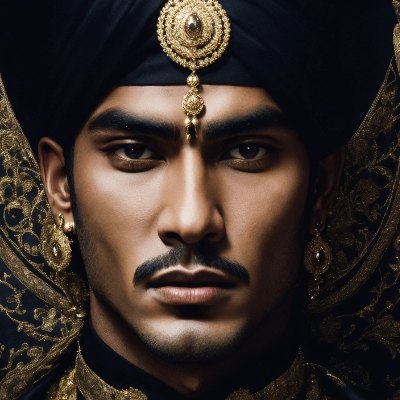
About
Hamsadhvaja — Son of Vrishadhvaja, Father of Dharmadhvaja and Kushadhvaja
Hamsadhvaja · Hansadhvaja · Rathadhvaja (variant name in alternate sources)
Hamsadhvaja is the son of Vrishadhvaja — the Shaiva king cursed by the sun god Surya — and the father of the two brothers Dharmadhvaja and Kushadhvaja, in whose families the goddess Mahalakshmi was born in mortal form as Tulasi and Vedavati respectively. He occupies the intermediate generation in the lineage of Vrishadhvaja's family and is named in the Brahmavaivarta Purana as the direct son of Vrishadhvaja. The Puranic Encyclopaedia, drawing on the Devi Bhagavata Purana, gives the same figure the name Rathadhvaja rather than Hamsadhvaja — a textual discrepancy between sources that represents the most significant variant in this lineage and must be stated as such. Hamsadhvaja died before his sons reached maturity, the Surya curse still operating on the family, and he plays no active narrative role beyond his genealogical position. Vishnu himself, in the narrative of the Devi Bhagavata Purana, states that both Vrishadhvaja and his son had already died by the time the gods brought the matter of the curse to Vishnu's attention, indicating that Hamsadhvaja's death under the shadow of the curse is an established plot element even though his personal biography is not developed in the primary sources.
✦ The Name
The name Hamsadhvaja is a Sanskrit compound of hamsa — meaning swan or the divine goose, a bird of supreme purity and spiritual discernment in Hindu iconographic and philosophical tradition — and dhvaja, meaning banner or standard. The name thus carries the sense of one whose standard bears the swan — an image of celestial grace. The swan is the vehicle of Brahma the creator and also a symbol of the liberated or enlightened soul in Sanskrit philosophical literature. The alternate name Rathadhvaja, given in the Puranic Encyclopaedia account, means one whose banner bears the chariot and belongs to the same family naming convention of dhvaja-compounded names shared by Vrishadhvaja, Dharmadhvaja, and Kushadhvaja. The irreconcilability of Hamsadhvaja and Rathadhvaja as names for the same figure represents a genuine textual variant between the Brahmavaivarta Purana and the Devi Bhagavata Purana traditions.
✦ Lineage
- Father: Vrishadhvaja — a king of intense Shaiva devotion who prohibited all worship except that of Shiva within his kingdom, thereby provoking the sun god Surya to curse the family with the withdrawal of Lakshmi's grace. Vrishadhvaja died with the curse unresolved.
- Sons: Dharmadhvaja — whose wife Madhavi gave birth to Tulasi, the mortal incarnation of Mahalakshmi who became the sacred basil plant; and Kushadhvaja — whose wife Malavati gave birth to Vedavati, the mortal incarnation of a part of Lakshmi who was reborn as Sita, wife of Rama. Both brothers undertook penance to propitiate Lakshmi and thereby lifted the ancestral curse.
✦ Textual Variants on the Name
The Brahmavaivarta Purana, as cited in secondary sources drawing on its Prakriti Khanda, names the son of Vrishadhvaja and father of Dharmadhvaja and Kushadhvaja as Hamsadhvaja. The Puranic Encyclopaedia of Vettam Mani — which draws primarily on the Devi Bhagavata Purana for this narrative — names the same figure Rathadhvaja. These two names are irreconcilable as variant spellings or transliterations; they are distinct Sanskrit names with different meanings. The figure they designate is, however, identical in genealogical position: the intermediate generation between Vrishadhvaja and the two brothers. Because both Puranas are considered authoritative primary texts and neither explicitly acknowledges the other's name for this figure, both must be recorded and the discrepancy treated as a genuine textual variant rather than as an error in either source.
✦ Connection to the Wider Genealogy
Hamsadhvaja connects the lineage of the cursed king Vrishadhvaja to the generation in which that curse was remedied by devoted penance and in which two of the most theologically significant births of the Vaishnava tradition occurred. Through his son Dharmadhvaja he is the maternal grandfather of Tulasi — the mortal form of Mahalakshmi who became the sacred basil, the river Gandaki, and the reason for the existence of the Shalagrama stone. Through his son Kushadhvaja he is the maternal grandfather of Vedavati, who was reborn as Sita, the consort of Rama, the seventh avatar of Vishnu. Hamsadhvaja thus occupies the genealogical pivot between the curse and its resolution, dying before the resolution was accomplished but being the father of those who accomplished it.
✦ References
- Primary Sources
- Brahmavaivarta Purana, Prakriti Khanda: Names this figure Hamsadhvaja as the son of Vrishadhvaja who died under the curse; places him within the extended genealogy descending from Dakshasavarni Manu.
- Devi Bhagavata Purana, Skandha 9, Chapter 15: Records that Vishnu informed the assembled gods that Vrishadhvaja and his heir-son were both dead by the time the matter reached Vishnu; the Puranic Encyclopaedia's summary of this passage gives the son's name as Rathadhvaja.
- Secondary Sources
- Mani, Vettam. Puranic Encyclopaedia. Motilal Banarsidass, 1975. Records the name Rathadhvaja for this figure in the summary of the Devi Bhagavata Purana account of the Vrishadhvaja lineage.
- Gopal Chandra — Tulsi Story in English: Draws on the Brahmavaivarta Purana to record the name Hamsadhvaja for this figure and describes his death under the diminished fortune of Surya's curse.