
About
Vrishadhvaja — Shaiva King Cursed by Surya, Ancestor of Tulasi and Vedavati
Vrishadhvaja · Vrishadvaja · Vrisha-dhvaja
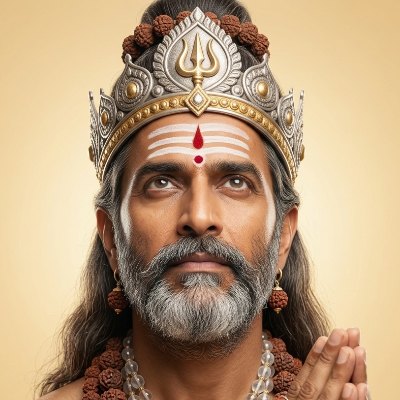
Vrishadhvaja is a king who appears in the Devi Bhagavata Purana and the Brahmavaivarta Purana as the founding figure of the royal lineage that would eventually give birth to the goddesses Tulasi and Vedavati, both understood in the tradition as partial incarnations of Mahalakshmi, the eternal consort of Vishnu. Vrishadhvaja was an intensely devoted worshipper of Shiva — the destroyer among the Hindu trinity — whose devotion extended to prohibiting the worship of all other deities in his kingdom, including the rites normally offered to Lakshmi and Sarasvati. This act of exclusive sectarian devotion provoked the sun god Surya to curse him with the permanent withdrawal of Lakshmi's grace from his family. The consequences of this curse cascaded through the subsequent generation, afflicting his son as well, until the two grandsons Dharmadhvaja and Kushadhvaja undertook penance to propitiate Lakshmi and restore what the curse had taken. Vrishadhvaja himself died while the curse was still in effect and does not appear again in the primary narrative after its pronouncement. The Brahmavaivarta Purana situates him within a lineage of successive Vaishnava kings descending from the Manu Dakshasavarni, noting that Vrishadhvaja was the first of this line to turn away from Vaishnava devotion toward exclusive Shaiva practice.
✦ The Name
The name Vrishadhvaja is a Sanskrit compound of vrisha, meaning bull, and dhvaja, meaning banner or standard. The name thus means one whose banner bears the bull — the bull being the vahana or vehicle of Shiva and one of the most prominent symbols of the Shaiva tradition. The name therefore encodes Vrishadhvaja's theological allegiance: he is, by his very name, a man who has placed Shiva's symbol as his standard. This naming convention makes his subsequent act of prohibiting all non-Shaiva worship a natural extension of his personal and dynastic identity rather than an aberration.
✦ Lineage
- Remote ancestry (Brahmavaivarta Purana account): The Brahmavaivarta Purana traces Vrishadhvaja's lineage to the Manu Dakshasavarni — identified in the Bhagavata Purana and Vishnu Purana as the ninth Manu, born of Varuna, the Vedic lord of cosmic waters and celestial order. From Dakshasavarni descended a line of kings: Dharmasavarni, Vishnusavarni, Devasavarni, and Rajasavarni — all identified in the Brahmavaivarta Purana as devoted Vaishnavas. Vrishadhvaja arose from this lineage and was the first to break with its Vaishnava tradition.
- Father: Not named in the available primary source passages. His paternal identity within the descendant line of Rajasavarni is implied by the Brahmavaivarta Purana's genealogical account but is not specified with a personal name in the sources consulted.
- Son (primary account — Puranic Encyclopaedia drawing on Devi Bhagavata Purana): Rathadhvaja — described as having died under the influence of the curse along with his father, before the grandsons Dharmadhvaja and Kushadhvaja were grown.
- Son (variant — Brahmavaivarta Purana): Hamsadhvaja — the Brahmavaivarta Purana names the intermediate son differently. Both accounts agree that this son died before the curse was resolved and that it was the grandsons who undertook the remedial penance.
- Grandsons: Dharmadhvaja and Kushadhvaja — the sons of Rathadhvaja or Hamsadhvaja who undertook the penance to propitiate Lakshmi, in response to which Mahalakshmi agreed to be born in their family. Dharmadhvaja's wife Madhavi gave birth to Tulasi, who became the sacred Tulasi plant. Kushadhvaja's wife Malavati gave birth to Vedavati, who is identified in the tradition with Sita, wife of Rama.
✦ The Prohibition and the Curse of Surya
The Devi Bhagavata Purana narrates that Vrishadhvaja, in his consuming devotion to Shiva, banned within his kingdom the worship of all deities other than Shiva. This prohibition specifically targeted the regular festivals and rites associated with Lakshmi — the goddess of fortune — and Sarasvati — the goddess of learning and the sacred arts — which were customarily observed throughout the kingdom. Surya, the sun god and one of the Adityas, was deeply agitated by this prohibition of the divine order of worship. He pronounced a curse on Vrishadhvaja: that Lakshmi would permanently withdraw her favour from him and from his lineage.
Shiva, learning of the curse, became angry on behalf of his devotee and pursued Surya with the intention of punishing him. Surya fled in fear, seeking refuge first with his father Kashyapa — the great primordial sage and progenitor of multiple races — and through Kashyapa reached Vishnu. Shiva arrived at Vishnu's abode in pursuit of Surya. The ensuing exchange between Shiva and Vishnu led to the revelation that, by the time the gods had been deliberating, a very great span of time had already passed on earth. Vishnu informed all assembled — including Shiva — that Vrishadhvaja was already dead, that his son too had died under the diminished fortune caused by the curse, and that the grandsons Dharmadhvaja and Kushadhvaja were at that very moment engaged in penance to Lakshmi in the hope of restoration. With this disclosure, the focus of the narrative passes to the grandsons, and Vrishadhvaja's own story closes at his death.
✦ Theological Significance
Vrishadhvaja functions within the Devi Bhagavata Purana's narrative as the originating cause of a chain of consequences that ultimately brings about the birth of two incarnations of Lakshmi on earth. His exclusive sectarian devotion — while arising from genuine reverence for Shiva — disrupts the cosmic balance of worship that sustains divine grace in the world. The Puranic tradition consistently presents such imbalances as requiring correction through the very channels they disrupt: it is Lakshmi's grace, withheld by the curse, that must be deliberately restored through Lakshmi's own consent to take birth in the cursed lineage. The narrative thereby frames Vrishadhvaja not as a villain but as a zealous devotee whose virtuous intention nonetheless produced unintended cosmic consequences — a pattern recognisable across numerous other Puranic episodes of boon, curse, and divine compensatory response.
✦ Textual Variants
The two primary textual sources for Vrishadhvaja's narrative — the Devi Bhagavata Purana and the Brahmavaivarta Purana — agree on the essential shape of his story: the prohibition of Lakshmi worship, Surya's curse, Shiva's pursuit of Surya, the deaths of Vrishadhvaja and his son, and the remedial penance of the grandsons. They differ on the name of the intermediate son and on the extent of the ancestral genealogy provided. The Devi Bhagavata Purana, as summarised in the Puranic Encyclopaedia, names the son Rathadhvaja and does not trace the remote ancestry. The Brahmavaivarta Purana names the son Hamsadhvaja and provides the extended genealogy through Dakshasavarni. Additionally, a secondary retelling found in some sources states that Surya sought refuge not only with Kashyapa but that the entire matter was brought before Vishnu through Brahma as intermediary — a slight variation in the sequence of divine intercession that does not affect the essential narrative.
✦ Connection to the Wider Genealogy
Vrishadhvaja stands at the head of the mortal lineage through which two of the most theologically significant births in the Vaishnava tradition occurred. Through his grandson Dharmadhvaja's daughter Tulasi, his lineage connects to Vishnu through the sacred plant that is the most beloved of all offerings to that god, and through the river Gandaki and the Shalagrama stone. Through his grandson Kushadhvaja's daughter Vedavati, his lineage connects to Rama — the seventh avatar of Vishnu — through Vedavati's rebirth as Sita and her marriage to Rama in the Treta Yuga. The Brahmavaivarta Purana's positioning of his ancestry within the lineage of Dakshasavarni Manu — himself a son of Varuna — gives his dynasty a cosmological depth extending from a future Manvantara of the cosmic cycle back to one of the principal Vedic gods.
✦ References
- Primary Sources
- Devi Bhagavata Purana, Skandha 9, Chapters 15–16: The principal source for the Vrishadhvaja narrative — his prohibition of Lakshmi worship, Surya's curse, Shiva's pursuit of Surya, the deaths of Vrishadhvaja and his son, and the subsequent penance of the grandsons. The Wisdomlib translation of chapter 16 confirms the passage where Vishnu informs the gods that Vrishadhvaja and his son are dead and the grandsons are already worshipping Lakshmi.
- Brahmavaivarta Purana, Prakriti Khanda: Extends the Vrishadhvaja narrative with a detailed ancestral genealogy tracing his lineage through Rajasavarni and the earlier Manu-descended kings to Dakshasavarni Manu; names the intermediate son as Hamsadhvaja rather than Rathadhvaja.
- Secondary Sources
- Mani, Vettam. Puranic Encyclopaedia. Motilal Banarsidass, 1975. Provides the summary of the Vrishadhvaja episode, names Rathadhvaja as the intermediate son, and contextualises the narrative within the broader Tulasi birth cycle.
- Wisdomlib.org — Devi Bhagavata Purana, Book 9, Chapter 16 translation: Provides the direct English rendering of the primary passage, confirming the chapter context and the Malavatī spelling of Kushadhvaja's wife's name.