
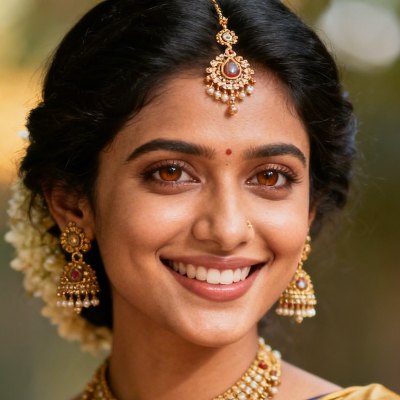
About
Devasena — Consort of Murugan, Goddess of Aspirations
Devasena · Devayanai · Deivanai · Deivayanai · Teyvanai · Tevayanai · Devasenapati-patni
Devasena is a Hindu goddess, the principal consort of Kartikeya — the war deity also known as Murugan, Skanda, and Subramanya, son of Shiva and Parvati — and is regarded as the embodiment of divine aspiration, ordered devotion, and celestial prosperity. Her name literally means "army of the gods," and in both the Sanskrit and Tamil traditions her identity is inseparably linked to Kartikeya's role as commander of the divine forces. She appears in the Mahabharata, multiple Sanskrit Mahapuranas, Sangam Tamil literature, and the Tamil Kanda Puranam, each giving different accounts of her parentage and origin. These accounts are not reconcilable and represent distinct textual traditions covering Vedic, epic, Puranic, and South Indian sources.
✦ The Name
The Sanskrit name Devasena is a compound of deva (deity, divine) and sena (army, host, force). Its primary meaning is "army of the gods" or "divine host," and Monier-Williams's Sanskrit dictionary notes that in Vedic and early classical usage the term referred to a host or company of celestial beings before it became the proper name of Kartikeya's consort. The Mahabharata itself glosses the name as a personification: the army of the devas given bodily form as Skanda's wife, so that Kartikeya's title Devasenapati — lord of Devasena — carries the double meaning of "husband of Devasena" and "commander of the divine army." The Tamil names Devayanai and Deivanai are adaptations of the Sanskrit compound, with the second element shifting through Tamil phonology. Deivanai can also be parsed as "divine female" or "celestial woman" in Tamil, a reading that complements the Sanskrit military meaning.
✦ Lineage — Textual Variants on Parentage
Devasena's parentage is one of the most extensively variant genealogical questions in the Puranic record. At least four distinct accounts exist across the primary texts and they cannot be harmonised.
- Daughter of Daksha Prajapati (Mahabharata, Vana Parva): In the Sanskrit epic, Devasena is recorded as a daughter of Daksha, the Prajapati (lord of progeny and facilitator of creation) who is a son of Brahma. In this account she and her sister Daityasena enjoy themselves at the Manasa lake when the asura Keshi abducts them; Daityasena consents to go with him, but Devasena refuses and calls on Indra for rescue. Indra comes to her aid, defeats Keshi, and promises to find her an invincible husband. This promise is fulfilled when Kartikeya is born and proves himself by defeating the demon armies.
- Daughter of Indra and Shachi (Sanskrit Puranas): The Brahmanda Purana (IV.30.105) and the Matsya Purana (159.8) record Devasena as a daughter of Indra, the king of the devas, and his wife Shachi; she is given in marriage to Kumara (Kartikeya) by her father after his military triumphs. Some Puranic passages, including accounts in the Skanda Purana, support this identification. The Shiva Purana refers to her as a daughter of Indra married to Kumara.
- Previous birth as Amritavalli, daughter of Vishnu (Tamil Skanda Purana manuscripts and Kanda Puranam): The Tamil recensions of the Skanda Purana record Devasena as the earthly incarnation of Amritavalli, a daughter of Vishnu and Lakshmi who was born from Vishnu's divine tears or divine light. In this tradition, Amritavalli performed austerities at Saravana Poigai to win Murugan, was directed by Murugan to be reborn as a human, presented herself to Indra at Mount Meru as the daughter of Mahavishnu, was raised by Indra's white elephant Airavata, and was subsequently given in marriage by Indra after Murugan's victory over Surapadman. Some passages of the Kanda Puranam describe Devayanai simply as Indra's daughter without the adoption story, making this a variant even within the Tamil tradition.
- Daughter of Mrityu or mind-born daughter of Brahma (scattered Puranic references): Some Puranic sources identify Devasena as a daughter of Mrityu, the personification of death, or as a mind-born being of Brahma. These identifications appear in secondary compilations and have not been traced to specific chapter-and-verse references in the primary texts used for this profile.
- Husband: Kartikeya (Murugan, Skanda, Subramanya) — the war deity, son of Shiva and Parvati, commander of the divine army, victorious over Tarakasura and Surapadman.
- Sister-wife: Valli — the incarnation of Sundaravalli, daughter of Vishnu and Lakshmi in the Tamil tradition; in the Mahabharata tradition, Daityasena is described as her sister rather than a co-wife.
✦ The Mahabharata Narrative
The Mahabharata's Vana Parva contains an extended account of Kartikeya's birth and marriage that provides the oldest Sanskrit literary record of Devasena. Here she and her sister Daityasena, as daughters of Daksha Prajapati, are enjoying themselves at the Manasa lake when the asura Keshi abducts both of them. While Daityasena willingly accompanies the demon, Devasena refuses and cries out for help. Indra comes, engages in combat with Keshi, and defeats him. In gratitude and recognition of Devasena's virtue, Brahma is consulted about a suitable husband for her; the answer is that a son born of Agni the fire deity would fulfil the requirement. Agni, in a complex episode involving the wives of the seven great sages, eventually produces the seed from which Kartikeya is born and nurtured by the Krittikas (the Pleiades star cluster). After Kartikeya proves his invincible martial prowess, Indra arranges his marriage to Devasena. In this narrative, Agni is ultimately identified with Shiva, and Kartikeya's parentage is assigned to the divine triad rather than a single deity. Because of his marriage to Devasena, Kartikeya becomes Devasenapati — a title that in this text carries the explicit double meaning of her husband and the commander of the divine forces.
✦ Marriage and Temple Presence
Across all traditions, Devasena's marriage to Kartikeya takes place after his military triumph — specifically after the defeat of either Tarakasura (Sanskrit tradition) or Surapadman (Tamil tradition). In the Tamil Kanda Puranam account, the wedding takes place at Tirupparankundram, one of Murugan's six principal temples (Arupadaiveedu) near Madurai, Tamil Nadu. In the Sanskrit Ramayana and some Purana traditions, Kartikeya's wedding is set in the divine realm without specifying a terrestrial site. After the marriage, the couple reside at Thiruttani in Tamil tradition, and at the celestial abode Svarga in some Sanskrit accounts. In temples throughout Tamil Nadu, Devasena stands to Murugan's left and Valli to his right.
✦ Textual Variants and Inconsistencies
The major inconsistency in Devasena's record is her parentage. The Mahabharata names her father as Daksha Prajapati; the Brahmanda and Matsya Puranas name her father as Indra; the Tamil Skanda Purana manuscripts name her previous birth's father as Vishnu, with Indra as her adoptive father in her earthly form; the Kanda Puranam in some passages presents her simply as Indra's daughter. These four accounts each belong to distinct and internally coherent literary traditions, and no primary text synthesises them. The Mahabharata account further differs from all others in making Daityasena her sister (a sister who chooses the demon) rather than giving her Valli as a co-wife; the co-wife relationship belongs entirely to the Tamil tradition.
The relationship between Devasena and Valli is also presented inconsistently. The Kanda Puranam describes the two wives as harmonious. The Paripatal (Sangam corpus) describes armed conflict between their followers. The Jayantipura Mahatmya records that Devayanai cursed Valli to be born on earth for mocking her. Folk ecal literature records persistent mistrust between the co-wives. These accounts represent genuinely different readings of the relationship and are not reconciled in any text.
✦ Theological Significance
Devasena embodies Kriya Shakti — the power of action, structured devotion, and ritual correctness — in South Indian Murugan theology. Her path to Murugan is through discipline, formal procedure, and the ordained hierarchy: penance, divine approval, formal adoption, and a Vedic marriage ceremony arranged by Indra. She represents the devotee who approaches god through the established structures of dharma. In the Mahabharata her significance is more martial and political: she is the personification of the divine army's capacity to be led and won, and her husband's title Devasenapati binds his identity as warrior and spouse into one. In temple theology her role is specifically distinguished from that of Valli: together the two consorts embody the two inseparable energies of Murugan's divine power.
✦ Iconography and Worship
Devasena has no independent temples dedicated to her. She is worshipped exclusively as Murugan's consort, installed to his left in his temple shrines. Festival icons used in temple processions depict Murugan flanked by both consorts. A Tuesday fast is associated with the worship of Murugan's consort goddesses. The Tirupparankundram temple near Madurai plays a special role in Devasena's cult as the site of her marriage, and she holds a more prominent presence there than at most other Murugan temples.
✦ References
- Primary Sources
- Mahabharata, Vana Parva — The oldest Sanskrit literary source for Devasena; records her as the daughter of Daksha Prajapati, the abduction episode with Keshi, Indra's rescue, the promise of an invincible husband, and the eventual marriage to Kartikeya after his military triumph over Taraka's forces.
- Brahmanda Purana, IV.30.105 — Names Devasena as a daughter of Indra, married to Kumara; no adoption narrative or previous Vaishnava birth is mentioned.
- Matsya Purana, 159.8 — Corroborates the Brahmanda Purana, recording Indra giving his daughter Devasena in marriage to Kartikeya.
- Tamil manuscripts of the Skanda Purana (South Indian recensions) — Records Devasena as the earthly incarnation of Amritavalli, daughter of Vishnu, who was adopted by Indra and given to Murugan after his victory over Surapadman.
- Kanda Puranam (Kacciyappar, 14th century CE) — The Tamil Skanda Purana adaptation providing the fullest Tamil narrative of Devayanai's marriage; also contains passages that describe her simply as Indra's daughter without the adoption story.
- Thirumurugatrupadai (Sangam corpus) — Ancient Tamil literary attestation of Murugan accompanied by Devayanai; among the earliest textual references to the consort relationship.
- Paripatal (Sangam corpus) — Records conflict between Devayanai's adherents and Valli's hunter tribe, contra the harmony described in Kanda Puranam.
- Modern and Secondary Sources
- Wikipedia, "Devasena" — Comprehensive overview of the multiple parentage traditions with specific text citations; used as a guide to cross-reference sources.
- Wisdomlib.org, "Devasena — definitions" — Compiles chapter-and-verse references from Brahmanda Purana, Matsya Purana, Mahabharata, Shiva Purana, and Sanskrit lexicons.
- Handwiki, "Religion: Devasena" — Documents the Tamil adoption narrative and the Kanda Puranam variant alongside the Sanskrit Puranic parentage traditions.