
About
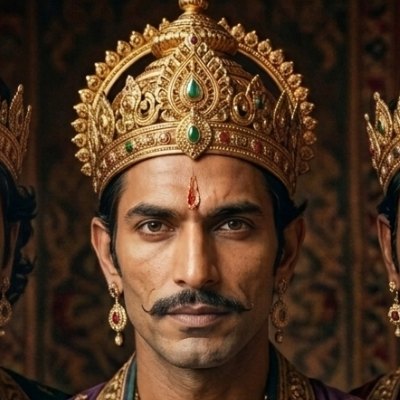
Madhu — Imperial Founder of the Madhava Line, Namesake of Krishna's Epithet Madhava
Madhu · Madhava (as a derived clan name) · Madhu I (to distinguish from other figures of the same name)
Madhu is a king of the Kroshtu branch of the Lunar Dynasty, recorded in the Vishnu Purana and the Bhagavata Purana as the son of Devakshetra and a major imperial figure in the Yadava genealogy. He is the ancestor from whose name the Madhava clan designation is derived, and it is in his honour that Krishna — born many generations later in this same lineage — is so frequently and prominently addressed as Madhava throughout the Bhagavad Gita, the Mahabharata, and the Puranas. Madhu is also associated with the forest and territory known as Madhuvana on the banks of the Yamuna river, which in some traditions is said to have taken its name from him, and from which the city of Mathura — the birthplace of Krishna — is considered to have developed. From Madhu and his successors descended the kings Kuruvasa, Purudvant, Jantu, and finally Satvata — the patriarch of the celebrated Satvata clans that produced the Andhakas, Vrishnis, Kukuras, Bhojas, and Surasenas, and ultimately Vasudeva and his son Krishna.
✦ The Name and the Madhava Epithet
The Sanskrit name Madhu means honey, sweetness, or the season of spring. It is also the name of a demon slain by Vishnu in several Puranic narratives — a figure entirely distinct from this Yadava king. The clan designation Madhava, derived from Madhu, means one belonging to or descended from the Madhu dynasty. This is a vṛddhi derivation — the standard Sanskrit grammatical process by which a personal name is lengthened to form a patronymic or clan name. The Wikipedia article on the Madhava epithet confirms that the word Madhava as applied to Krishna refers specifically to his lineage as one who appeared from the Madhu dynasty, not merely as a generic epithet of sweetness, though later commentators such as Adi Shankara additionally interpreted Madhava through the root meaning consort of Lakshmi. Both the genealogical and the theological interpretations coexist in the tradition; the genealogical one — direct descent from King Madhu — is the oldest and most contextually grounded.
In the Bhagavad Gita, Arjuna addresses Krishna as Madhava at a pivotal moment of crisis before the battle of Kurukshetra, and the title recurs throughout the text. Every such usage is, in the Puranic understanding, a direct reference to this ancestral king. The same genealogical logic applies to the clan name Varshneya — derived from a later ancestor Vrishni — and to Dasharha, derived from the earlier ancestor Dasharha profiled above.
✦ Lineage
- Remote ancestor: Dasharha — the founder of the Dasharha sub-clan, profiled above, from whose succession Madhu is reached through the intervening kings Vyoman, Jimuta, Vikriti, Bhimaratha, Navaratha, Dasharatha (a separate Yadava king), Shakuni, Karambhi, Devarata, and Devakshetra — ten kings standing between Dasharha and Madhu in the Vishnu Purana's sequence.
- Father: Devakshetra — son of Devarata in the Vishnu Purana's sequence; no independent narrative is recorded of him.
- Son: Anavaratha (also Kuruvasa or Anshu in variant texts) — Madhu's immediate successor. The Vishnu Purana gives the son's name as Anavaratha; later in the same passage the sequence continues through Kuruvatsa, Anuratha, Puruhotra, and Anshu to Satvata. Some variant traditions compress or rename these intermediate figures.
- Key descendants: Through Anavaratha and the succeeding kings Kuruvasa, Purudvant, and Jantu, the lineage reaches Satvata — the patriarch of all the Satvata clans, whose sons Bhajamana, Devavridha, Andhaka, and Vrishni each founded separate and celebrated sub-dynasties.
✦ Madhu and the Madhuvana
Several Puranic and historical traditions associate King Madhu with the forest-territory of Madhuvana on the banks of the Yamuna, understood in these sources as the original seat of Yadava power in the northern region. The Harivamsha tradition, as recorded in the Wikipedia article on the Yadavas, states that Satvata was a descendant of King Madhu, and that Satvata's son Bhima was contemporary with Rama of the Solar dynasty — placing Madhu in the broad period just before or contemporary with the events of the Ramayana. Some traditions further identify the city of Mathura, the birthplace of Krishna, as having taken its name from a forest or territory associated with Madhu's reign, though this etymology is not universally corroborated in all sources. The Yadavas ruling at Dwaraka in Krishna's period were also known collectively as the Madhus — alongside being called Dasharhas — indicating that Madhu's name remained a living clan identity across many centuries of Yadava tradition.
✦ Textual Variants
The Vishnu Purana (Book 4, Chapter 12) gives the sequence from Dasharha to Satvata as Dasharha — Vyoman — Jimuta — Vikriti — Bhimaratha — Navaratha — Dasharatha — Shakuni — Karambhi — Devarata — Devakshetra — Madhu — Anavaratha — Kuruvatsa — Anuratha — Puruhotra — Anshu — Satvata. The Bhagavata Purana (Ninth Canto, Chapter 24) gives a partially divergent sequence for portions of this stretch with different intermediate names. The name of Madhu's son is given as Anavaratha in the Vishnu Purana but the subsequent three or four names before Satvata show variation across texts. These divergences are characteristic of Puranic dynastic lists for intermediate kings and do not affect Madhu's own position or identification.
✦ Connection to the Wider Genealogy
Madhu is the twenty-sixth king in the chain of thirty connecting Shashabindu to Satvata. He is four generations above Satvata and thus stands at the immediate threshold of the most historically consequential branch of the entire Yadava genealogy. Every time the name Madhava is used for Krishna — in the Bhagavad Gita, in the Mahabharata's narrative, in Puranic hymns, and in daily Vaishnava devotional practice — the reference reaches back through the lineage to this specific ancient king. In the genealogical framework of the tree, Madhu functions as the closing imperial figure of the long bridge between Shashabindu and Satvata, and as the man whose name became the most theologically resonant of all the ancestral epithets preserved in Krishna's tradition.
✦ References
Primary Sources
- Vishnu Purana, Book 4, Chapter 12: Primary genealogical source placing Madhu as son of Devakshetra and father of Anavaratha, within the long sequence from Dasharha to Satvata descending from Vidarbha's line through Kratha.
- Bhagavata Purana, Ninth Canto, Chapter 24: Corroborates Madhu's position within the Yadava dynastic list descending from Kroshtu through Jyamagha and Vidarbha, leading to Satvata.
- Harivamsha: Preserves the tradition that Satvata was a descendant of King Madhu, placing Madhu's era in the period contemporary with or preceding the Ramayana age.
- Mahabharata and Bhagavad Gita: The epithet Madhava is used repeatedly for Krishna throughout the epic, including in the Bhagavad Gita where Arjuna addresses Krishna by this name; the genealogical basis is the lineage traced to King Madhu.
Secondary and Reference Works
- Wikipedia, "Madhava (Vishnu)" article: Explains the Sanskrit derivation of Madhava from Madhu and confirms that the epithet refers to Krishna's lineage as one who appeared from the Madhu dynasty, alongside the theological interpretations of Adi Shankara and others.
- Grokipedia, "Madhava (Vishnu)" article: Provides detailed etymological analysis of the vṛddhi derivation Madhava from Madhu and contextualises the Harivamsha and Bhagavad Gita usages within the ancestral lineage framework.
- Wikipedia, "Yadava" article: Records the Harivamsha tradition placing Satvata as a descendant of King Madhu and notes that the Yadavas at Dwaraka were known collectively as the Madhus.
- Scriptures.redzambala.com, Vishnu Purana Book 4 Chapter 12 translation: Supplies the complete translated sequence from Dasharha through Madhu to Satvata, confirming the precise genealogical chain.