
About
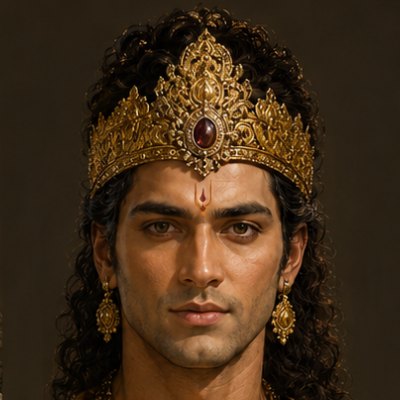
Brihadbala — Son of Devabhaga, Prince of the Vrishni Clan
Brihadbala · Brhadbala · Mitravan · Mitravat
Brihadbala is recorded in the Puranic genealogies of the Yadava lineage as a son of Devabhaga — a younger brother of Vasudeva, the father of Krishna — and thus belongs to the Vrishni branch of the Yadava confederation rather than to the Kukura sub-clan. His mother is identified in the Padma Purana tradition as Kamsaa, a daughter of Ugrasena, the king of Mathura of the Kukura sub-clan, making Brihadbala a figure whose parentage bridges the two principal families of the late Dvapara Yuga Yadava world — the Vrishni line through his father Devabhaga and the Kukura-Ugrasena line through his mother. He is named in the Bhagavata Purana's ninth skanda alongside his brother Chitraketu as one of the sons of Devabhaga. A variant Puranic tradition, found in the Agni Purana, records the name of Devabhaga's second son as Mitravan or Mitravat rather than Brihadbala, constituting a textual discrepancy parallel to those encountered elsewhere in the Yadava genealogical lists. This Brihadbala of the Vrishni line is an entirely distinct figure from the better-known Brihadbala of the Solar dynasty — a king of Kosala descended from Rama through Kusha — who fought on the Kaurava side in the Kurukshetra War and was killed by Abhimanyu, and who belongs to an altogether different lineage and tradition.
✦ The Name
Brihadbala is a Sanskrit compound formed from brihat, meaning great, large, or mighty, and bala, meaning strength, force, or army. The compound thus carries the sense of one of great strength or mighty force, a name of martial character appropriate to a member of a Yadava royal family. The variant name Mitravan, recorded in some Puranic traditions for the same generational slot, is a Sanskrit compound from mitra, meaning friend or the sun, and van, a suffix indicating one who possesses the quality — thus one who has friends or one endowed with the sun's qualities. The two names belong to entirely different semantic fields, which is consistent with the pattern observed elsewhere in the Yadava genealogical lists where variant traditions assign semantically unrelated names to the same generational position rather than offering phonetically similar alternatives that might be explained by scribal error.
✦ Lineage
- Father: Devabhaga — a younger brother of Vasudeva, who was the father of Krishna. Devabhaga thus belonged to the Vrishni branch of the Yadava confederation, the lineage descending from Vrishni within the broader Yadu dynasty. Devabhaga is named in the Bhagavata Purana's ninth skanda as one of the sons of Shura, the prominent Vrishni patriarch whose family includes Vasudeva and several other notable figures of the late Dvapara Yuga.
- Mother: Kamsaa — identified in the Padma Purana tradition as a daughter of Ugrasena, the king of Mathura of the Kukura sub-clan, and given in marriage to Devabhaga. If this identification is accurate, Brihadbala's maternal grandfather was Ugrasena himself, making Kamsa — Ugrasena's eldest son and the adversary of Krishna — Brihadbala's maternal uncle. This would place Brihadbala at the intersection of the two principal family groupings whose conflicts and alliances define the central narrative of the Bhagavata Purana's tenth skanda. The Bhagavata Purana at chapter 24, verse 25 of the ninth skanda records daughters of Ugrasena, with Kamsaa named among them, though the specific attribution of Kamsaa as Devabhaga's wife comes from the Padma Purana rather than the Bhagavata itself at this passage.
- Paternal grandfather: Shura — a senior Vrishni patriarch and father of Vasudeva, Devabhaga, and several other sons and daughters. Shura is one of the most important figures in the Vrishni genealogical tradition, as his children include not only Vasudeva the father of Krishna but also Pritha — later known as Kunti — who was given in adoption to Shura's cousin Kuntibhoja and who became the mother of the Pandavas.
- Paternal uncle: Vasudeva — the most prominent son of Shura, husband of Devaki and Rohini, and the father of Krishna and Balarama respectively. Vasudeva is one of the central figures of the Bhagavata Purana's tenth skanda narrative. As Devabhaga's elder brother, Vasudeva was Brihadbala's paternal uncle, making Krishna his first cousin.
- Cousin: Krishna — son of Vasudeva and Devaki, the supreme deity in his human incarnation as described in the Bhagavata Purana and the Vishnu Purana. Krishna was the son of Brihadbala's paternal uncle Vasudeva, making him Brihadbala's first cousin within the Vrishni family.
- Brother: Chitraketu — named in the Bhagavata Purana alongside Brihadbala as a son of Devabhaga. Chitraketu is the elder of the two brothers as recorded in the Bhagavata Purana's enumeration at chapter 24, verse 28 of the ninth skanda.
✦ Disambiguation from the Solar Dynasty Brihadbala
The name Brihadbala is borne by at least two distinct figures in the Puranic and epic tradition, and their careful separation is essential for accurate genealogical recording. The more extensively narrated Brihadbala is a king of the Kosala kingdom belonging to the Solar dynasty, a descendant of Rama through his son Kusha, who appears in the Bhagavata Purana's ninth skanda at chapter 12 in the Solar dynasty genealogy and in the Vishnu Purana in the corresponding section. This Solar dynasty Brihadbala fought on the side of the Kauravas in the Kurukshetra War as the king of Kosala and was killed in battle by Abhimanyu, Arjuna's son, on the thirteenth day of the war as described in the Mahabharata's Drona Parva. He is also mentioned in the Linga Purana under the alternate name Srutayu. This Solar dynasty figure has no connection whatsoever to the Vrishni-lineage Brihadbala who is the subject of this profile, beyond sharing the same name. A further figure named Brihadbala who was a son of Suba, king of Gandhara, appears in the Mahabharata's Adi Parva in connection with the Panchali Svayamvara — this is a third distinct individual also sharing only the name.
✦ Textual Variants and Inconsistencies
The Bhagavata Purana at chapter 24, verse 28 of the ninth skanda names Chitraketu and Brihadbala as the two sons of Devabhaga. The Agni Purana at chapter 275, verse 20 is reported in some reference traditions to give Mitravan or Mitravat rather than Brihadbala as the name of Devabhaga's second son at the equivalent genealogical position. This variant could not be independently confirmed from primary source access during the preparation of this profile and is therefore recorded as a reported variant requiring verification against the primary text of the Agni Purana directly. If confirmed, this variant is structurally similar to other name discrepancies encountered throughout the Yadava genealogical lists — such as Vahni and Dhrista for the same position in the Kukura lineage — where different Puranic traditions assign semantically unrelated names to the same generational slot rather than offering phonetically explicable scribal variants. The combining of Brihadbala and Mitravan into a single genealogical node, as suggested in some modern reference treatments, is a scholarly reconciliation rather than a claim made by any primary text.
✦ Connection to the Wider Genealogy
Brihadbala occupies a position at the confluence of two major Yadava family branches within the late Dvapara Yuga genealogical framework. Through his father Devabhaga he belongs to the Vrishni line descending from Shura, the same patrilineal house that produces Vasudeva and Krishna. Through his mother Kamsaa — daughter of Ugrasena — he is connected to the Kukura sub-clan line that this series of profiles has traced from Kukura through twelve generations to Kamsa and his siblings. Brihadbala himself receives no independent narrative episode in the primary sources beyond his naming in the genealogical enumeration, and his line's continuation beyond his own generation is not recorded in the primary sources consulted for this profile. He functions within the genealogical record primarily as a marker of the family connections between the Vrishni and Kukura branches of the Yadava confederation in the generation contemporary with Krishna.
✦ References
- Bhagavata Purana, Ninth Skanda, Chapter 24, verse 28: The primary source naming Chitraketu and Brihadbala as the two sons of Devabhaga within the Vrishni genealogical enumeration, placing them as members of the generation contemporary with Krishna.
- Bhagavata Purana, Ninth Skanda, Chapter 24, verse 25: The source enumerating the daughters of Ugrasena, including Kamsaa, providing the basis for identifying Brihadbala's maternal connection to the Kukura-Ugrasena line.
- Padma Purana, Chapter 5: The source identifying Kamsaa as the wife of Devabhaga and thus the mother of Brihadbala and Chitraketu, a detail that connects the Vrishni and Kukura lineages through this marriage.
- Agni Purana, Chapter 275, verse 20: The reported source for the variant name Mitravan or Mitravat in place of Brihadbala for Devabhaga's second son; this variant requires direct verification against the primary text.
- Bhagavata Purana, Ninth Skanda, Chapter 12, verses 8–9: The source for the entirely separate Solar dynasty figure named Brihadbala — a descendant of Rama through Kusha — cited here to establish the distinction between that figure and the Vrishni-lineage Brihadbala who is the subject of this profile.
- Mahabharata, Drona Parva: The source for the narrative of the Solar dynasty Brihadbala's death at the hands of Abhimanyu during the Kurukshetra War, cited for disambiguation purposes only.
- Wisdomlib — definition of Brihadbala: A modern Sanskrit reference resource documenting the multiple figures bearing this name across the tradition and confirming the separate attestation of a son of Devabhaga under this name.
- Puranic Encyclopaedia by Vettam Mani (1975): A modern reference work providing consolidated entries on the figures named Brihadbala across the Puranic and epic tradition, relevant for disambiguation and cross-checking of the Vrishni-lineage figure's genealogical position.