
About
Valli — Consort of Murugan, Goddess of Devoted Love
Valli · Valli Amma · Sundaravalli (previous birth) · Valliyammai
Valli is a Hindu goddess and the second consort of Murugan — the war deity also known as Kartikeya, Skanda, and Subramanya, son of Shiva and Parvati — venerated throughout Tamil Nadu and wherever the Murugan cult is observed. Born on earth into the Kurava mountain tribe and raised as the adopted daughter of the chieftain Nambirajan, she grew up as a huntress harbouring deep devotion for Murugan. In the Tamil scriptural tradition, principally the Tamil manuscripts of the Skanda Purana and the Kanda Puranam composed by Kacciyappar in the fourteenth century CE, her earthly birth is the reincarnation of a celestial being named Sundaravalli, recorded as a daughter of Vishnu and Lakshmi who performed austerities to win Murugan as her husband. The courtship of Valli by Murugan — conducted through disguise, playful trials, and divine assistance from Ganesha — is one of the most celebrated narrative cycles of Tamil Murugan devotion and is attested across literary, folk, and temple traditions. She is also attested, without the Vaishnava celestial origin, in the ancient Tamil Sangam corpus.
✦ The Name
The Tamil word Valli (வள்ளி) primarily denotes a creeper or climbing plant, particularly the sweet potato creeper (Ipomoea batatas). By poetic extension in Tamil literary convention it is used as a term for a slender, graceful woman, analogous to the Sanskrit use of lata (creeper) for a woman. Her name is thus both topographic — referring to Vallimalai, the hill where the creeper grows and where she was found — and descriptive of her graceful form. The name also resonates with her celestial identity as Sundaravalli, in which valli carries the same creeper-woman imagery combined with sundara (beauty). In Sri Lanka the same figure is associated with Kataragama, and local Vedda tradition carries her name and worship in slightly variant forms.
✦ Lineage
- Celestial parentage (Tamil Skanda Purana / Kanda Puranam): Vishnu (Narayana) — the preserver deity — and Lakshmi (Sri) — the goddess of fortune — as Sundaravalli in her previous birth.
- Earthly birth-father (Kanda Puranam variant): Sivamuni — an ascetic practising austerities on Vallimalai whose passionate glance at a doe caused the doe to conceive and give birth to Valli. One sub-tradition identifies Sivamuni as Vishnu himself in mortal birth, under a curse from the sage Kanva.
- Earthly foster-father: Nambirajan (Nambi, Nambi Raja) — chieftain of the Kurava mountain tribe at Vallimalai, who found the infant Valli in a tuber pit among sweet potato creepers and raised her as his daughter.
- Husband: Murugan (Kartikeya, Skanda, Subramanya) — the war deity, son of Shiva and Parvati; he wooed Valli through a celebrated series of disguised encounters and married her at Vallimalai.
- Sister-wife: Devasena (Devayanai) — the incarnation of Amritavalli, Murugan's first consort; the two are venerated together as Murugan's paired consorts in all his principal temples.
- Celestial sister (previous birth): Amritavalli — daughter of Vishnu and Lakshmi in the Tamil tradition, reborn as Devasena.
✦ Birth and Upbringing
The Kanda Puranam records that Sundaravalli, having received Murugan's promise that he would marry her in her next earthly birth, descended into human incarnation on Vallimalai. The mechanism of this descent involves Sivamuni, the ascetic. During a moment of distraction from his meditation, Sivamuni looked with desire at a doe passing the hermitage; the doe became pregnant as a result and gave birth to a female child. The doe, unable to care for a human infant, left the child near a pond or among the tubers of the valli creeper. Nambirajan, the Kurava chieftain, who had long prayed to have a daughter, came upon the infant while digging for edible tubers and took her home. She was named Valli, after the creeper plants and the hill. She grew up as the cherished daughter of Nambirajan and became a fierce, skilled huntress.
✦ The Courtship by Murugan
The courtship narrative is the central episode of Valli's mythology and is narrated at length in the Kanda Puranam. Valli, by the time she reached the age of twelve, was set to guard the millet fields of her tribe against birds and animals, a common task for young girls in the Kurunji (mountain) landscape celebrated in Tamil Sangam poetry. Murugan, desiring to fulfil his promise and win Valli as his wife, came to her in disguise as a young hunter. Valli rebuffed him. He returned in the guise of an aged Shaiva mendicant, but she again rejected his advances. In this second encounter, Murugan called upon his brother Ganesha — the elephant-headed deity, son of Shiva and Parvati — to assist him. Ganesha came in the form of a wild elephant and charged at Valli, terrifying her. She fled and threw herself against the aged mendicant for protection. When the disguise was revealed and Murugan took his true form before her, she recognised him and accepted him.
Nambirajan, learning of Valli's absence in the company of a stranger, sent out a search party. When they found the couple, the tribesmen attacked Murugan with weapons; their arrows and blows had no effect on the deity. The chieftain and his men fell lifeless. Valli was devastated. She pleaded with Murugan to restore her family. Murugan instructed her to revive them herself; she touched the fallen men and all were immediately restored to life. Recognising who stood before them, Nambirajan and his tribe prostrated themselves and celebrated the marriage of Valli to Murugan. The wedding site is held to be Vallimalai, and after the marriage the couple settled at Thiruttani in the Tamil tradition.
✦ Textual Variants and Inconsistencies
Valli's identity as the reincarnation of Sundaravalli, daughter of Vishnu, is attested in the Tamil Skanda Purana manuscripts and the Kanda Puranam and is specific to those South Indian traditions. It does not appear in the standard Sanskrit recensions of the Skanda Purana or in any Sanskrit Mahapurana. Scholars note that this Vaishnava parentage was introduced through South Indian manuscript traditions and may reflect the theological synthesis of Shaiva and Vaishnava devotion characteristic of Tamil religious culture.
The account of Valli's earthly birth varies. The Kanda Puranam gives the Sivamuni-and-doe version. Some sources describe her as simply found abandoned in a tuber pit without specifying a human father. The sub-tradition identifying Sivamuni as Vishnu in mortal form under Kanva's curse is present in some devotional retellings but cannot be traced to a specific chapter in a primary text with the precision available to this profile.
The nature of Valli's relationship with Devasena varies sharply across sources. The Kanda Puranam and the Skanda Purana Tamil tradition present harmonious co-wives who together complete Murugan. The Paripatal from the Sangam corpus presents armed conflict between their respective communities. The Jayantipura Mahatmya presents Valli's earthly birth not as the fulfilment of a positive penance-vow but as a punishment imposed by Murugan for her mockery of Devayanai. Folk ecal traditions record mutual jealousy and quarrel. An alternate ending found in Sri Lankan lore associated with the Kataragama temple has Murugan remain in the forest with Valli rather than settling at Thiruttani.
✦ Theological Significance
Valli embodies Ichha Shakti — the power of desire, will, and spontaneous devotional love — in South Indian Murugan theology. Her path to the divine is not through ritual hierarchy or formal procedure but through ardent personal longing, patient endurance, and complete surrender to the god she loves. She is the soul that finds Murugan not in the celestial courts of Indra but in the millet fields of a mountain tribe. The contrast with Devasena is theologically deliberate: together the two consorts represent the two complete paths of devotion — structured piety and passionate love — and together they constitute the fullness of Murugan's Shakti.
✦ Iconography and Worship
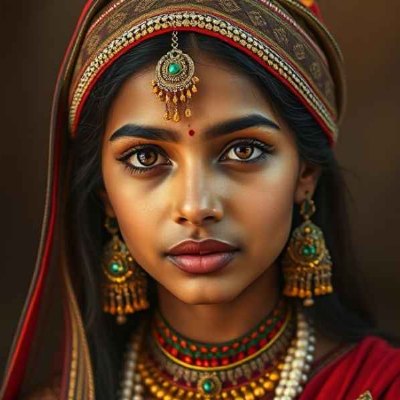
As Valli, she stands to Murugan's right in the standard temple icon, with Devasena on his left. She is depicted as a young woman, sometimes in the attire or ornaments of a mountain tribal girl in Tamil iconography, reflecting her earthly origins among the Kurava. She carries no independent temple cult but is venerated as Murugan's inseparable consort in all his principal shrines. The Vallimalai temple in the Vellore district of Tamil Nadu, at the hill of her birth and marriage, holds the most specific association with her. Valli Kalyanam — the festival commemorating her wedding to Murugan — is celebrated annually in Murugan temples on the Vaikasi Visakam day. In Sri Lanka, the Kataragama temple preserves the strongest independent Valli tradition, maintained by Vedda communities who consider themselves descendants of her foster-father Nambirajan's tribe.
✦ Connection to the Wider Genealogy
Through her previous celestial birth as Sundaravalli, Valli is a daughter of Vishnu the preserver and Lakshmi the goddess of fortune in the Tamil tradition, connecting her to the supreme Vaishnava lineage. Through her marriage to Murugan she is connected to the Shaiva divine family: Murugan's parents are Shiva the destroyer and Parvati, daughter of Himavan the mountain deity; his brother is Ganesha, who plays a direct role in her marriage. Devasena, her co-wife, was herself Amritavalli in her previous birth — Valli's own sister in the celestial existence — making their relationship as co-wives a continuation of their sisterhood from a prior life. Through her earthly foster-father Nambirajan of the Kurava tribe, she is linked to the mountain pastoral world of ancient Tamil Sangam literature and to the Vedda communities of Sri Lanka who preserve her oldest known folk traditions.
✦ References
- Primary Sources
- Tamil manuscripts of the Skanda Purana (South Indian recensions) — Records Valli as the earthly incarnation of Sundaravalli, daughter of Vishnu; this tradition is not present in the standard Sanskrit Skanda Purana manuscripts.
- Kanda Puranam (Kacciyappar, 14th century CE) — The Tamil adaptation of the Skanda Purana providing the fullest narrative of Valli's birth from a doe on Vallimalai, her upbringing by Nambirajan, the millet-field courtship episodes, Ganesha's role as elephant, the falling of the tribesmen and their restoration, and the marriage at Vallimalai.
- Thirumurugatrupadai (Sangam corpus, ancient Tamil literature) — One of the earliest literary attestations of Murugan with his consorts; predates the Vaishnava parentage tradition and attests to the pre-Puranic antiquity of the Valli figure in Tamil devotion.
- Paripatal (Sangam corpus) — Records conflict between Devayanai's and Valli's adherents, providing a significant counterpoint to the Kanda Puranam's harmony narrative.
- Jayantipura Mahatmya — Records a variant in which Valli's earthly birth is a punishment from Murugan for mocking Devayanai, inverting the positive penance-and-boon motivation of the Kanda Puranam account.
- Modern and Secondary Sources
- Wikipedia, "Valli" — Provides a sourced overview of the multiple birth variants, Sangam sources, the Kanda Puranam narrative, and the Sri Lankan Kataragama tradition.
- Shanlax Journals, "Valli: A Venerated Folk Deity" — Academic paper treating Valli across Sanskrit, Tamil literary, and folk traditions, with attention to the regional scope of the South Indian Skanda Purana manuscript tradition.
- Grokipedia, "Valli" — Documents the Kanda Puranam birth and courtship narratives in detail, including the Sivamuni-doe account and the disguise episodes.
- Hindupedia, "Valli" and related entries — Secondary compilation of Puranic and Tamil scriptural references to Valli and her relationship to Murugan.