
About
Trinas — The Grasses and Straw, Daughters of Kashyapa and Ira
Trina · Trinani · grass-class · Trina-varga · straw plants
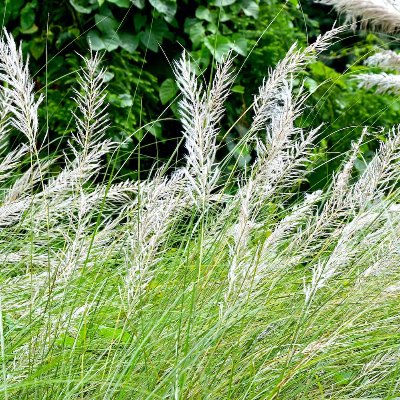
The Trinas are the class of grasses, rushes, and straw plants born as daughters of the primordial sage Kashyapa and his wife Ira. They represent one of the six named categories of plant life that the Vishnu Purana and Vayu Purana enumerate as the offspring of this couple, and they constitute a cosmogonically significant group because grasses and straw are among the most ecologically foundational plants — forming the ground cover of the earth, sustaining grazing animals, and furnishing material for sacrificial rites. Kashyapa, counted among the Saptarishis or seven great sages, is presented in the Puranas as a universal progenitor who fathered the plant kingdom through Ira and the animal and divine kingdoms through his other wives.
✦ The Name
The Sanskrit word Trina means grass, blade of grass, or straw, and in its plural form Trinani it refers to the class of grasses collectively. Classical Sanskrit usage applies Trina broadly to any slender-stemmed, blade-leaved, low-growing plant of the grass family, as well as to rushes and straw. The word carries a secondary connotation of insignificance or lightness — something as worthless as a blade of grass — but in the Puranic genealogical context the Trinas are assigned a dignified origin as daughters of a great sage. The Vedic tradition, particularly the Atharvaveda, also invokes specific grasses such as Darbha (Kusha grass, Desmostachya bipinnata) as sacred plants with protective and purificatory powers, suggesting that even within the Trina class certain members held ritual prominence.
✦ Lineage
- Father: Kashyapa — one of the seven great sages (Saptarishis), a Prajapati or progenitor-lord, son of the sage Marichi who was himself born of Brahma; the Puranas cast him as the foremost progenitor of all created beings
- Mother: Ira — a daughter of the progenitor Daksha, given as one of several wives to Kashyapa; specifically associated with the plant kingdom in the Puranic enumeration; also rendered as Ida in some textual variants
- Siblings through Ira (same mother and father): Oshadhis (herbs and medicinal plants), Gulmas (shrubs and bushes), Vallis (climbing creepers), Latas (creepers and vines), and Vrikshas (trees)
✦ Role in Puranic Cosmogony and Vedic Ritual
Within the Puranic taxonomy of Ira's six plant-offspring, the Trinas represent the most widespread and ecologically pervasive category. Grasses cover the largest surface area of the terrestrial world, sustaining the great herbivorous animals upon which the food chain depends, and providing the thatching, bedding, and sacrificial materials foundational to human settlement and Vedic ritual practice.
The Kusha or Darbha grass, a specific member of the Trina class, is of particular importance in Vedic and Puranic ritual: it is used to purify the ritual space, to seat officiants and deities, and as a sacred material in funeral rites. The Mahabharata and several Puranas narrate episodes in which Kusha grass plays a decisive role in ritual and narrative contexts, testifying to the high ritual significance ascribed to at least some members of the grass class even as grasses in general are proverbially considered insignificant.
✦ Connection to the Wider Genealogy
The Trinas, as daughters of Kashyapa, share cosmogonic ancestry with the full range of beings that the Puranas attribute to Kashyapa's progeny — the Adityas, Daityas, Danavas, Nagas, Garudas, and many other classes. Like all six plant groups born of Ira, the Trinas fall under the sovereignty of Soma, the moon deity, who is described as the lord and nourisher of all plant life in the Puranic cosmological system.
✦ References
- Primary Sources
- Vishnu Purana, Book I, Chapter 15: Names Trinas among the plant daughters of Kashyapa and Ira.
- Vayu Purana, Chapter 69: Parallel enumeration confirming the Trina class as born of Ira.
- Atharvaveda, Book XIX, Hymn 32 (and related hymns): Hymns to Darbha (Kusha grass) that establish the sacred status of this pre-eminent member of the grass class.
- Mahabharata, Adi Parva, Chapter 65: Genealogical enumeration of Kashyapa's wives and offspring.
- Secondary Sources
- Mani, Vettam. Puranic Encyclopaedia. Motilal Banarsidass, 1975: Covers the offspring of Ira and the broader plant taxonomy of the Puranas.
- Monier-Williams, M. A Sanskrit-English Dictionary. Oxford, 1899: Defines Trina and its botanical and proverbial usages.