
About
Oshadhis — The Herbs and Medicinal Plants, Daughters of Kashyapa and Ira
Osadhis · Aushadhis · Oshadhi-varga · medicinal herbs
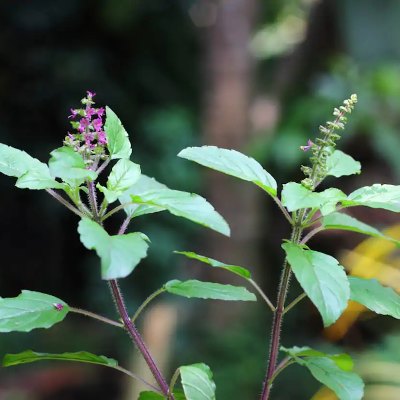
The Oshadhis are the class of herbs and medicinal plants born as the daughters of the primordial sage Kashyapa and his wife Ira. Kashyapa, one of the seven great sages counted among the Saptarishis, is regarded in the Puranas as the progenitor of a vast range of beings through his many wives, daughters of the progenitor Daksha. Ira, also rendered as Ida or Ila in variant lists, is one of these wives, and from her union with Kashyapa arose the vegetable creation associated with healing, nourishment, and the sustaining of life. The Oshadhis occupy a significant place in the Puranic taxonomy of created beings because of their association with the moon: the Puranas describe Soma, the moon deity, as the lord and sovereign of herbs, who nourishes and governs the plant kingdom. The Oshadhis are most prominently enumerated in the Vishnu Purana and the Vayu Purana in their accounts of Kashyapa's progeny through his several wives.
✦ The Name
The word Oshadhi (or Aushadhi) derives from the Sanskrit root meaning that which bears or contains light or nourishment, with particular reference to plants that ripen and shed their seeds and then perish — as distinct from trees and perennial plants. In classical Sanskrit botanical terminology, Oshadhi denotes specifically those plants that die after producing fruit, making them a discrete botanical category. In the medical tradition of Ayurveda, the term Aushadhi is employed broadly for medicinal substances drawn from the plant kingdom. The Puranic usage preserves both the narrow botanical and the broader medicinal senses.
✦ Lineage
- Father: Kashyapa — one of the seven great sages (Saptarishis), a Prajapati or progenitor-lord, son of the sage Marichi who was himself born of Brahma; regarded in the Puranas as the progenitor of gods, demons, humans, and the animal and plant kingdoms through his many wives
- Mother: Ira — one of the thirteen or seventeen daughters of the progenitor Daksha given in marriage to Kashyapa; her name is sometimes rendered Ida in variant textual lists; she is specifically associated with the origin of plant life in the Puranic enumeration of Kashyapa's wives and their offspring
- Siblings through Ira (same mother and father): Gulmas (shrubs and bushes), Trinas (grasses and straw), Vallis (climbing creepers), Latas (creepers and vines), and Vrikshas (trees) — these five groups of plants are named alongside the Oshadhis as the six categories of plant life born of Ira
✦ Role in Puranic Cosmogony
The Puranic account treats the birth of the Oshadhis from Ira as the cosmogonic origin of the entire class of healing plants on earth. Within the hierarchical taxonomy of created life elaborated in the Vishnu Purana and Vayu Purana, the offspring of Ira represent the vegetable order in its totality, with each of the six named groups corresponding to a distinct morphological class of plant. The Oshadhis, as the herbs specifically, are distinguished by their annual or ephemeral character: they complete their life cycle with the production of fruit or seed and then decay, in contrast to the longer-lived Vrikshas (trees) and the climbing or trailing forms of the Latas and Vallis.
The Puranas consistently associate the Oshadhis with Soma, the moon deity, who is described as their king and nourisher. This association reflects the belief that the waxing and waning of the moon governs the growth and potency of medicinal herbs — a doctrine elaborated in both the Puranas and the Ayurvedic medical texts. Soma's kingship over the plant kingdom is invoked in several Puranic genealogies where he is called Oshadhipati, lord of the Oshadhis.
✦ Theological and Philosophical Significance
The Vedic tradition accords the Oshadhis a sacred status well before the Puranic systematisation. The Rigveda contains a hymn addressed directly to the plants as divine healing powers, where they are invoked as ancient beings who existed before the gods themselves. The Atharvaveda elaborates extensively on the medicinal and ritual properties of plants, treating them as living agents of divine healing power. The Puranic genealogy that makes the Oshadhis daughters of Kashyapa and Ira integrates this Vedic reverence into a narrative framework, giving the plant kingdom a defined ancestry within the cosmogonic hierarchy.
✦ Connection to the Wider Genealogy
Through their father Kashyapa, the Oshadhis are related to an extraordinarily wide range of beings in the Puranic cosmological system. Kashyapa's other wives bore the Adityas (solar gods), the Daityas (demons), the Danavas, the Nagas (serpents), the Garudas (eagles), the Apsaras, and numerous other classes of beings — making the Oshadhis, within the Puranic framework, cousins of the gods and demons alike. Through their mother Ira, they share parentage with the five other categories of plant life enumerated below. Their lord Soma, the moon, stands in a position of sovereign authority over them, a relationship that crosses the genealogical hierarchy and operates on the level of natural governance rather than birth-descent.
✦ References
- Primary Sources
- Vishnu Purana, Book I, Chapter 15: Enumerates the wives of Kashyapa and their offspring, naming Ira as the mother of the six plant categories including the Oshadhis.
- Vayu Purana, Chapter 69: Provides a parallel enumeration of Kashyapa's progeny through his several wives, confirming Ira as the progenitor of the plant kingdom.
- Rigveda, Mandala X, Hymn 97: A hymn to the plants (Oshadhis) invoking them as ancient, divinely powerful healing beings predating the gods; establishes the Vedic sanctity of the herb class.
- Atharvaveda, Book VI and Book VIII: Extensive hymns to medicinal plants treating them as living divine agents; provides the theological background for the Puranic genealogical placement of the Oshadhis.
- Mahabharata, Adi Parva, Chapter 65: Lists the wives of Kashyapa and their offspring in its own genealogical enumeration; corroborates the Puranic account with some variation in the list of wives' names.
- Secondary Sources
- Mani, Vettam. Puranic Encyclopaedia. Motilal Banarsidass, 1975: Provides an index entry for Ira and her offspring, cross-referencing the Vishnu Purana and Vayu Purana accounts.
- Monier-Williams, M. A Sanskrit-English Dictionary. Oxford, 1899: Gives the etymology and botanical sense of the terms Oshadhi and Aushadhi.