
About
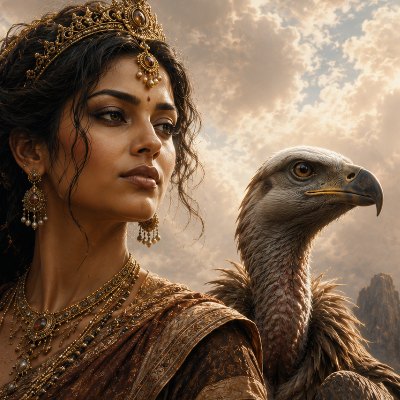
Gridhrika — Daughter of Kashyapa and Tamra, Mother of Vultures
Gridhrika · Gridhra-matri · daughter of Tamra
Gridhrika is a daughter of the primordial sage Kashyapa and his wife Tamra, and is identified in the Vishnu Purana and the Vayu Purana as the progenitrix of vultures. Kashyapa, one of the seven great sages of the Saptarishi tradition and a Prajapati or progenitor-lord, is regarded across the Puranas as the foremost progenitor of all created beings. Tamra, one of the many daughters of the progenitor Daksha given in marriage to Kashyapa, is specifically associated with the origin of the major bird families, and her daughters each head a separate avian lineage. Gridhrika's offspring — the vultures, known in Sanskrit as Gridhra — are birds of considerable significance in the Puranic narrative tradition, appearing in several major episodes of the Ramayana and Mahabharata and associated with the battlefield, death, and the boundaries between the mortal and divine worlds.
✦ The Name
The name Gridhrika is the feminine form of Gridhra, the Sanskrit word for vulture. The word Gridhra derives from a root associated with greed or eager desire — reflecting the vulture's association with scavenging and its appearance at sites of death and carrion. Despite these associations, the vulture holds a position of narrative dignity in the Sanskrit epics: Jatayu and Sampati, the great vulture brothers of the Ramayana, are among the most nobly portrayed bird figures in the entire epic tradition. Jatayu, a son of Aruna (the charioteer of the sun deity Surya), attempted to rescue Sita from the demon king Ravana and was mortally wounded by him — an act of self-sacrifice celebrated across the Ramayana tradition. Sampati, his elder brother, assisted the monkey army in their search for Sita. Both figures are described as Griddhas or Gridharajas (kings of vultures), and their lineage in the Ramayana is traced through Aruna, not through Tamra — but the Puranic genealogy that makes Gridhrika the mother of all vultures situates the entire species within the Kashyapa-Tamra lineage.
✦ Lineage
- Father: Kashyapa — one of the seven great sages (Saptarishis), a Prajapati or progenitor-lord, son of the sage Marichi who was himself born of Brahma
- Mother: Tamra — a daughter of the progenitor Daksha, given as one of several wives to Kashyapa; the Puranic ancestress of the major bird families; her name means copper-coloured or dark red
- Siblings through Tamra (same mother and father): Shuki (mother of parrots), Shyeni (mother of hawks and falcons), Bhasi (mother of the Bhasa birds), Sugrivi (mother of horses and camels in some accounts), and Kaki (mother of crows)
- Offspring: Vultures (Gridhra) and the broader class of large scavenging birds of prey, who descend from Gridhrika as their ancestral mother
✦ The Gridhra in Epic Narrative
The vulture class holds a remarkable position in the narrative tradition of the Sanskrit epics precisely because of the heroic roles played by Jatayu and Sampati in the Ramayana. Jatayu, described as the king of vultures and a friend of the solar king Dasharatha (father of Rama), intervened when Ravana abducted Sita. Despite his great age, Jatayu fought Ravana in the sky and was struck down, losing his wings. He lived long enough to report Sita's abduction to Rama and Lakshmana before dying. His death is mourned by Rama himself, who performed funeral rites for the bird — an honour extraordinary in the epic tradition, where such rites are typically reserved for human kin. Sampati, his elder brother, contributed to the search for Sita by using his long sight to perceive Lanka from a great distance, enabling the monkey army to determine where Sita was held. These episodes establish the vultures not as birds of ill omen but as devoted allies of the divine order.
It should be noted that the Ramayana traces the specific lineage of Jatayu and Sampati through Aruna, the charioteer of Surya (the sun), and Shyeni — the daughter of Kashyapa and Tamra who is named in the Puranic lists as the mother of hawks. This creates a textual complexity: within the Ramayana's own genealogical account, Jatayu and Sampati are sons of Aruna and Shyeni, making them members of the hawk lineage rather than the vulture lineage headed by Gridhrika. The Puranic listing of Gridhrika as mother of all vultures (Gridhra) represents a separate cosmogonic classification that does not wholly align with the specific genealogy of the Ramayana's most famous vulture figures. Both accounts are recorded here without harmonisation, as each belongs to its own textual tradition.
✦ Connection to the Wider Genealogy
Through her father Kashyapa, Gridhrika is related to the Adityas, the Daityas, the Nagas, Garuda, the plant kingdom, and all other orders of creation attributed to Kashyapa's progeny. Through her mother Tamra, she shares parentage with the five other bird-ancestresses. The vultures descended from Gridhrika occupy a defined place within this genealogy, related through their grandmother Tamra and grandfather Kashyapa to the entire order of created life in the Puranic system.
✦ References
- Primary Sources
- Vishnu Purana, Book I, Chapter 21: Names Gridhrika as a daughter of Tamra and Kashyapa and identifies her as the mother of vultures.
- Vayu Purana, Chapter 69: Parallel genealogical account confirming Gridhrika's parentage and role as progenitrix of the Gridhra class.
- Ramayana, Aranya Kanda, Chapters 48–68 (Valmiki): Narrates the episode of Jatayu's battle with Ravana, his death, and Rama's funeral rites for him; establishes the noble character of the vulture class in the epic tradition.
- Ramayana, Kishkindha Kanda, Chapter 58 (Valmiki): The episode of Sampati assisting the monkey army in locating Sita; provides Sampati's genealogy through Aruna and Shyeni.
- Mahabharata, Adi Parva, Chapter 65: Genealogical enumeration of Kashyapa's wives and offspring; corroboration of the Puranic bird lineages.
- Secondary Sources
- Mani, Vettam. Puranic Encyclopaedia. Motilal Banarsidass, 1975: Covers Gridhrika, the Gridhra class, and the Jatayu-Sampati lineage question across Puranic and epic sources.
- Monier-Williams, M. A Sanskrit-English Dictionary. Oxford, 1899: Defines Gridhra and its Sanskrit etymology.