
About
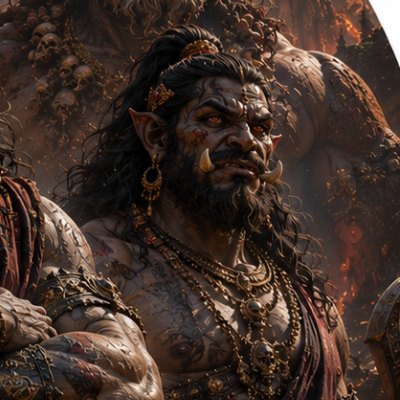
Subahu — Rakshasa Commander, Defiler of Vishvamitra's Sacrifice, Slain by Rama
Subahu · son of Sunda and Tataka · brother of Maricha
Subahu is a Rakshasa who appears in the Bala Kanda of the Valmiki Ramayana as one of the demonic commanders who disrupts the sacrificial rites of the sage Vishvamitra. He is the son of the Rakshasa Sunda and the Yakshini-turned-Rakshasi Tataka, and the brother of Maricha. Together with his mother Tataka and his brother Maricha, Subahu participated in the systematic desecration of Vishvamitra's yajnas by raining impure matter upon the sacred fires. When Rama and Lakshmana came to protect the sacrifice at Vishvamitra's request, Subahu was killed by Rama directly — struck by a weapon that destroyed him outright — in the same engagement in which Maricha was hurled away unharmed and Tataka had already been slain. Subahu is not attested as a significant figure in any primary source beyond this single episode, and his profile is accordingly brief.
✦ The Name
The name Subahu is a Sanskrit compound formed from su (good, excellent, auspicious) and bahu (arm or strength of arm), carrying the sense of one with excellent arms or one of great arm-strength. It is a name that occurs in several distinct contexts across the Sanskrit tradition — notably as the name of a king in the Mahabharata and as a name borne by other minor figures — and these are separate individuals from the Rakshasa Subahu of the Ramayana. The name in the context of a Rakshasa demon-commander has an ironic quality, combining an auspicious prefix with a reference to physical strength in a being whose power is exercised in the service of adharma.
✦ Lineage
- Father: Sunda — a Rakshasa, son of Jharjha (Jambha in variant manuscripts), destroyed by the spiritual wrath of the sage Agastya after attacking his hermitage.
- Mother: Tataka — born a Yakshini, daughter of the Yaksha king Suketu, endowed by Brahma's boon with the strength of a thousand elephants, cursed by Agastya into Rakshasa form following her attack upon him in grief and rage after Sunda's death. She was subsequently killed by Rama in the Tatakavana.
- Brother: Maricha — the shape-shifting Rakshasa who survived his encounter with Rama in the Bala Kanda through Rama's deliberate restraint, and who later became the golden deer of the Aranya Kanda through coercion by Ravana, enabling Sita's abduction. Maricha and Subahu share the same parents and appeared together in the assault on Vishvamitra's sacrifice, but their fates in that encounter diverged completely: Subahu was killed, Maricha was spared.
✦ The Desecration of Vishvamitra's Sacrifice and Death
The Valmiki Ramayana's Bala Kanda records that Subahu, along with his mother Tataka and his brother Maricha, had been persistently disrupting the sacrificial rites of the sage Vishvamitra. The manner of their disruption is described specifically: at the critical junctures of the yajna ceremony, they rained blood, raw flesh, and bones down upon the sacred fires from the sky, rendering the sacrifice ritually impure and impossible to complete. This systematic desecration of the sacrificial order — the central mechanism of cosmic maintenance in the Vedic worldview — is presented in the text as the gravest form of adharma, sufficient to require the intervention of royal warriors.
Vishvamitra, unable to complete his rites through his own efforts (the conventions of his particular vow of austerity apparently prohibited him from responding with direct violence during the sacrifice), travelled to the court of Dasharatha in Ayodhya and secured the services of the young princes Rama and Lakshmana. After Tataka's killing in the Tatakavana, Vishvamitra led the princes to his hermitage and the sacrifice was resumed under their protection.
When Subahu and Maricha arrived to repeat the desecration, Rama acted immediately. The Ramayana records that Rama used a specific weapon — the Agneya astra, a weapon of fire — against Subahu, destroying him. Against Maricha, a different weapon was used, one that struck without killing and cast Maricha far away across the ocean. The deliberate distinction in the weapons used, and consequently in the outcomes for the two brothers, is a textual detail that underscores Rama's precise and discriminating use of force: Subahu was judged to warrant destruction, Maricha was not. No explanation for this distinction is offered within the Bala Kanda text itself, though the subsequent narrative of the Aranya Kanda — in which Maricha's survival becomes consequential for the entire Sita-abduction plot — gives the distinction a retrospective narrative logic.
Subahu does not appear again in any primary source after his death in this episode. He has no known descendants recorded in the tradition.
✦ Connection to the Wider Genealogy
In the genealogical tree in which this profile appears, Subahu is placed as a child of Sunda and Tataka, at the same generational level as his brother Maricha. Through Tataka he carries Yaksha descent on the maternal side — she was born a Yakshini, daughter of the Yaksha king Suketu — and through Sunda he belongs to the Rakshasa class by birth. His functional and narrative identity is entirely Rakshasa. Unlike Maricha, whose survival and subsequent career give him considerable genealogical and narrative reach, Subahu is a terminal node in the lineage tree: he dies in the Bala Kanda, leaves no descendants in the recorded tradition, and his line ends with him.
✦ References
Primary Sources
- Valmiki Ramayana, Bala Kanda, Sargas 24–30: The sole primary source for Subahu. His parentage is established in Vishvamitra's narration to Rama, and his death at Rama's hand during the protection of Vishvamitra's sacrifice is recorded in the account of the yajna's completion.
Modern Reference Works
- Vettam Mani, Puranic Encyclopaedia (1975): Brief entry on Subahu (Ramayana) identifying him as the son of Tataka and Sunda and brother of Maricha, distinguishing him from other figures named Subahu in the Mahabharata tradition.
- Wisdomlib (wisdomlib.org), Tataka and Maricha entries: References to Subahu appear within these entries and corroborate the Bala Kanda account of his participation in the disruption of Vishvamitra's sacrifice and his death.