
About
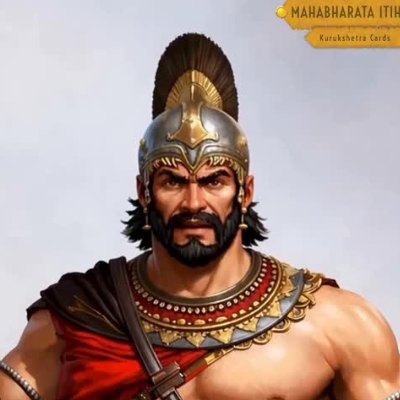
Jarasandha — Emperor of Magadha and Principal Adversary of the Yadavas
Jarasandha · Dvaimatura · Magadhadhipati · Magadhesvara · Brihadrathanandana
Jarasandha was the king of Magadha, whose capital stood at Girivraja, the ancient fortified city identified with modern Rajgir in Bihar. Son of King Brihadratha, the founder of the Brihadratha dynasty of Magadha, Jarasandha was born miraculously from the conjoined halves delivered by two queens — both twin daughters of the king of Kashi — and rose to become one of the most formidable rulers of his age, extending Magadhan dominion across much of the Gangetic plain and beyond. His principal significance in the Mahabharata tradition lies in his sustained military campaign against the Yadava clan following the death of his son-in-law Kansa, the tyrannical king of Mathura, which ultimately forced the migration of the entire Yadava people to the island fortress of Dvaraka, and in his imprisonment of eighty-six captive kings intended for a great royal sacrifice. His death at the hands of Bhima — executed under the strategic direction of Krishna and witnessed by Arjuna — is narrated in the Jarasandhavadha sub-parva within the Sabha Parva of the Mahabharata. He appears additionally in the Harivamsha (Vishnu Parva) and in the Bhagavata Purana (Tenth Skandha), where the geopolitical consequences of his campaigns and the liberation of his captive kings by Krishna are treated at length.
✦ The Name
The name Jarasandha is a compound of two Sanskrit elements: jara, here used as the proper name of the demoness who reunited the infant's two halves, and sandha, meaning union or joining. The name thus carries the meaning "the one joined by Jara" and permanently commemorates the extraordinary circumstances of his birth. The epithet Dvaimatura, meaning "he who has two mothers," alludes directly to his origin from two separate wombs. He is addressed in texts by the honorifics Magadhadhipati and Magadhesvara, both signifying "lord of Magadha," and by the patronymic Brihadrathanandana, meaning "son of Brihadratha." The Puranic genealogical tradition traces his lineage within the Lunar Dynasty from the primordial succession running through Brahma, Atri, Chandra, Budha, Pururavas, Nahusha, Yayati, Puru, and a long chain of Kuru-line kings down through Vasu and Brihadratha to Jarasandha himself.
✦ Lineage
- Paternal grandfather: Uparichara Vasu, also known as King Vasu of Chedi, a celebrated Lunar Dynasty king who features prominently in Vedic and Puranic tradition as a righteous sovereign and devotee of Indra.
- Father: Brihadratha of Magadha, founder of the Brihadratha dynasty, the earliest recorded ruling line of the Magadha kingdom; described as a king of great power, religious observance, and military renown who ruled from the capital Girivraja.
- Mothers: Two queens, both twin daughters of the king of Kashi, married equally by Brihadratha, each of whom bore one half of the body from which Jarasandha was ultimately formed.
- Daughters: Asti and Prapti, both given in marriage to Kansa, the ruler of Mathura, thereby creating a powerful political alliance between the Magadha and Mathura kingdoms. The death of Kansa at the hands of Krishna — who was Kansa's nephew by his sister Devaki — widowed both daughters and became the immediate cause of Jarasandha's prolonged enmity toward Krishna and the Yadava clan.
- Son and successor: Sahadeva of Magadha — not to be confused with Sahadeva the youngest of the five Pandava princes, nor with any other figure of the same name in the epic — was installed on the throne of Magadha by Krishna after his father's death and governed as a subordinate ally of the Pandavas. He also had a brother, Jayatsena, who held some regional sovereignty within Magadha. For the account of Sahadeva's death during the Kurukshetra War, see the note on textual variants below.
✦ The Miraculous Birth
The Sabha Parva of the Mahabharata, as narrated by Krishna to Yudhishthira in the context of the Rajasuya sacrifice deliberations, gives the fullest account of Jarasandha's birth. King Brihadratha of Magadha had two queens, both twin daughters of the king of Kashi, whom he loved with perfect equality, but he remained without an heir for many years. Learning that the great sage Chandakaushika had arrived in his kingdom, Brihadratha visited him and placed his sorrow before him. Pleased by the king's devotion, the sage took up a mango fruit, infused it with sacred incantations, and presented it to the king with the blessing that it would produce a remarkable child. Unwilling to favour either wife over the other, Brihadratha divided the fruit in equal halves and gave one portion to each queen. Both queens conceived, but each gave birth to only half a human body — one delivering the upper portion and the other the lower, both halves lifeless and devoid of breath. Horrified by the inauspicious forms, Brihadratha ordered that both pieces be discarded in the forest.
A Rakshasi named Jara — described in various accounts as a demoness who inhabited that region — came upon the two discarded pieces with the intention of consuming them. She picked up one half in her right hand and the other in her left, and when she brought her palms together to make the pieces more manageable to carry, the two halves fused instantaneously into a living, whole, and robust infant who let out a great cry. Startled and unable to bring herself to harm a living child, Jara assumed human form and carried the boy to Brihadratha, explaining to the king all that had occurred. She told him that the child would become celebrated bearing her name, and then departed. The overjoyed king accepted the child, performed all the rites of birth and purification, and named him Jarasandha in honour of the demoness through whom he had been given life. Shortly thereafter, the sage Chandakaushika returned, beheld the child, and prophesied that Jarasandha possessed the strength of ten thousand elephants and was destined for extraordinary greatness. After installing Jarasandha as crown prince, Brihadratha and both his queens withdrew to the forest for religious austerities.
✦ Rise to Imperial Power
Upon assuming the throne of Magadha, Jarasandha extended his dominion by conquest and alliance across a vast territory. He became the paramount ruler of the middle and eastern regions of the subcontinent, and the Sabha Parva records numerous powerful kings who either submitted to him, became his tributaries, or fled their kingdoms in fear of his military reach. Among those who accepted subordination were Bhishmaka, king of Vidarbha and father-in-law of Krishna; Bhagadatta, ruler of Pragjyotisha; Paundraka Vasudeva of the Pundra kingdom; and many others. Eighteen clans of the Bhojas fled westward rather than face him. The kings of Shurasena, Kosala, southern Panchala, Matsya, and numerous other realms reportedly abandoned their territories. His chief military allies during this period were the powerful warriors Hamsa and Dimbhaka, whose combined strength greatly augmented his campaigns.
Jarasandha's political alliance with Mathura was cemented through the marriage of his two daughters, Asti and Prapti, to Kansa, who ruled Mathura as a tyrant and was himself an ally and protector of Jarasandha's interests in the western kingdoms. Through this relationship, Jarasandha acquired a son-in-law whose power base complemented his own, forming one of the strongest political compacts in the epic's geopolitical landscape. The Sabha Parva also records a separate episode in which Jarasandha, after a svayamvara of the daughter of the king of Kalinga, fought a duel with Karna — identified in the Mahabharata as the son of Kunti and the sun-god Surya, and one of the greatest warriors of the age. After a fierce contest, Karna overcame him, and Jarasandha, impressed by the warrior's prowess, gifted him the land of Malini to rule.
✦ The Campaigns Against Mathura and the Migration to Dvaraka
When Krishna — an avatar of Vishnu born into the Yadava clan as son of Vasudeva and Devaki, and raised in Vrindavana — returned to Mathura and slew Kansa, Jarasandha was consumed by grief and fury at the widowing of his two daughters. He declared war on Krishna and the Yadavas. According to the Mahabharata's account in the Sabha Parva, he launched seventeen successive military campaigns against the city of Mathura, each time with vast armies, and each time Krishna and his elder brother Balarama — also born to Vasudeva and Rohini, and regarded as an avatar of Adi Sesha — successfully repelled the invasion. The Harivamsha in its Vishnu Parva expands this narrative considerably, describing the structural strain imposed on the Bhoja-Yadava alliance by the relentless pressure of these campaigns. During the period of the seventeenth and eighteenth invasions, Jarasandha allied himself with Kalayavana, a Yavana king who brought thirty million warriors against Mathura and who bore a boon that prevented him from dying at the hands of a Yadava on the battlefield.
Faced with simultaneous assault from two directions and the exhaustion of his resources after seventeen campaigns, Krishna determined that the city of Mathura could no longer be defended with strategic wisdom. He directed the divine architect Vishvakarma to construct a magnificent fortified city on an island in the western sea, which came to be known as Dvaraka. Krishna then arranged for the migration of the entire Yadava population to this new city. The Harivamsha and the Bhagavata Purana both treat this relocation as one of the major geopolitical consequences of Jarasandha's persistent campaigns, representing a fundamental restructuring of the Yadava polity from a land-based kingdom to an island fortress impregnable to conventional siege. After the migration, Jarasandha set fire to the city of Mathura, apparently believing Krishna had perished, and withdrew. The Bhagavata Purana records that he subsequently learned Krishna had merely shifted his capital, which renewed his frustration.
✦ The Imprisonment of Kings
In pursuit of his aspiration to become a supreme world-sovereign and perform the ultimate act of Shiva-worship at a scale commensurate with his power, Jarasandha devised a plan to capture one hundred independent kings and offer them in a grand Rudra Yajna. He systematically subdued rulers who refused his sovereignty and locked them in the dungeons of his capital Girivraja. By the time of the Rajasuya deliberations among the Pandavas, he had taken eighty-six such kings captive. This fact is stated consistently in both the Sabha Parva of the Mahabharata and the Bhagavata Purana's Tenth Skandha. The imprisonment of kings was regarded as a profound violation of dharmic order. The Bhagavata Purana records that these imprisoned kings sent a messenger to Krishna at Dvaraka, appealing to him as their only refuge, and that it was partly in response to this appeal, alongside the need to remove an obstacle to Yudhishthira's Rajasuya sacrifice, that Krishna resolved to act against Jarasandha.
✦ The Brahmin Disguise and Entry into Girivraja
When Yudhishthira, eldest of the Pandava princes and son of the dharma-god Dharmaraja, sought to perform the Rajasuya sacrifice to assert his status as paramount king of the earth, Krishna — who had come as an invited guest and advisor — informed him that Jarasandha's continued existence and his ongoing plan to sacrifice captive kings made the imperial sacrifice impossible and contrary to cosmic order. Direct military invasion of Magadha was deemed inadvisable given its formidable defences and Jarasandha's strength. Krishna therefore proposed that he, along with Bhima — the second Pandava and son of the wind-god Vayu, renowned for his extraordinary physical power — and Arjuna, the third Pandava and son of Indra and the greatest archer of the age, would enter Girivraja in disguise and challenge Jarasandha to single combat, exploiting his well-known vow never to refuse any request made by a Brahmin supplicant.
The three traveled to Magadha. In one version of the narrative given in the Sabha Parva, they arrived at the sacred Chaityaka peak near the capital, broke its summit, and destroyed three great drums fashioned from the hide of a Rakshasa bull that Jarasandha had slain there — an act intended as a deliberate provocation that would force a confrontation. They then entered the city without arms, dressed as Brahmin ascetics observing the Snataka vow. Jarasandha received them but quickly perceived that, despite their Brahmin appearance, their bearing, their physique, and the marks of bowstrings on their arms revealed them as warriors. When Krishna then disclosed their true identities and challenged Jarasandha to choose his opponent for single combat, Jarasandha, unwilling to release his captive kings, accepted the challenge and selected Bhima as his adversary, judging him the strongest of the three and dismissing Krishna as unworthy of his effort.
✦ The Fourteen-Day Wrestling Duel and Death
The Sabha Parva, in its chapters covering the Jarasandhavadha sub-parva, provides a detailed account of the wrestling match. Bhima and Jarasandha engaged in an uninterrupted contest of Mal-yuddha, the classical form of armed and unarmed grappling, for fourteen continuous days with neither combatant able to achieve a decisive victory. Throughout the contest, every time Bhima succeeded in tearing Jarasandha's body in two — which was his natural vulnerability and also his supernatural power — the separated halves would immediately rejoin and Jarasandha would stand restored. This quality of bodily reconstitution was the direct consequence of his birth: having been formed by the external joining of two pieces of flesh, his body retained a structural capacity for self-reunion when split along the same axis.
On the fourteenth day, as Bhima began to show fatigue, Krishna intervened with a wordless signal. He picked up a blade of grass, split it lengthwise down the middle, and cast the two halves in opposite directions — but with the deliberate inversion of throwing the left half to the right side and the right half to the left. Bhima understood the instruction immediately. He seized Jarasandha once more, tore his body in two, and this time threw the right half to the left and the left half to the right. The two halves, now opposed in their orientation, could not rejoin, and Jarasandha died. Following his death, Krishna and Arjuna embraced Bhima in congratulation. Krishna then summoned Sahadeva, the son of Jarasandha, installed him on the throne of Magadha with proper ceremony, and released all the captive kings from Jarasandha's dungeons. Yudhishthira subsequently performed the Rajasuya sacrifice without obstacle.
✦ Textual Variants and Inconsistencies
On the number of captive kings: The Sabha Parva of the Mahabharata consistently places the number of kings imprisoned by Jarasandha at eighty-six. The Bhagavata Purana, Tenth Skandha, Chapter 70, gives the significantly higher figure of twenty thousand captive kings. These two accounts cannot be harmonised and represent a genuine divergence between the epic and the Purana in the scale of Jarasandha's programme. The figure of ninety-eight, mentioned in some manuscript recensions of the Mahabharata, represents an intermediate variant within the epic tradition itself.
On the nature of Jara: The Sabha Parva identifies Jara as a Rakshasi — a female demon of the cannibal class. Several secondary accounts and regional traditions describe her as an Asuri, a female Asura. The Wikipedia article on Jarasandha uses the term Asuri. The distinction is textually significant since Rakshasi and Asuri denote different categories of supernatural being in Sanskrit cosmology, but both traditions agree on her role as the agent who joined the two halves.
On the death of Sahadeva of Magadha in the Kurukshetra War:The Wikipedia article on Sahadeva of Magadha states that he was killed in the Kurukshetra War by Karna along with his cousin Jayadeva. A Quora answer citing the Drona Parva directly attributes his killing to Drona. The Shakuni Fandom wiki places the killing of a Sahadeva of Magadha by Shakuni on day twelve. These accounts diverge, and no single attribution commands clear primary-text authority. The claim that Shakuni killed him on day fourteen specifically is not corroborated by the sources available and has accordingly not been incorporated as established fact in this profile.
On the incarnation identity: The Wikipedia article on Jarasandha, drawing on Puranic material, identifies him as an incarnation of the demon Viprachitti, a powerful Daitya who appears in Puranic cosmology as a son of Kashyapa and Danu and the husband of Simhika. This identification appears in the Wisdomlib Puranic Encyclopedia as well. It is not elaborated in the Sabha Parva narrative of the Mahabharata itself and belongs primarily to the Puranic theological framework of the age's demonic presences.
On the duration of the wrestling match: The Sabha Parva gives the duration of the Bhima-Jarasandha duel as fourteen days. One secondary glossary entry in the Wisdomlib definitions section describes it as a thirteen-day combat. This minor discrepancy may reflect differing manuscript recensions or a counting convention. The fourteen-day figure is used in the body of this profile as it is the figure most consistently cited across primary-text summaries.
✦ Theological and Philosophical Significance
Jarasandha functions within the Mahabharata's ethical architecture as a figure whose power, though immense, is directed toward ends that violate the foundational order of dharma. His plan to sacrifice one hundred kings to Shiva represents the inversion of royal duty: instead of protecting subordinate rulers, he destroys them for his own ritual aggrandisement. Krishna's insistence that Jarasandha must be eliminated before Yudhishthira's Rajasuya sacrifice proceeds frames his removal not as mere political strategy but as a restoration of cosmic and social order. The Sabha Parva makes explicit that a world in which an emperor imprisons and slaughters kings cannot sustain the conditions for righteous sovereignty. The manner of his death — split along the axis of his own origin and thrown in inverted directions so that his body cannot reconstitute — carries a symbolic dimension that several commentators have noted: the flaw in his birth, temporarily overcome by supernatural power, becomes the precise mechanism of his final undoing.
In the Jain text Harivamsa Purana, Jarasandha is identified as the ninth Pratinarayana, a category of supremely powerful adversarial figures who stand in opposition to the Vasudeva heroes of Jain cosmological history. This represents a distinct theological framing of the same figure, reflecting the Jain tradition's independent engagement with shared epic characters.
✦ Connection to the Wider Genealogy
Through his father Brihadratha, Jarasandha belongs to the Lunar Dynasty, descended through the Kuru lineage from the ancient king Puru. Through his daughters Asti and Prapti, he was the father-in-law of Kansa of Mathura, who was in turn the maternal uncle of Krishna — making Jarasandha and Krishna relatives by marriage, a fact noted in the Mahabharata itself. His son Sahadeva of Magadha continued the Brihadratha line after his father's death, and the Puranas record that Sahadeva's descendants ruled Magadha for several generations before the dynasty eventually gave way to the Pradyota line. Jarasandha's alliance network drew in kings from across the subcontinent, and his political shadow falls over much of the pre-war diplomatic geography of the Mahabharata, with many rulers defining their allegiances in relation to his power.
✦ References
Primary Sources
- Mahabharata, Sabha Parva, Jarasandhavadha sub-parva (Chapters 14–24): The principal primary source for Jarasandha's lineage, birth narrative, campaigns against Mathura, imprisonment of kings, the entry of Krishna, Bhima, and Arjuna into Girivraja in disguise, the fourteen-day wrestling duel, and the manner of his death.
- Harivamsha, Vishnu Parva: Expands the account of Jarasandha's successive invasions of Mathura, the geopolitical strain placed on the Yadava alliance, and the strategic reasoning behind the Yadava migration to Dvaraka.
- Bhagavata Purana, Tenth Skandha, Chapters 50 and 70: Provides the Purana's account of Jarasandha's campaigns and their consequences for the Yadavas, records the appeal of the twenty thousand captive kings to Krishna, and narrates Krishna's instigation of the plan to eliminate Jarasandha as the prelude to their liberation.
- Mahabharata, Drona Parva: Relevant to the fate of Sahadeva of Magadha during the Kurukshetra War; one textual tradition attributes his death to Drona on the fourteenth day of the battle.
- Jain Harivamsa Purana: Identifies Jarasandha as the ninth Pratinarayana in Jain cosmological history, representing an independent theological reading of the figure.
Secondary and Reference Sources
- Wisdomlib, Puranic Encyclopedia (Vettam Mani): Provides the full genealogical chain of Jarasandha within the Lunar Dynasty, the identification of Jarasandha as an incarnation of Viprachitti, and definitions of key terms and epithets.
- Wikipedia, "Jarasandha": Collates narrative details from multiple primary texts; notes the identification with Viprachitti, the Jain Pratinarayana designation, and variant descriptions of Jara as Asuri versus Rakshasi; states that Sahadeva of Magadha was killed by Karna.
- Wikipedia, "Sahadeva of Magadha": Documents the political situation of Magadha after Jarasandha's death, the installation of Sahadeva on the throne, and the dynastic continuity through Sahadeva's descendants; notes Sahadeva's brother Jayatsena.
- Grokipedia, "Jarasandha" and "Brihadratha": Provides secondary synthesis of the Sabha Parva narrative, details of the invasion campaigns, and information on Brihadratha's lineage and the founding of the Magadha dynasty.
- Vedadhara.com, "Jarasandha in Mahabharata": Supplies narrative details from the Sabha Parva including the episode of Chaityaka peak, the drums made from the Rakshasa bull's hide, the conversation between Krishna and Jarasandha before the duel, and the figure of eighty-six captive kings.
- Wisdomlib, "King Jarasandha: Significance and Symbolism": Aggregates Puranic references to the figure of Jarasandha across multiple texts and traditions including Jainism, and confirms the eighty-six captive kings figure from the Mahabharata.