
About
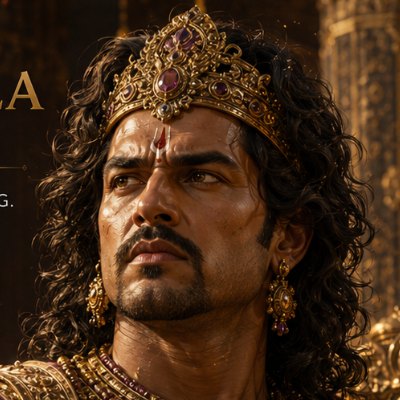
Shishupala — King of Chedi, Antagonist of Krishna, and Final Incarnation of the Gatekeeper Jaya
Shishupala · Sisupala · Chaidya · Sunitha · Jaya (in his divine identity) · king of Chedi
Shishupala was the king of the Chedi kingdom and one of the principal antagonists of Krishna in the Mahabharata. He was the son of King Damaghosha of Chedi and his queen Shrutashrava, who was a daughter of Shurasena of Mathura and a sister of Vasudeva, the father of Krishna. This made Shishupala Krishna's first cousin through the maternal line — Shrutashrava being Krishna's paternal aunt. He is known chiefly from the Sabha Parva of the Mahabharata, in which his confrontation with Krishna at the Rajasuya sacrifice of the Pandava king Yudhishthira results in his death by Krishna's discus after he surpasses the limit of one hundred pardoned offences. The Bhagavata Purana identifies him as the third and final earthly incarnation of Jaya, one of the two divine gatekeepers of Vishnu's heaven Vaikuntha, who were cursed to be born three times as enemies of Vishnu. His story is also the subject of the Shishupala Vadha, a celebrated Sanskrit mahakavya composed by the poet Magha in approximately the seventh or eighth century of the common era. He appears across the Mahabharata, the Bhagavata Purana, the Vishnu Purana, the Vayu Purana, the Brahmanda Purana, and the Harivamsa.
✦ The Name
The name Shishupala is a compound of shishu, meaning child or infant, and pala, meaning protector or guardian. The compound thus means protector of children or guardian of the young, a name whose irony is evident given the circumstances of his birth and the inauspicious portents that attended it. He is also called Chaidya, meaning the king or prince of Chedi, which functions as a royal epithet rather than a personal name. The name Sunitha is attested in some sources as an alternate personal name. In his identity as the final incarnation of the Vaikuntha gatekeeper, he is identified with Jaya — meaning victory — whose curse-driven descent into mortal enmity with Vishnu's avatars is narrated in the Bhagavata Purana.
✦ Lineage
- Father: Damaghosha — king of Chedi, allied with Jarasandha of Magadha; his own lineage within the Chedi dynasty is not recorded in primary sources.
- Mother: Shrutashrava — daughter of Shurasena of Mathura and sister of Vasudeva; the one who extracted from Krishna the promise of one hundred pardons for her son.
- Paternal uncles (through mother): Vasudeva — father of Krishna and Balarama; Samudravijaya and others of the Shurasena-Yadava line.
- Maternal cousins (through mother's siblings): Krishna — son of Vasudeva and Devaki; avatar of Vishnu and Shishupala's destined slayer. Balarama — elder brother of Krishna. Dantavakra — son of Shrutadeva (another of Shrutashrava's sisters) and king of Karusha; identified as the incarnation of Vijaya, Jaya's companion gatekeeper, and slain by Krishna after Shishupala's death.
- Sons: Dhrishtaketu — eldest son, who succeeded Shishupala as king of Chedi, aligned with the Pandavas, and served as a commander in the Kurukshetra War; Sarabha — middle son, who became king after Dhrishtaketu's death; Mahipala — younger son, killed in the Kurukshetra War; Suketu — also named among his sons.
- Daughter: Karenumati — given in marriage to the Pandava Nakula; their son was Niramitra.
✦ The Divine Prehistory: Jaya, the Curse of the Four Kumaras, and the Three Descents
The Bhagavata Purana, from the third canto onward, situates Shishupala within a cosmic narrative that spans three ages of the world. Jaya and Vijaya were the two divine gatekeepers stationed at the entrance to Vaikuntha, the eternal abode of Vishnu. On one occasion, the four Kumaras — Sanaka, Sanandana, Sanatana, and Sanatkumara, the mind-born sons of Brahma who had the appearance of young children despite their ancient spiritual attainment — came to Vaikuntha seeking audience with Vishnu. Jaya and Vijaya, failing to recognise the sages' spiritual stature and judging them by their childlike appearance, refused them entry. The Kumaras, offended by this failure of discernment, pronounced a curse: the two gatekeepers would be cast down from Vaikuntha and compelled to take mortal births in the material world.
Vishnu appeared and accepted the validity of the curse, but offered the gatekeepers a choice: they could take seven births on earth as devotees of Vishnu, after which they would return to Vaikuntha, or they could take three births as his enemies, being slain by his own hand in each life, and return after three lives. Unable to bear the thought of seven births separated from Vishnu's presence, Jaya and Vijaya chose the shorter path of three births as adversaries. In the first birth, in the Satya Yuga, they were born as the asuras Hiranyaksha and Hiranyakashipu and were slain respectively by Vishnu's Varaha and Narasimha avatars. In the second birth, in the Treta Yuga, they were born as the rakshasa brothers Ravana and Kumbhakarna and were slain by Rama, Vishnu's seventh avatar. In the third and final birth, in the Dvapara Yuga, Jaya was born as Shishupala and Vijaya as Dantavakra, the king of Karusha who was Shishupala's maternal cousin, and both were slain by Krishna, Vishnu's eighth avatar. After this final death, their curse was exhausted and their divine status was restored.
✦ Birth, Prophecy, and Krishna's Promise
Shishupala was born to Damaghosha and Shrutashrava with three eyes and four arms, and his birth-cry resembled the braying of a donkey. These signs caused consternation and a consideration of abandonment, but a celestial voice — called an akashavani in the Sanskrit tradition — addressed the parents and ordered them not to abandon the child, assuring them of his great future strength and fortune. The voice further revealed that the one in whose lap the extra arms fell away and at whose sight the third eye closed would be the person destined to kill him. Many kings and nobles came to Chedi and held the infant in turn, but in no one did the signs change. When Shrutashrava placed the child in the lap of her nephew Krishna, who had come to Chedi with his elder brother Balarama, the third eye disappeared on the child beholding Krishna and the two extra arms fell away at that same moment. The identity of the destined slayer was thus confirmed. Shrutashrava, in her grief, appealed to Krishna to spare her son, and Krishna, honouring the bond of kinship, gave her the assurance that he would pardon Shishupala for one hundred transgressions before taking any action against him.
✦ Enmity with Krishna: Youth, Alliances, and the Loss of Rukmini
As Shishupala grew to manhood and ascended the throne of Chedi after the death of his father Damaghosha, a deep and growing hostility toward Krishna took root in him. Several factors are identified in the sources as feeding this enmity. Among them was the friendship Shishupala maintained with Kamsa, the king of Mathura who was Krishna's maternal uncle and who was slain by Krishna; Kamsa's death intensified Shishupala's antipathy. Shishupala became one of the foremost members of the political coalition led by Jarasandha, the powerful emperor of Magadha, which sought to oppose and contain Krishna and the Yadavas.
The episode that most personally embittered Shishupala involved the princess Rukmini of Vidarbha, the daughter of King Bhishmaka. Rukmini's brother Rukmi had cultivated a close friendship with Shishupala and prevailed upon their father to arrange Rukmini's marriage to him. Damaghosha himself had traveled to Kundina, the Vidarbha capital, to conduct the preliminary negotiations and had been received there by Bhishmaka. However, Rukmini, who had conceived a deep devotion to Krishna, secretly sent a Brahmin messenger to Krishna with a letter declaring her love and pleading that he come to abduct her before the wedding took place, as she refused to be wed to Shishupala. Krishna, having received her message, came to Kundina with Balarama. On the morning of the scheduled wedding, as Rukmini went to the temple of the goddess Ambika to make her pre-marital offerings, Krishna intercepted her and carried her away in his chariot. Shishupala and his allies, including Jarasandha, gave chase, but Krishna and Balarama repulsed them in battle. Rukmi alone continued the pursuit and was defeated; Krishna spared his life at Rukmini's entreaty. The loss of Rukmini — a princess whom Shishupala had regarded as his betrothed — became a lasting source of personal grievance and intensified his hostility toward Krishna beyond what political or military rivalry alone could account for.
✦ Submission to Bhima at the Rajasuya Conquest
When Yudhishthira, the eldest of the five Pandava brothers, resolved to perform the Rajasuya sacrifice — a ceremony asserting universal sovereignty — his brother Bhima was dispatched on an eastern military campaign to compel the submission of kingdoms in that direction. Shishupala, despite his alliance with Jarasandha and his enmity toward Krishna, did not resist Bhima's campaign. He allowed Bhima to take formal acknowledgement of his kingdom's submission, paid tribute, and received Bhima as a guest at the Chedi court for an extended period. The Mahabharata records that Bhima spent considerable time at Chedi and was treated hospitably. This episode establishes that Shishupala, whatever his personal enmities, recognized the political reality of Yudhishthira's growing power, at least for a time.
✦ The Rajasuya Sacrifice: The Agrapuja Dispute
The culminating episode of Shishupala's life occurred at the Rajasuya sacrifice of Yudhishthira, held at Indraprastha. After the completion of the principal sacrificial rituals, the question arose of who among the assembled kings and nobles deserved the agrapuja — the first and highest worship, the ceremonial honour of receiving the sacred arghya water before all others. Yudhishthira deferred to the elder Bhishma, the grandsire of the Kuru house, who recommended that the honour be given to Krishna on the grounds that no one present surpassed him in worth. Sahadeva, one of the Pandavas, rose and formally performed the agrapuja to Krishna.
Shishupala rose in furious opposition. He denounced the choice as a disgrace and launched into an extensive and sustained verbal attack, first on Bhishma for recommending a mere cowherd over the assembled kings and warriors, then on Yudhishthira for accepting that recommendation, and then on Krishna himself. His speeches, as recorded in the Sabha Parva, ranged across a systematic disparagement of Krishna's deeds and lineage. He dismissed Krishna's celebrated acts — the killing of the demoness Putana, the lifting of the Govardhan mountain to shelter the cowherds from Indra's rain, the vanquishing of various supernatural adversaries — as trivial, fraudulent, or performed by deception rather than genuine valour. He described Krishna as a coward who had abandoned Mathura when Jarasandha attacked rather than face him in open battle, as a man who had stolen another's betrothed, and as unworthy of the company of kings. He also directed insults at Bhishma, accusing him of misjudgement, and at others in the assembly who supported the honour given to Krishna.
The assembly was thrown into uproar. Bhima became enraged and had to be restrained. Bhishma defended the honour of Krishna with counter-arguments. Various kings either supported Shishupala's protest or sat in silence. Krishna himself remained composed throughout, honouring his promise to Shrutashrava by enduring the insults without response. He counted the offences as they accumulated.
✦ The Death of Shishupala
When the count of Shishupala's transgressions reached the hundredth — the precise limit Krishna had promised his aunt — Krishna intervened. He addressed the assembly, recounted the history of Shishupala's offences, and made clear that the promised limit had been reached. When Shishupala continued and committed his hundred-and-first offence, Krishna released his Sudarsana Chakra, the luminous discus weapon that is the characteristic armament of Vishnu. The weapon severed Shishupala's head. He died on the spot in the midst of the assembled kings, sages, and nobles gathered for the Rajasuya.
The Bhagavata Purana records that at the moment of Shishupala's death, a luminous form — described as a ball of light or a radiant essence — rose from his body and merged into Krishna's own person. This is interpreted in the theological tradition as the liberation of Shishupala's soul: the curse of Jaya having been fulfilled through three lives of enmity and three deaths at Vishnu's hand, the gatekeeper's true divine nature was restored and absorbed back into the Lord. Yudhishthira, after the incident, installed Shishupala's eldest son Dhrishtaketu on the throne of Chedi to restore order.
✦ Textual Variants and Inconsistencies
There is a discrepancy between sources regarding the identity of Shishupala's mother. The Bhagavata Purana and the principal genealogical traditions of the Puranas consistently name her as Shrutashrava, one of the five daughters of Shurasena. However, certain secondary retellings and at least one other Puranic list give the name of Shishupala's mother as Shrutakirti, which is in fact the name of another of Shurasena's daughters who married a king of Kekaya. The primary Puranic sources — Bhagavata Purana IX.24.39, the Vishnu Purana, and the Wisdomlib compilation of Puranic data — are unambiguous that Shrutashrava, not Shrutakirti, was the wife of Damaghosha and mother of Shishupala; the confusion appears to arise from the similarity of the two names.
There is also a minor variant in the count of Shishupala's children. The Mahabharata and the Wikipedia-collated traditional lists name four sons — Dhrishtaketu, Mahipala, Suketu, and Sarabha — and a daughter, Karenumati. The Chedi kingdom article in the Vyasa Mahabharata encyclopaedia additionally notes the ambiguity about whether Karenumati was the daughter of Shishupala or of his son Dhrishtaketu; the Mahabharata's Adi Parva and the account in the Glorious Hinduism secondary source give her as Shishupala's own daughter, while a note in the List of Characters in the Mahabharata article acknowledges the textual uncertainty. The primary Mahabharata text in Adi Parva Chapter 90 records the marriage of Nakula to Karenumati without resolving this specifically.
✦ Theological and Philosophical Significance
The story of Shishupala carries several layers of significance in the Vaishnava theological tradition. At the cosmological level, the narrative of Jaya and Vijaya demonstrates that even the closest associates of Vishnu are subject to the consequences of spiritual error and that their ultimate liberation is secured not despite their enmity toward the divine but through it — their sustained hostility, paradoxically, becomes the mechanism of their return to the divine source. The Bhagavata Purana uses this narrative to develop the doctrine that intense meditation on the divine — even meditation rooted in hatred and fear — generates the same proximity to the divine as devotional love. This is formulated as the principle of dvesabhakti, or liberation through enmity.
At the ethical and narrative level, the story explores the theme of the promised limit of grace. Krishna's vow to his aunt is presented in the Mahabharata as a genuine obligation that he fulfils scrupulously, counting and enduring insults that would have provoked immediate retaliation from others. The moment of the hundred-and-first offence is the point at which both justice and mercy have been fully discharged: mercy in the endurance, justice in the final act. The episode also explores the relationship between kinship obligations and divine will, since Shrutashrava's maternal plea succeeds in modifying the timing but not the ultimate fact of the destined outcome.
The Shishupala Vadha of Magha, one of the five classical Sanskrit mahakavyas, uses the episode as the occasion for an extensive and technically virtuosic poetic treatment, celebrated in the tradition for the complexity of its rhetorical figures and double-meaning compositions. It established Shishupala's death as one of the canonical subjects of classical Sanskrit literary culture.
✦ Connection to the Wider Genealogy
Through his mother Shrutashrava, Shishupala was the first cousin of Krishna and Balarama (sons of Vasudeva), the first cousin of Dantavakra (son of Shrutadeva, another of Shrutashrava's sisters), and the cousin of the five Pandavas through Kunti (Pritha), who was also a daughter of Shurasena and sister of Shrutashrava. His daughter Karenumati's marriage to the Pandava Nakula connected the Chedi and Pandava lines by alliance. His son Dhrishtaketu served as a Pandava commander in the Kurukshetra War, aligning the next generation of Chedi with the family his father had opposed. Dantavakra, identified as the incarnation of Vijaya and thus the parallel figure to Shishupala-as-Jaya, was Shishupala's maternal cousin through their mothers being sisters, and was killed by Krishna shortly after Shishupala, completing the fulfilment of the Vaikuntha curse.
✦ References
Primary Sources
- Mahabharata, Sabha Parva, Chapters 38–44 (Sisupala-badha Parva): The primary narrative source for the Rajasuya confrontation, the agrapuja dispute, Shishupala's speeches of abuse, and his death by Krishna's Sudarsana Chakra.
- Mahabharata, Sabha Parva, Chapter 42 (Ganguli translation): Contains the narrative of Shishupala's birth, the celestial prophecy, and Shrutashrava's boon from Krishna.
- Mahabharata, Adi Parva, Chapter 186, verse 86: Identifies Damaghosha as the father of Shishupala.
- Mahabharata, Adi Parva, Chapter 90: Records the marriage of Nakula to Karenumati, daughter of the king of Chedi.
- Bhagavata Purana, Canto 7, Chapter 1: Develops the theological interpretation of Shishupala's enmity toward Krishna as a form of liberation through constant meditation, however hostile.
- Bhagavata Purana, Canto 9, Chapter 24: Places Shishupala genealogically within the lineage of Shurasena through his mother Shrutashrava.
- Bhagavata Purana, Canto 10, Chapters 52–54 (Rukmini episode): Narrates the proposed marriage of Shishupala to Rukmini and Krishna's abduction of Rukmini before the wedding.
- Bhagavata Purana, Canto 3 (Jaya-Vijaya curse episode): Narrates the curse of the four Kumaras, the choice of three adversarial births, and the identification of Shishupala as Jaya in his third birth.
- Vishnu Purana, IV.14: Records Shishupala within the Chedi lineage and corroborates the narrative of his birth and death.
- Vayu Purana, 96.158 and Brahmanda Purana, III.71.159: Provide corroborating genealogical data on Shishupala's parents and kingdom.
- Shishupala Vadha of Magha (7th–8th century CE): A Sanskrit mahakavya based on the Sabha Parva episode; not a primary Puranic or epic source but an important classical literary treatment of the narrative.
Secondary Sources
- Wisdomlib, Puranic Encyclopaedia entry "Shishupala": Consolidates references from multiple primary texts on Shishupala's birth, parentage, and narrative role.
- Wikipedia article "Shishupala": Provides a collated genealogical summary and bibliographic references including Chakravarti, Bishnupada — Penguin Companion to the Mahabharata (2007).
- Wikipedia article "Jaya-Vijaya": Summarises the three-birth cycle narrative drawing on the Bhagavata Purana and Brahmanda Purana.
- Wikipedia article "Chedi Kingdom": Provides contextual data on Shishupala's successors, Dhrishtaketu's role in the Kurukshetra War, and the ambiguity regarding Karenumati's parentage.
- Mani, Vettam — Puranic Encyclopaedia (1975): Reference work for cross-verification of genealogical data.