
About
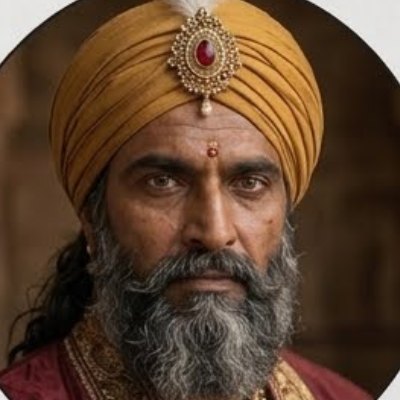
Vrishabhanu — Cowherd Chieftain of Vraja, Father of Radha
Vrishabhanu · Vrishabhanu Gop · Suchandra (previous birth)
Vrishabhanu is a cowherd chieftain of Vraja, identified across the Brahma Vaivarta Purana, the Padma Purana's Uttara Khanda, the Garga Samhita, and Rupa Goswami's Shri Radha-Krishna-Ganoddesha-Dipika as the father of Radha, the eternal consort of Krishna and the foremost of the gopis of Vraja. He is the husband of Kirtida Devi — herself the rebirth of Kalavati, the youngest of the three mind-born daughters of the Pitris from Svadha, a daughter of Daksha Prajapati — with whom he is recorded as having discovered the infant Radha near the banks of the river Yamuna. He is also the father of Radha's younger sister Ananga Manjari. Vrishabhanu shared the chieftainship of his branch of the Vraja cowherds with his brothers Bhanu, Subhanu, and Ratnabhanu, each name continuing the recurring solar bhanu element of their family line. In the Padma Purana and the Garga Samhita, Vrishabhanu's birth as a cowherd is presented as the rebirth of a former king named Suchandra, who together with his wife Kalavati performed sustained austerities and received from Brahma the boon of becoming parents of the supreme goddess in her descended form. The Shiva Purana's Rudra Samhita, Parvati Khanda (2.3.2), had already declared, through Sanatkumara's pronouncement at Shvetadvipa, that Kalavati would become the wife of Vrishabhanu the cowherd chief and that Radha would be born as their daughter — confirming the two traditions as complementary. Vrishabhanu's principal significance in the tradition lies in this paternal role: he is the mortal father of the figure whom Gaudiya Vaishnavism identifies as the Hladini Shakti, the personification of Krishna's own potency of divine bliss, and his household at Barsana is venerated as Radha's ancestral home and the seat of her worship.
✦ The Name
The name Vrishabhanu is a Sanskrit compound of vrishabha, meaning bull — a term widely used in Vedic and Puranic literature both for the animal itself and, by extension, as an epithet conveying strength, pre-eminence, or excellence, a bull among men being a common idiom for a foremost or outstanding figure — and bhanu, meaning light, splendour, or sun, the element shared with his brothers Bhanu, Subhanu, and Ratnabhanu and with the ancestral figures of the Bhanu line. The compound may thus be rendered as the foremost or pre-eminent sun, or as a bull-like, mighty figure of solar splendour, an apt name for the chieftain who headed his branch of the Vraja cowherds. In his previous birth, he bore the name Suchandra, a Sanskrit compound of su, meaning good or auspicious, and chandra, meaning moon, thus signifying one of auspicious lunar radiance.
✦ Lineage
- Father (as Vrishabhanu): Mahibhanu — named in Rupa Goswami's Shri Radha-Krishna-Ganoddesha-Dipika as Vrishabhanu's father within an established cowherd lineage of Vraja bearing the Bhanu name across generations; this genealogical tradition is separate from and not reconciled with the Suchandra rebirth narrative in any primary source
- Mother (as Vrishabhanu): Sukhada — named in Rupa Goswami's Shri Radha-Krishna-Ganoddesha-Dipika as Vrishabhanu's mother alongside Mahibhanu
- Brothers: Bhanu, Subhanu, and Ratnabhanu — cowherd chieftains of Vraja recorded in Rupa Goswami's Shri Radha-Krishna-Ganoddesha-Dipika as Vrishabhanu's brothers, with whom he shared the chieftainship of their branch of the Gopala community, each name carrying the same solar bhanu element
- Spouse: Kirtida Devi — wife of Vrishabhanu and mother of Radha and Ananga Manjari; in her previous birth she was Kalavati, the youngest of the three mind-born daughters of the Pitris from Svadha, a daughter of Daksha Prajapati and Prasuti; she is venerated in Gaudiya Vaishnava tradition as one of the most exalted of mortal mothers
- Daughter: Radha — recorded in the Brahma Vaivarta Purana as discovered by Vrishabhanu near the banks of the Yamuna within a lotus, radiant and golden-complexioned, and recognised as a manifestation of the supreme goddess descended to share in Krishna's pastimes; venerated across the Brahma Vaivarta Purana, the Padma Purana's Uttara Khanda, the Garga Samhita, and the wider Gaudiya Vaishnava tradition as the foremost of the gopis of Vraja and as the eternal consort of Krishna, identified theologically as his Hladini Shakti
- Daughter: Ananga Manjari — Radha's younger sister, recorded in the Brahma Vaivarta Purana and in Gaudiya Vaishnava devotional literature as a close attendant and confidante within Radha's intimate circle
✦ The Declaration at Shvetadvipa
The Shiva Purana's Rudra Samhita, Parvati Khanda (2.3.2), records the episode that established, at a cosmic level, the destined union of Vrishabhanu and Kalavati and the birth of Radha within their household. The three mind-born daughters of the Pitris and Svadha — Mena, Dhanya, and Kalavati — travelled to Shvetadvipa, the divine island of Vishnu in the Ocean of Milk. When the four Kumaras arrived at the assembly there, the three sisters failed to rise in respect, and Sanatkumara pronounced that they would take birth on earth. When the sisters appealed, Sanatkumara declared their divine destinies: for Kalavati, the youngest, he declared that she would become the wife of Vrishabhanu the cowherd chief of Vraja, and that Radha — described as a companion of Krishna — would be born as her daughter. This declaration situates Vrishabhanu as the figure pre-ordained at the celestial level to be the husband of Kalavati and the earthly father of Radha, prior to and independent of the Suchandra narrative of the later Vaishnava devotional texts.
✦ The Previous Birth as Suchandra and the Boon of Brahma
The Padma Purana's Uttara Khanda and the Garga Samhita record that Vrishabhanu, in his previous birth, was a king named Suchandra. Suchandra was married to Kalavati, described in the Padma Purana as a granddaughter of Daksha Prajapati — consistent with Kalavati's identity as a daughter of Svadha, herself a daughter of Daksha. Together, Suchandra and Kalavati undertook sustained austerities on the banks of the Gomati River, appealing to Brahma over a period recorded in the Garga Samhita as twelve years. Brahma appeared and granted them the boon that they would ascend to Svarga and subsequently be reborn on earth, at which time the supreme consort of Vishnu — Lakshmi in the form of Radha — would be born as their daughter, after which both would attain final liberation.
The Padma Purana also preserves an account in which Suchandra, growing detached from household existence, departed for the ashrama of the sage Agastya. Kalavati, left behind, lamented his departure, and Brahma appeared to console her with the same promise of rebirth and the birth of the goddess as their daughter. In fulfilment of this boon, Suchandra was reborn in the Dvapara Yuga in Vraja, in a household the Garga Samhita associates with Surabhanu, and was named Vrishabhanu. Kalavati was reborn as Kirtida, emerging according to the Garga Samhita from the sacrificial fire-pit of a king named Bhalandan. Both Vrishabhanu and Kirtida are described in the Garga Samhita as retaining memory of their previous lives. They were united in marriage and in due course the infant Radha manifested within their household.
✦ The Discovery of Radha
The Brahma Vaivarta Purana records that Vrishabhanu, going to bathe at the Yamuna, encountered a blazing golden lotus upon the water containing a radiant infant. He carried the child home to Kirtida Devi. According to the Padma Purana and Garga Samhita, Brahma appeared at that moment and recalled to Vrishabhanu the story of his previous birth as Suchandra, his marriage to Kalavati, and the boon granted through their austerities, identifying the infant as the incarnation of Lakshmi. The infant Radha did not open her eyes and made no sound, causing concern among her parents and the village community. The Garga Samhita and Padma Purana record that when the infant Krishna, brought to Radha's first birthday celebration at Vrishabhanu's household, crawled to her cradle and looked at her, Radha opened her eyes for the first time, with Krishna as the first sight she beheld.
✦ Textual Variants and Inconsistencies
Two distinct traditions account for Vrishabhanu's parentage and origin, and the sources consulted do not reconcile them. Rupa Goswami's Shri Radha-Krishna-Ganoddesha-Dipika names Mahibhanu as Vrishabhanu's father and Sukhada as his mother, situating him within an established cowherd lineage bearing the Bhanu name across multiple generations. The Garga Samhita and the Padma Purana's Uttara Khanda, by contrast, account for Vrishabhanu's origin through the rebirth narrative of King Suchandra, associating his household with Surabhanu, a tradition that does not refer to Mahibhanu or Sukhada. The two traditions differ in kind as much as in content: the Ganoddesha-Dipika presents a straightforward generational lineage, while the Garga Samhita and Padma Purana present a rebirth narrative emphasising spiritual continuity from a former life. No primary source consulted attempts to combine both traditions into a single coherent account, and this profile presents both without imposing a resolution.
The tradition linking Vrishabhanu to Kalavati's celestial identity as a daughter of the Pitris and Svadha rests on the Shiva Purana's declaration at Shvetadvipa and the Garga Samhita's synthesis of that tradition with the Suchandra-Kalavati narrative. The older Puranas including the Vishnu Purana, Bhagavata Purana, and Vayu Purana record only two daughters of the Pitris and Svadha — Mena and Dharini — and do not mention Kalavati. The three-daughter tradition is specific to the Shiva Purana and the later Vaishnava devotional corpus. Radha's birth mode is also inconsistently presented across sources: the Padma Purana's account of Radha as ayonija, appearing within a lotus on the Yamuna rather than born from the womb, coexists unresolved with accounts that describe her as simply born to Kirtida within their household.
✦ Theological Significance
Within Gaudiya Vaishnava theology, Vrishabhanu's role as Radha's father carries significance beyond ordinary genealogy because of who Radha herself is understood to be. Radha is identified as the Hladini Shakti, the personification of Krishna's own potency of divine bliss, and her appearance within Vrishabhanu's household is understood not as the birth of a separate being into a family but as the manifestation of an eternal divine reality within a particular earthly setting for the purpose of Krishna's pastimes in Vraja. The arc of Vrishabhanu's existence — from King Suchandra's austerities alongside Kalavati on the Gomati, through Brahma's boon, through rebirth as a cowherd chieftain, to the discovery of the divine infant at the Yamuna — is presented in the tradition as the culmination of devotional aspiration across two lifetimes, earning the closest possible relationship to the divine.
✦ Iconography and Worship
Vrishabhanu's household at Barsana, in the Braj region of Uttar Pradesh, is venerated as Radha's ancestral home and is closely associated with the Shri Radha Rani Temple, also known as the Shriji Temple, situated atop a hill at Barsana and dedicated to Radha as the presiding deity. Vrishabhanu himself is venerated within the Braj pilgrimage tradition as the patriarch of this household and his role as the chieftain who received and raised Radha is commemorated within the broader devotional geography of Barsana, though he does not possess an independent temple or iconographic tradition comparable to that of Radha or Krishna themselves.
✦ Connection to the Wider Genealogy
Vrishabhanu stands as the central genealogical link in the Abhira cowherd line of Vraja from which Radha descends. As head of a branch of the Gopala community shared with his brothers Bhanu, Subhanu, and Ratnabhanu, and as husband of Kirtida Devi — the reborn form of Kalavati, daughter of the Pitris and granddaughter of Daksha Prajapati — Vrishabhanu's household represents the earthly point at which the eternal relationship between Radha and Krishna becomes manifest within the pastoral community of Vraja. Through his wife Kirtida Devi, his household is connected to the lineage of the Pitris and through them to Daksha Prajapati, Prasuti, and Svayambhuva Manu, the primordial progenitors. Through Radha, his lineage is connected to the entirety of the Krishna narrative tradition, including the Yadava dynasty of Dwaraka into which Krishna was born through Vasudeva and Devaki, though Vrishabhanu's own cowherd lineage remains distinct from that royal Yadava line.
✦ References
- Shiva Purana, Rudra Samhita, Parvati Khanda, Chapter 2.3.2: Records Sanatkumara's declaration at Shvetadvipa naming Vrishabhanu as the destined husband of Kalavati, youngest daughter of the Pitris and Svadha, and father of Radha.
- Padma Purana, Uttara Khanda: Primary source for the narrative of Vrishabhanu's former life as King Suchandra, his marriage to Kalavati granddaughter of Daksha, their austerities at the Gomati, Brahma's boon, Suchandra's departure to Agastya's ashrama, and the rebirth of both as Vrishabhanu and Kirtida; also preserves the account of Radha's appearance as a divine infant within a lotus on the Yamuna.
- Garga Samhita, Canto 1 and Chapter 16: Parallel primary source for the Suchandra rebirth narrative; records the twelve-year penance at the Gomati; identifies Kirtida's emergence from the fire-pit of King Bhalandan; states that both Vrishabhanu and Kirtida retained memory of their previous lives; also contains the verse addressing Radha as daughter of Kalavati.
- Brahma Vaivarta Purana, Krishna Janma Khanda: Primary source for the discovery of Radha by Vrishabhanu near the Yamuna and for the identification of Ananga Manjari as his second daughter.
- Rupa Goswami, Shri Radha-Krishna-Ganoddesha-Dipika, Shri Radha-Parijvara-Nirupana section: Primary source for the alternative genealogical tradition naming Mahibhanu and Sukhada as Vrishabhanu's parents, and for the identification of his brothers Bhanu, Subhanu, and Ratnabhanu.
- Vettam Mani, Puranic Encyclopaedia. Motilal Banarsidass, 1975: Consulted for cross-verification of Vrishabhanu's identity and family relationships across the major Puranas.
- Mahanidhi Swami, Radha Kunda Mahima and Braj Mandala Parikrama manuals: Pilgrimage manuals describing Vrishabhanu's household at Barsana and its association with the Shri Radha Rani Temple.