
About
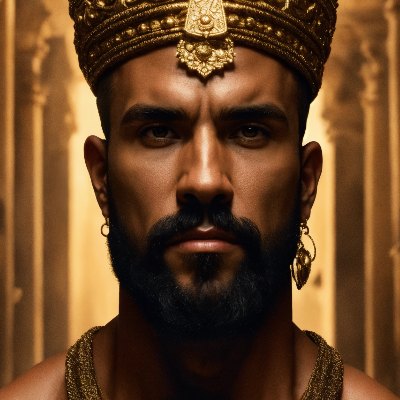
Matsya — Son of Uparichara Vasu by the Apsara Adrika
Matsya · Matsya Dvwaita · Son of Uparichara Vasu · Twin of Satyavati
Matsya was a son of Uparichara Vasu, the righteous Paurava king of Chedi, born not of the king's queen Girika but of the apsara Adrika, a celestial being who had been cursed to live on earth in the body of a fish. Matsya was born as one of two human children recovered from the belly of the fish when it was caught by fishermen of Uparichara Vasu's kingdom; his twin sister, who was given to the fisherman Dasharaj and grew up as Satyavati, became one of the most significant women of the Mahabharata tradition. Uparichara Vasu retained Matsya in his own household and raised him as a prince. Matsya subsequently founded the Matsya kingdom. He appears in the Mahabharata's Adi Parva, and the account of his birth is corroborated in the Vishnu Purana, the Bhagavata Purana, and the Harivamsa.
✦ The Name
The name Matsya is the Sanskrit word for "fish." It was given to this prince because he was born from within the body of a fish — the enchanted form of the apsara Adrika. The name directly commemorates the extraordinary circumstances of his birth. Some secondary accounts refer to him as Matsya Dvwaita, a designation not found in the primary Puranic or epic sources examined; it appears in certain regional and secondary genealogical traditions. In later genealogical lists, Matsya is sometimes described as an adopted son of Uparichara Vasu rather than a natural son, reflecting the unusual manner of his origin, though the Mahabharata itself states that the king chose the male child to raise in his own household without explicitly characterising the relationship as adoption.
✦ Lineage
- Father: Uparichara Vasu — a Paurava king of Chedi, descendant of Kuru, renowned for his friendship with Indra and for riding a crystal flying chariot; Matsya's biological father through an involuntary emission of seed that was carried by a hawk and eventually swallowed by the fish Adrika.
- Mother: Adrika — an apsara who had been cursed by a sage to live in the form of a fish; she swallowed the seed of Uparichara Vasu that fell into the Yamuna river, became pregnant as a result, and was caught by fishermen nine months later. The primary sources state that upon delivering two human children — Matsya and Satyavati — the apsara was released from her curse and returned to the celestial realm.
- Twin sister: Satyavati, also known as Matsyagandha and Kali — given by Uparichara Vasu to the fisherman Dasharaj; she later married Shantanu, the Kuru king of Hastinapura, and bore the sages Chitrangada and Vichitravirya. She had also previously borne the sage Vyasa to the rishi Parashara before her marriage to Shantanu. Through Vyasa's offspring — Dhritarashtra, Pandu, and Vidura — Satyavati became the grandmother of the Kauravas and the Pandavas.
- Half-brothers (by Girika): Brihadratha, also known as Maharatha — installed at Magadha, father of Jarasandha; Pratyagraha — installed at Chedi, ancestor of Shishupala; Kushamba, also called Manivahana; Mavella; and Yadu — all sons of Girika by the same father, and each a founder of a separate kingdom.
- Descendant: Virata — a later king of the Matsya kingdom, in whose court the Pandavas spent their year of incognito exile; Virata's daughter Uttara married Abhimanyu, the son of Arjuna, and their son Parikshit succeeded to the Hastinapura throne after the Kurukshetra war.
✦ The Birth Narrative
The Mahabharata narrates the circumstances of Matsya's birth as follows. On a day when his wife Girika had bathed preparatory to conception and informed the king of her readiness, Uparichara Vasu was simultaneously summoned by his ancestral manes (pitrs) to hunt deer for their monthly ceremony. Bound by filial duty, he set out for the forest despite his desire for his wife. In the forest, overcome by longing for Girika, his seed fell involuntarily. Unwilling to waste it during an auspicious period, the king collected it on a leaf and despatched a hawk to carry it to his palace. A second hawk, mistaking the leaf's contents for a piece of meat, attacked the first hawk in flight, and the seed was knocked from its carrier and fell into the river Yamuna. There it was swallowed by a fish, which was in fact the apsara Adrika living under a sage's curse in fish form. Nine months later, fishermen of the king's domain caught the fish and, when they cut it open, discovered two human infants inside — a boy and a girl. They brought the children to the king. Uparichara Vasu chose to raise the boy in his household; the boy was named Matsya on account of his fish-womb birth. The girl was given to the fisherman Dasharaj, who raised her as his own daughter and named her Satyavati.
✦ Foundation of the Matsya Kingdom
The primary sources record that Matsya subsequently founded the Matsya kingdom, which became an established polity in ancient India with its own ruling dynasty. The Mahabharata at Adi Parva 1.63 identifies him as the founder of the Matsya line, and states that Virata — a much later descendant — founded the kingdom's capital Viratanagara. Secondary sources identify this capital with modern Bairat in the Jaipur district of Rajasthan. The Mahabharata (V.74.16) also records that a king named Sahaja once ruled over both the Chedis and the Matsyas, suggesting that at some period the Matsya kingdom fell within the Chedi sphere of influence — a connection consistent with Matsya's own origins as a Chedi prince. The individual deeds of Matsya during his reign are not narrated in the available primary sources.
✦ Textual Variants and Inconsistencies
The principal inconsistency in the sources concerns Matsya's exact relationship to the five sons of Girika. The Mahabharata clearly distinguishes Matsya from the five sons of Girika: the five sons — Brihadratha, Pratyagraha, Kushamba, Mavella, and Yadu — are born of the queen, whereas Matsya is the product of the separate episode with Adrika. However, certain secondary genealogical compilations list Matsya together with the five Girika sons as though he were a sixth son in the same group, occasionally numbering Uparichara Vasu's sons as six or seven. The Vishnu Purana (Book IV, chapter 19, Wilson translation) gives the king "seven children" in one note while listing Vrihadratha, Pratyagra, Kusamva, Mavella, Matsya, and others — a list of six named figures plus an implied remainder — suggesting that Matsya was counted among the sons even while acknowledging the different mother. The Mahabharata narrative, however, treats the birth of Matsya as a wholly separate episode from the enumeration of the five sons by Girika, and this distinction should be maintained.
A further inconsistency involves the mechanism of Adrika's pregnancy. Some versions state that the apsara herself swallowed the seed when it fell into the river; others describe the seed as being already inside the fish when the fish swallowed it from the water. The moral and narrative substance of the episode is identical in all versions.
✦ A Note on the Epithet Chedipa
The term Chedipa does not appear as a personal name for any son of Uparichara Vasu — including Matsya — in the Mahabharata, the Vishnu Purana, the Bhagavata Purana, the Matsya Purana, the Vayu Purana, or the Harivamsa. It is a Sanskrit patronymic or dynastic epithet meaning "lord of Chedi" or "prince of Chedi," formed from the kingdom-name Chedi and the suffix -pa (lord, protector). As such it is applicable as a general designation to any of the sons of Uparichara Vasu, since they were all princes of the Chedi royal household, and arguably also to Matsya in the sense that he too was raised at the Chedi court. In genealogical reference lists and certain secondary works, Chedipa occasionally appears as though it were a proper name for one of the sons; this usage is not supported by the primary textual tradition.
✦ Connection to the Wider Genealogy
Matsya belongs to the Paurava branch of the lunar dynasty through his father Uparichara Vasu. His most consequential genealogical connection is through his twin sister Satyavati. Satyavati, raised by the fisherman Dasharaj, became the wife of Shantanu, the Kuru king of Hastinapura. She bore Shantanu two sons — Chitrangada and Vichitravirya — and had previously borne the sage Vyasa (Krishna Dvaipayana) to the rishi Parashara before her marriage. When both of Shantanu's sons died without male heirs, Vyasa fathered Dhritarashtra, Pandu, and Vidura on the widows and serving-woman of Vichitravirya, thus continuing the Kuru line. The Pandavas were the sons of Pandu and the Kauravas the sons of Dhritarashtra, making Satyavati — and through her, Matsya — part of the remote genealogical web that produced the protagonists of the entire Mahabharata. Through his own descendants, Matsya's line continued in the Matsya kingdom, whose king Virata became an ally of the Pandavas; Virata's daughter Uttara married Abhimanyu, Arjuna's son, and their son Parikshit inherited the Hastinapura throne after the Kurukshetra war, further interlacing the Matsya and Kuru lines.
✦ References
Primary Sources
- Mahabharata, Adi Parva, chapters 63–64 — The principal source for the birth narrative of Matsya and Satyavati; describes the hawk episode, the fish Adrika, and Uparichara Vasu's decision to retain the boy as Matsya and give the girl to Dasharaj; states that the boy founded the Matsya kingdom.
- Vishnu Purana, Book IV, chapter 19 — Refers to the account of Uparichara Vasu and his family, including the birth of Matsya and Satyavati by Adrika the apsara-fish; Wilson's notes at p. 455 explicitly cite the Mahabharata, Bhagavata, Matsya Purana, and Harivamsa as parallel sources for this legend.
- Bhagavata Purana, Canto IX, chapter 22 — Corroborates the account of Uparichara Vasu's sons and the Adrika episode.
- Harivamsa, genealogical sections — Corroborates the birth narrative of Matsya and Satyavati.
- Mahabharata, Adi Parva 1.63 — States that the descendant Virata founded Viratanagara as the capital of the Matsya kingdom.
- Mahabharata, V.74.16 — Records that king Sahaja ruled both the Chedis and the Matsyas, attesting a historical connection between the two kingdoms consistent with Matsya's Chedi origins.
Secondary and Reference Works
- Puranic Encyclopaedia (Vettam Mani) — Provides a consolidated account of Matsya's birth and identifies him as the founder of the Matsya royal dynasty.
- Bharatpedia, "Uparichara Vasu" — Reproduces the Mahabharata account of Adrika's release from her curse upon delivering Matsya and Satyavati, and notes the fate of each twin.
- Indica Today, "Apsara Adrika and the Chronicler of Mahabharata" — Narrates the full birth episode and contextualises Adrika's role in the chain of events leading to the composition of the Mahabharata via Satyavati and Vyasa.
- Wikipedia, "Uparichara Vasu" — Summarises the episode and notes the distinction between Matsya's birth circumstances and the birth of the five sons by Girika.