
About
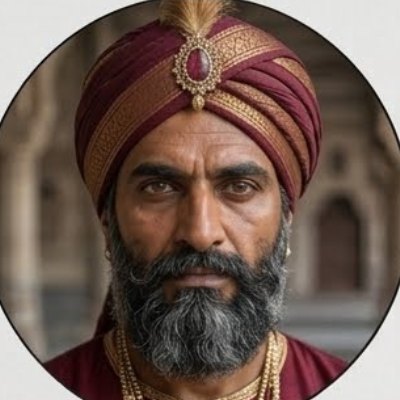
Surabhanu — Yadava Cowherd Chieftain Associated with Vrishabhanu's Rebirth
Surabhanu
Surabhanu is named in the Garga Samhita and in the Uttara Khanda of the Padma Purana as a Yadava cowherd chieftain into whose household Vrishabhanu — the cowherd of Vraja later identified as the father of Radha, the eternal consort of Krishna — was born following his former life as a king named Suchandra. In this account, Suchandra, through devotion and austerity, was granted the boon of being reborn into circumstances that would make him the father of the supreme goddess in her descended form, and this rebirth occurred within Surabhanu's house. Surabhanu's textual presence is confined to this single genealogical and narrative function, and no episode, deed, or independent action beyond this connection is attributed to him in the sources consulted.
✦ The Name
The name Surabhanu is a Sanskrit compound of sura, meaning a deva or a being of divine or godly nature, and bhanu, meaning light, splendour, or sun. The compound may be rendered as the splendour of the gods or the sun among the divine beings. The presence of the bhanu element situates the name within the same recurring solar naming pattern found among Vrishabhanu and his brothers Bhanu, Subhanu, and Ratnabhanu, and among the ancestral figures Suryabhanu and Mahibhanu, though the precise genealogical relationship between Surabhanu and these other Bhanu-named figures is not consistently established across the sources, as discussed below.
✦ The Suchandra Rebirth Narrative
The Uttara Khanda of the Padma Purana records that Vrishabhanu, prior to his birth as the cowherd chieftain of Vraja and father of Radha, was in a former life a king named Suchandra. Through sustained devotion and austerity, Suchandra was granted a boon that would result, in a subsequent birth, in his becoming the father of the supreme goddess in the form in which she would descend to share in Krishna's pastimes in Vraja. This boon was fulfilled through his birth into the household of Surabhanu, a Yadava cowherd chieftain. The narrative thus frames Surabhanu's household as the vessel through which the soul of King Suchandra was reborn as Vrishabhanu, establishing Surabhanu's significance as the figure whose lineage received this reborn soul rather than as an independently developed character.
✦ Lineage
- Associated descendant: Vrishabhanu — cowherd chieftain of Vraja and father of Radha, identified in the Garga Samhita and the Padma Purana's Uttara Khanda as having been born into Surabhanu's household following his former life as King Suchandra.
✦ Textual Variants and Inconsistencies
A significant inconsistency arises between the genealogical traditions concerning the figure under whose household Vrishabhanu's birth is placed. Rupa Goswami's sixteenth-century Shri Radha-Krishna-Ganoddesha-Dipika, in its Shri Radha-Parijvara-Nirupana section, names Mahibhanu as Vrishabhanu's father, with Sukhada as Vrishabhanu's mother. The Garga Samhita and the Padma Purana's Uttara Khanda, by contrast, frame Vrishabhanu's birth through the narrative of King Suchandra's rebirth into the household of Surabhanu, without referring to Mahibhanu or Sukhada in this context. The two traditions are not reconciled in the sources consulted: it is not stated whether Surabhanu and Mahibhanu are intended as the same figure under different names, as successive generations, or as alternative and independent genealogical framings arising from different textual lineages. The sequence in which Surabhanu is placed after Mahibhanu and before Vrishabhanu in some modern pilgrimage compilations represents one attempt at harmonising these two traditions into a single four-generation line, but this harmonisation is not present in the Garga Samhita, the Padma Purana, or the Shri Radha-Krishna-Ganoddesha-Dipika themselves.
✦ References
- Primary Sources
- Padma Purana, Uttara Khanda — Primary source for the narrative of King Suchandra's rebirth into Surabhanu's household as Vrishabhanu, the father of Radha.
- Garga Samhita, Canto 1 — Parallel primary source for the Suchandra rebirth narrative and Surabhanu's identification as the Yadava cowherd chieftain into whose house Vrishabhanu was born.
- Shri Radha-Krishna-Ganoddesha-Dipika of Rupa Goswami, Shri Radha-Parijvara-Nirupana section — Provides the alternative genealogical tradition naming Mahibhanu, rather than Surabhanu, as the figure associated with Vrishabhanu's birth, relevant to the textual variant discussed in this profile.
- Secondary Sources
- Bharatpedia, entry on Vrishabhanu — Secondary reference consolidating the Garga Samhita and Padma Purana material concerning Surabhanu and the Suchandra rebirth narrative.
- Mahanidhi Swami, Radha Kunda Mahima and Braj Mandala Parikrama manuals — Modern pilgrimage manuals presenting a four-tier ancestral sequence in which Surabhanu is placed between Mahibhanu and Vrishabhanu, representing one harmonisation of the two genealogical traditions discussed above.