
About
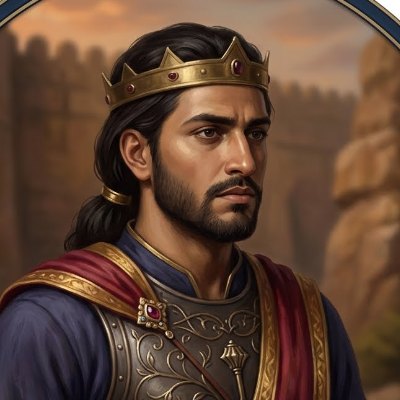
Sahadeva of Magadha — King of Magadha, Division Commander of the Pandava Army
Sahadeva · Magadharaja · Brihadrathanandana · Jarasandhiputra
Sahadeva of Magadha was a king of the ancient kingdom of Magadha, son of the formidable emperor Jarasandha and grandson of Brihadratha, the founder of the Brihadratha dynasty. He is a figure distinct from two other prominent bearers of the same name in the Mahabharata: Sahadeva the youngest of the five Pandava princes, son of Madri and the Ashvin gods, and Sahadeva of the Panchala line. Sahadeva of Magadha first appears in the narrative at the moment of his father's defeat and death, when Krishna installs him on the throne of Magadha immediately after Bhima's execution of Jarasandha. He subsequently maintained the kingdom as a vassal ally of the Pandavas, participated in the Draupadi svayamvara assembly as a declared Pandava supporter, and at the outset of the Kurukshetra War was formally appointed by Yudhishthira as one of the seven division commanders of the Pandava army. He was slain during the war by Drona, the supreme commander of the Kaurava forces. He appears in the Sabha Parva and Drona Parva of the Mahabharata, in the Udyoga Parva at the muster of armies, and in the Bhagavata Purana and Matsya Purana in relation to his dynastic succession. The Wisdomlib Puranic Encyclopedia cites Drona Parva, Chapter 225, Verse 45 as the specific locus of his death, and Udyoga Parva, Chapter 187, Verse 11 for his appointment among the commanders.
✦ The Name
The name Sahadeva is a Sanskrit compound of saha, meaning "together with" or "accompanied by," and deva, meaning "god" or "divine being," yielding the broad sense of "he who is with the gods" or "accompanied by the divine." The name is extremely common in the epic tradition and is shared by several unrelated figures, making precise identification by name alone unreliable. In genealogical and textual reference, this Sahadeva is most precisely identified by his patronymic and dynastic appellations: Jarasandhiputra (son of Jarasandha) and Magadharaja (king of Magadha). His grandfather's name yields the dynastic designation Brihadrathanandana, meaning "of the lineage of Brihadratha."
✦ Lineage
- Paternal grandfather: Brihadratha of Magadha, founder of the Brihadratha dynasty, the earliest ruling line of the Magadha kingdom, whose capital was Girivraja, identified with modern Rajgir in Bihar.
- Father: Jarasandha, emperor of Magadha, one of the most powerful rulers of his age, whose campaigns against the Yadavas, alliance network across the subcontinent, and imprisonment of eighty-six captive kings for royal sacrifice made him the principal obstacle to Yudhishthira's Rajasuya sacrifice. He was killed in single combat by Bhima, son of the wind-god Vayu and second of the five Pandava princes, under the direction of Krishna.
- Sisters: Asti and Prapti, both given by Jarasandha in marriage to Kansa, the tyrannical king of Mathura, whose death at the hands of Krishna precipitated Jarasandha's sustained war against the Yadava clan.
- Brother: Jayatsena, a Magadhan prince who held some regional sovereignty alongside or following Sahadeva. His alliance during the Kurukshetra War is a matter of textual inconsistency; see the Variants section below.
- Sons: Somapi, also referred to as Somadhi in the Matsya Purana, and Marjasp (also rendered Marjari in some sources). The Puranas record that Somapi succeeded Sahadeva on the throne of Magadha and ruled from Girivraja for fifty-eight years. Somapi's own son was Shrutashravas, continuing the Brihadratha line into subsequent generations.
✦ Enthronement at Girivraja
The Sabha Parva of the Mahabharata, in the chapter immediately following the account of Jarasandha's death at Bhima's hands, records that Sahadeva came before Krishna accompanied by the principal officers of state and his priests. He bowed before Krishna and presented him with substantial offerings of jewels and precious stones. Krishna, reassuring the prince who approached in evident anxiety, accepted the gifts and formally installed Sahadeva on the throne of Magadha. The Sacred Texts edition of the Sabha Parva preserves the episode in the original translation: Sahadeva, described as high-souled and strong-armed, obtained the friendship of Krishna and was treated with respect and kindness by Bhima and Arjuna, the two sons of Pritha, before re-entering his father's city. With Krishna's permission, Sahadeva also performed the last rites for Jarasandha. The Sabha Parva further records that Sahadeva, at Krishna's direction, made arrangements for the ceremonial bath, garments, and meals of all the captive kings who had been released from Jarasandha's dungeons. Krishna then departed Girivraja with the Pandavas, carrying with him the wealth and jewels that had been presented by the freed kings.
✦ The Divided Kingdom
Although Sahadeva was formally installed as king of Magadha by Krishna, the Wikipedia article on Sahadeva of Magadha notes that he appears to have governed only the western territories of the kingdom. The eastern region, with its historic capital at Girivraja, was controlled by two other rulers named Dandadhara and Danda, who are not identified in the epic as sons of Jarasandha. These rulers, together with a prince named Jalasandha, aligned themselves with the Kaurava cause during the Kurukshetra War while Sahadeva supported the Pandavas, indicating a lasting political fracture within Magadha that followed the death of Jarasandha and was never fully resolved before the war.
✦ Allegiance to the Pandavas and the Rajasuya Assembly
Sahadeva attended the svayamvara of Draupadi and is recorded among the kings who demonstrated allegiance to the Pandavas. At Yudhishthira's Rajasuya sacrifice, Sahadeva appeared as a tributary ally. The Sacred Texts edition of the Sabha Parva records that after Jarasandha's death, the freed kings themselves contributed wealth, gems, and fine garments to Bhima and Krishna, who brought these back to Indraprastha. Sahadeva's formal subordination to Yudhishthira's sovereignty was thus expressed both by his installation at Krishna's hand and by his presence and tribute at the culminating sacrifice of the Pandava imperial assertion.
✦ Appointment as Division Commander
The Udyoga Parva of the Mahabharata, in the section concerned with the mustering and organisation of the Pandava army before the Kurukshetra War, explicitly records the appointment of Sahadeva, ruler of the Magadhas, as one of the seven commanders to whom the seven akshauhini divisions of the Pandava force were assigned. The Udyoga Parva passage, preserved in the Sacred Texts edition, names the seven commanders as Drupada, Virata, the bull of Sini's race (Satyaki), Dhrishtadyumna prince of Panchala, Dhrishtaketu, Shikhandi of Panchala, and Sahadeva ruler of the Magadhas, with Dhrishtadyumna placed above them all as commander-in-chief and Arjuna designated as the foremost among all warriors. The same parva, in a separate passage, also mentions Sahadeva son of Jarasandha alongside Jayatsena as warriors resolved upon fighting for the Pandavas, confirming his committed allegiance at the commencement of the war. Sahadeva brought one akshauhini of troops to the Pandava camp.
✦ Death in the Kurukshetra War
Sahadeva of Magadha was slain during the Kurukshetra War by Drona, the supreme Kaurava commander during the middle phase of the war and one of the foremost martial teachers of the age. The Wisdomlib Puranic Encyclopedia, citing Drona Parva, Chapter 225, Verse 45 as the specific textual locus, records this death as occurring under Drona's command during the great battle. The Grokipedia article on Sahadeva of Magadha identifies the episode as occurring within the Jayadratha-Vadha Parva, the sub-section of the Drona Parva that narrates the intense fighting of the fourteenth day, during which Drona decimated a number of Pandava-allied rulers and commanders. A blog entry on the Kurukshetra War's fourteenth day notes that Satyaki beheaded a Magadhan prince named Vyagradhatta and engaged in exterminating the Magadha army on that same day, suggesting the broader Magadhan forces suffered heavy losses.
✦ Dynastic Succession
Following the conclusion of the Kurukshetra War with the Pandava victory, Sahadeva's son Somapi — also referred to as Somadhi in the Matsya Purana — ascended the throne of Magadha. The Puranic record, as summarised by the Wisdomlib Puranic Encyclopedia citing the Bhagavata Purana (Skandha Nine), the Matsya Purana, the Vayu Purana, and the Vishnu Purana, states that Somapi ruled from Girivraja for fifty-eight years, maintaining the Brihadratha line in continuity with the new political order established by the Pandavas. Somapi's son was Shrutashravas, who continued the succession.
✦ Textual Variants and Inconsistencies
On the allegiance of Jayatsena during the war: The Udyoga Parva names Sahadeva son of Jarasandha and Jayatsena together as warriors resolved to fight for the Pandavas. However, the Mahabharata also contains passages that describe Jayatsena — identified as king of Magadha and son of Jarasandha — fighting on the Kaurava side and being slain by the Pandava warrior Abhimanyu. A blog analysis of Mahabharata nomenclature confirms this inconsistency and notes that scholars have proposed two interpretations: either there were two distinct Magadhan princes sharing the name Jayatsena who fought on opposing sides, or the text contains a transmission or attribution error. The Wikipedia article on Jayatsena records both readings without resolving the contradiction. The inconsistency is genuine and cannot be resolved from the available textual evidence.
On the name of the second son: The Wikipedia article on Sahadeva of Magadha and the Puranic sources give his second son's name as Marjasp. The Wisdomlib Puranic Encyclopedia lists it as Marjaspi. These represent orthographic variants of the same name across sources rather than a substantive genealogical discrepancy.
On the naming of the seven commanders: Two slightly different lists of the seven Pandava division commanders appear in the Udyoga Parva in different sections. One passage, preserved in the Sacred Texts edition at Book 5, Section 158, names Drupada, Virata, Satyaki, Dhrishtadyumna, Dhrishtaketu, Shikhandi, and Sahadeva of Magadha. A second passage names Drupada, Virata, Dhrishtadyumna, Sikhandin, Satyaki, Chekitana, and Bhimasena. These two lists do not agree on all positions. The first list explicitly names Sahadeva of Magadha; the second replaces him with Chekitana and Bhimasena. Both lists appear in the same Parva and the discrepancy has not been resolved by critical editors. The first list, being the more specific and naming Sahadeva of Magadha by title, is the one that directly confirms his appointment.
✦ Connection to the Wider Genealogy
Sahadeva of Magadha belongs to the Brihadratha dynasty of the Lunar Dynasty line, descended through Uparichara Vasu of Chedi. Through his father Jarasandha's daughters Asti and Prapti, he was the nephew by alliance of Kansa of Mathura, and thereby an indirect relative of Krishna, who was Kansa's nephew by his sister Devaki. Through his son Somapi and grandson Shrutashravas, he links the Jarasandha-era Magadha kingdom to the post-war Puranic dynastic record, which traces the Brihadratha line's continuation at Girivraja until its eventual displacement by the Pradyota dynasty.
✦ References
Primary Sources
- Mahabharata, Sabha Parva, Jarasandhavadha sub-parva, Chapter 24 (Sacred Texts edition): The principal primary source for Sahadeva's enthronement at Girivraja by Krishna, his presentation of jewels, his performance of Jarasandha's last rites, and his care for the released captive kings.
- Mahabharata, Udyoga Parva, Section 158 (Sacred Texts edition): Explicitly names Sahadeva, ruler of the Magadhas, as one of the seven division commanders appointed by Yudhishthira, confirming his military command status at the outset of the Kurukshetra War.
- Mahabharata, Udyoga Parva, Section 50 (Sacred Texts edition): Names Sahadeva son of Jarasandha and Jayatsena together among the warriors resolved to fight for the Pandavas, establishing both brothers' declared allegiance.
- Mahabharata, Drona Parva, Chapter 225, Verse 45: The specific primary-text locus recording Sahadeva of Magadha's death at the hands of Drona during the Kurukshetra War.
- Bhagavata Purana, Skandha Nine: Records Sahadeva's enthronement by Krishna, his arrangement for the released kings, his sons Somapi and Marjaspi, and the fifty-eight-year reign of Somapi at Girivraja.
- Matsya Purana and Vayu Purana: Provide parallel dynastic records of Sahadeva's succession through Somadhi (Matsya Purana's variant name for Somapi) and the continuation of the Brihadratha line.
- Vishnu Purana, Book Four, Chapter 22: Includes the Magadha dynastic record placing Sahadeva and his successors within the Brihadratha lineage.
Secondary and Reference Sources
- Wisdomlib, Puranic Encyclopedia (Vettam Mani), definition of Sahadeva: Provides chapter and verse citations for Udyoga Parva Chapter 187 Verse 11 (appointment among commanders) and Drona Parva Chapter 225 Verse 45 (death by Drona), and lists sons Somapi and Marjaspi with Puranic source references.
- Wikipedia, "Sahadeva of Magadha": Synthesises primary-text references regarding enthronement, the political division of Magadha, attendance at the Draupadi svayamvara, the one-akshauhini contribution to the Pandava army, the seven maharathi appointment, death by Drona, and the fifty-eight-year reign of Somapi.
- Wikipedia, "Jayatsena": Documents the textual inconsistency concerning Jayatsena's war allegiance, recording both the Udyoga Parva's statement of Pandava support and the Mahabharata's separate description of Jayatsena fighting for the Kauravas and being slain by Abhimanyu.
- Grokipedia, "Sahadeva of Magadha": Provides secondary synthesis of the Drona Parva narrative placing Sahadeva's death within the Jayadratha-Vadha Parva sub-section, and notes post-war dynastic continuity through Somadhi.
- Sacred Texts Archive, Mahabharata translations: Supplies direct translation of the Sabha Parva Chapter 24 episode of Sahadeva's installation and the Udyoga Parva Chapter 158 list of seven division commanders, both used to verify the factual content of this profile.