
About
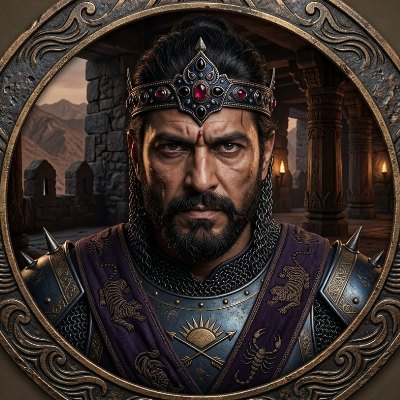
Jayatsena — Prince of Magadha, Kaurava Ally, Son of Jarasandha
Jayatsena · Jarasandhija · Magadhah · Magadhadhipati · Maagadhanamadhipati
Jayatsena was a Magadhan royal of the Brihadratha dynasty, the younger brother of Sahadeva of Magadha — who was installed as king of Magadha by Krishna after Jarasandha's death — and a son of Jarasandha, the formidable emperor of Magadha. He is a figure distinct from several other bearers of the same name in the Sanskrit tradition, including a son of Sarvabhauma mentioned in the Adi Parva and a Jayatsena named in the Harivamsha and Vishnu Purana as son of Nadina. The Adi Parva of the Mahabharata identifies the Magadhan Jayatsena as the earthly incarnation of the eldest of the Kalakeya demons. His significance in the epic lies principally in the textual ambiguity surrounding his war allegiance: the Udyoga Parva and Sabha Parva record him as an ally of the Pandavas, while the war books — the Bhishma Parva, the Karna Parva, and the Stri Parva — describe a king named Jayatsena, identified as son of Jarasandha and lord of the Magadhas, fighting for the Kauravas and being killed by Abhimanyu, the son of Arjuna and Subhadra. The Karna Parva, Section 5, Verse 120, preserved in the Sacred Texts edition, is the primary locus of his death as recorded in direct primary text. The Mahabharata does not explicitly resolve whether these references describe one individual or two distinct figures.
✦ The Name
The name Jayatsena is a Sanskrit compound of jayat, a present participle derived from the root ji meaning "to conquer" or "to be victorious," and sena, meaning "army." The compound thus carries the sense of "he of the victorious army" or "one who possesses a conquering force." The Wikipedia article on Jayatsena records this etymology. In the war books he is addressed by the titles Magadhah, meaning "the Magadhan," and Magadhanamdhipati, meaning "lord of the Magadhas," the latter appearing in Karna Parva VIII.73.3657. His patronymic Jarasandhija — son of Jarasandha — and his dynastic designation as a member of the Brihadratha line are the identifiers that consistently anchor him to the Magadhan royal house across all textual references.
✦ Lineage
- Paternal grandfather: Brihadratha of Magadha, founder of the Brihadratha dynasty, the earliest ruling line of the kingdom of Magadha, whose capital was Girivraja, identified with modern Rajgir in Bihar.
- Father: Jarasandha, emperor of Magadha, one of the most powerful rulers of his age, born from two separately delivered halves rejoined by the Rakshasi Jara from whom he took his name. He extended Magadhan power across much of the subcontinent, imprisoned eighty-six captive kings intended for royal sacrifice, and launched seventeen sustained campaigns against the Yadava city of Mathura after Krishna killed his son-in-law Kamsa. He was killed in single combat by Bhima, second of the five Pandava princes and son of the wind-god Vayu, under the strategic direction of Krishna.
- Brother: Sahadeva of Magadha, installed on the throne of Magadha by Krishna immediately after Jarasandha's death, who subsequently supported the Pandavas, contributed one akshauhini of troops to the Pandava army, and was appointed one of the seven division commanders of the Pandava forces in the Udyoga Parva. He was killed during the Kurukshetra War by Drona, the supreme commander of the Kaurava forces during the middle phase of the war.
- Sisters: Asti and Prapti, both given in marriage by Jarasandha to Kamsa, the tyrant king of Mathura, whose widowing after Krishna killed Kamsa and whose grief-stricken return to Girivraja precipitated Jarasandha's sustained war against the Yadavas.
✦ Cosmological Identity
The Adi Parva of the Mahabharata, in its Sambhava Parva section at I.67.2684, records the cosmic identities of the kings who would participate in the Kurukshetra War — a systematic enumeration of divine and demonic presences incarnated in human royal form for the great conflict. Jayatsena, son of Jarasandha, is there identified as the earthly incarnation of the eldest among the Kalakeya demons. The Kalakeyas are a class of Asuras or demonic beings who appear in Puranic and epic cosmology as formidable adversaries of the gods, distinct from the Danavas and Daityas though broadly grouped among the demonic races. This identification places Jayatsena within the epic's theological framework in which the Kurukshetra War is understood as a cosmic event drawing together incarnations of both divine and demonic entities to resolve accumulated karmic and cosmic imbalances.
✦ Presence at the Draupadi Svayamvara
The Adi Parva records Jayatsena's attendance at the svayamvara of Draupadi, the daughter of King Drupada of Panchala, at I.186.6988. He is listed among the distinguished royal guests who travelled to the Panchala capital to compete for her hand. His brother Sahadeva of Magadha is also listed as attending the same assembly. This is the earliest narrative appearance of Jayatsena in the epic and establishes his presence in the political world of the pre-war period alongside the major kings and princes of the age.
✦ The Alliance Question: Pandava or Kaurava?
The most significant and unresolved textual problem surrounding Jayatsena is the question of his war allegiance. The Sabha Parva at II.44.1538 mentions him as ruler of Magadha in a context of Pandava-allied kings. The Udyoga Parva at V.4.71–82 and again at V.19.577 records that Jayatsena brought a full akshauhini of forces to support Yudhishthira in preparation for the war. The same Udyoga Parva passage at V.50.2014 explicitly names Jarasandha's son Jayatsena together with Sahadeva as both having sided with Yudhishthira. James L. Fitzgerald, translator of the critical edition of the Mahabharata, lists Jayatsena as an important Pandava ally on the basis of these Udyoga Parva attestations.
Against this, the war books present a directly contradictory tradition. The Bhishma Parva at VI.16.623 names a Jayatsena as a regional king who contributed one akshauhini to Duryodhana's Kaurava army. The same Parva at VI.108.5007 refers to a Magadhan Jayatsena fighting Bhimasena. The Karna Parva at VIII.5.120 explicitly identifies this warrior as Jarasandhih Magadhah — the Jarasandha-born Magadhan — and states that he was slain in battle by the son of Subhadra, that is, Abhimanyu. The Karna Parva at VIII.73.3657 confirms the same killing, describing the Magadhanam adhipati, lord of the Magadhas, as having been killed by Abhimanyu seven days earlier. The Stri Parva at XI.25.712 records the lamentation of Magadhan women for their slain ruler, further substantiating his death in the Kaurava cause.
The Mahabharata does not explicitly address or resolve this contradiction. Three scholarly positions exist. F. E. Pargiter, in his historical analysis, rejects the Pandava-alliance tradition entirely and holds that after Jarasandha's fall, Magadha fractured politically, with Sahadeva governing only the western territories while eastern Magadha and Girivraja were under separate rulers including Danda, Dandadhara, and a Jayatsena who supported the Kauravas. Vettam Mani in the Puranic Encyclopedia acknowledges Jayatsena as Sahadeva's brother and a Pandava ally but proposes that the Kaurava-allied Jayatsena who was killed by Abhimanyu was a distinct person — son of a different, otherwise unrecorded Jarasandha, a Kshatriya of Magadha. Kevin McGrath interprets the ambiguity as an editorial phenomenon arising from the epic's composite origins across multiple narrative traditions with differing accounts of Magadha's allegiance. No critical consensus has been reached.
✦ The Akshauhini Contribution
Regardless of which tradition one follows regarding allegiance, both the Pandava-tradition and the Kaurava-tradition texts record that Jayatsena brought a full akshauhini of troops to the war. The Udyoga Parva attributes this force to the Pandava cause; the Bhishma Parva attributes an akshauhini from a Jayatsena to the Kaurava forces. An akshauhini was the standard division unit of the epic's military accounting, comprising 21,870 chariots, an equal number of war elephants, 65,610 cavalry, and 109,350 infantry soldiers. The Grokipedia article on Jarasandha notes that both Sahadeva and Jayatsena are credited with contributing Magadhan forces to the Pandava camp in the post-Jarasandha period, drawing on the Udyoga Parva tradition.
✦ Death at the Hands of Abhimanyu
The death of Jayatsena at the hands of Abhimanyu is among the most textually secure facts in his profile. The Karna Parva, Section 5, Verse 120, preserved in the Sacred Texts critical translation by Kisari Mohan Ganguli, is unambiguous: Sanjaya, recounting to the blind king Dhritarashtra the great losses sustained by both sides, states that the mighty Jayatsena, son of Jarasandha, prince of the Magadhas, was slain in battle by the high-souled son of Subhadra. Abhimanyu was the son of Arjuna — himself the third Pandava, son of Kunti and the god Indra, and the foremost archer of the age — and Subhadra, sister of Krishna and Balarama. The Karna Parva's further reference at VIII.73.3657, speaking of the lord of the Magadhas as having been killed by Abhimanyu seven days prior, and the Stri Parva's record of Magadhan women mourning their ruler, both confirm the event. The specific day of the battle on which this death occurred is not unambiguously stated in the primary texts for the purposes of this profile; the submitted identification of the tenth day is not corroborated by the primary text references available and has accordingly not been incorporated.
✦ Textual Variants and Inconsistencies
On the core allegiance contradiction: As detailed above, the Sabha Parva and Udyoga Parva record Jayatsena as a Pandava ally, while the Bhishma Parva, Karna Parva, and Stri Parva record a Jayatsena identified by the same patronymic and title as a Kaurava ally who dies fighting for Duryodhana. The Mahabharata itself provides no explicit reconciliation. Three distinct scholarly resolutions have been proposed — rejection of the Pandava-allegiance verses (Pargiter), positing a second Jayatsena son of a different Jarasandha (Mani), and reading the contradiction as editorial layering from multiple regional traditions (McGrath) — and no consensus position commands the field.
On the name Jayatsena in other contexts: The Wikipedia article on Jayatsena records that the name appears in the Mahabharata as a name of one of the Kaurava brothers (Mahabharata VI.69), as the name of a son of Sarvabhauma (Mahabharata I.3769), and in the Harivamsha and Vishnu Purana as a son of Nadina. These are distinct figures sharing the same name and are not to be identified with the Magadhan Jayatsena profiled here.
On the control of Girivraja: The Wikipedia article on Sahadeva of Magadha notes that the eastern part of Magadha, including its historic capital Girivraja, appeared to be under rulers named Danda and Dandadhara who are not identified as sons of Jarasandha. Whether Jayatsena exercised authority over this eastern territory is Pargiter's historical inference and is not stated as a direct narrative fact in the primary texts.
✦ Connection to the Wider Genealogy
Jayatsena belongs to the Brihadratha dynasty of the Lunar Dynasty line, descending through Uparichara Vasu of Chedi and the Kuru succession to Brihadratha and then to Jarasandha. Through his sisters Asti and Prapti, married to Kamsa of Mathura, he was connected by alliance to the Bhoja-Yadava line and thereby to Krishna, who was Kamsa's nephew. His brother Sahadeva of Magadha continued the Brihadratha line at Girivraja, succeeded by Sahadeva's sons Somapi and Marjasp. Jayatsena's own lineage beyond his death in the Kurukshetra War is not recorded in any primary or secondary source consulted.
✦ References
Primary Sources
- Mahabharata, Adi Parva, Sambhava Parva section, I.67.2684: Identifies Jayatsena son of Jarasandha as the earthly incarnation of the eldest of the Kalakeya demons, within the epic's systematic enumeration of cosmic identities assumed by kings participating in the war.
- Mahabharata, Adi Parva, I.186.6988: Records Jayatsena's attendance at the svayamvara of Draupadi alongside his brother Sahadeva of Magadha, establishing his presence in the pre-war political world.
- Mahabharata, Sabha Parva, II.44.1538: Mentions Jayatsena as ruler of Magadha in the context of kings aligned with the Pandava cause.
- Mahabharata, Udyoga Parva, V.4.71–82 and V.19.577: Records Jayatsena as having contributed a full akshauhini of forces to Yudhishthira's army in preparation for the Kurukshetra War.
- Mahabharata, Udyoga Parva, V.50.2014: Explicitly names both Jayatsena son of Jarasandha and Sahadeva of Magadha as warriors who sided with Yudhishthira.
- Mahabharata, Bhishma Parva, VI.16.623: Names a Jayatsena as a regional king contributing one akshauhini to Duryodhana's Kaurava forces — the primary Kaurava-allegiance attestation.
- Mahabharata, Bhishma Parva, VI.108.5007: Refers to the Magadhan Jayatsena fighting Bhimasena during the war.
- Mahabharata, Karna Parva, VIII.5.120 (Sacred Texts edition): The primary death notice; Sanjaya states explicitly that Jayatsena son of Jarasandha, prince of the Magadhas, was slain in battle by the high-souled son of Subhadra — that is, Abhimanyu.
- Mahabharata, Karna Parva, VIII.73.3657: Confirms Abhimanyu's killing of the lord of the Magadhas seven days prior, corroborating the death notice at VIII.5.120.
- Mahabharata, Stri Parva, XI.25.712: Records the lamentation of Magadhan women for their slain ruler, providing further confirmation of his death in the Kaurava cause.
Secondary and Reference Sources
- Wikipedia, "Jayatsena": The most comprehensive secondary synthesis for this profile; collates all primary-text references to Jayatsena's allegiance from the Sabha, Udyoga, Bhishma, Karna, and Stri Parvas, presents all three scholarly positions (Pargiter, Mani, McGrath), and provides precise verse citations across the critical edition.
- Wisdomlib, definition of Jarasandha (Puranic Encyclopedia, Vettam Mani): Notes Jayatsena as a son of Jarasandha, records the Karna Parva death by Abhimanyu at Chapter 5 Verse 30, and proposes the identification of the Kaurava Jayatsena as son of a different Magadhan Jarasandha.
- Wikipedia, "Sahadeva of Magadha": Confirms Jayatsena as Sahadeva's brother and notes his possible sovereignty in some Magadhan territory alongside his brother after Jarasandha's death.
- Sacred Texts Archive, Karna Parva translation (Kisari Mohan Ganguli): Supplies the direct primary-text passage of Jayatsena's death notice at Section 5, used to verify the textual content of this profile.
- Grokipedia, "Jarasandha": Notes that both Sahadeva and Jayatsena allied with the Pandavas in the Udyoga Parva tradition, drawing on Udyoga Parva V.50.2014.