
About
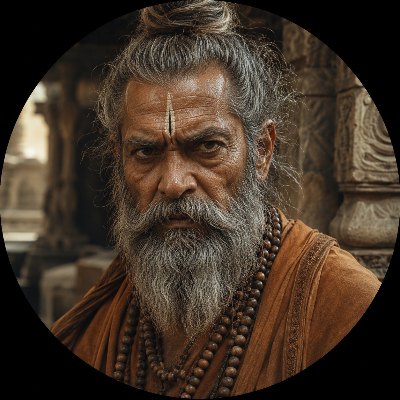
Gargya — Brahmin Preceptor and Biological Father of Kalayavana
Gargya · Gargya of the Garga Gotra · Shaishirayana (Geeta Press Harivamsha variant)
Gargya is a Brahmin sage and preceptor descended from the Puru-Bharata lineage through the chain Manyu — Garga — Shini — Gargya, whose descendants, though of Kshatriya birth, had adopted Brahmin status by his generation as recorded in the Vishnu Purana (Book IV, Chapter XIX) and the Bhagavata Purana (Skandha IX, Chapter 21). He is attested primarily in the Harivamsha (Vishnu Parva, Chapter 58), the Vishnu Purana (Book V, Chapter XXIII), and the Brahmanda Purana (Chapter 14.46) as the biological father of Kalayavana — the Yavana king who invaded Mathura with a vast army and whose death at the hands of the sleeping king Muchukunda was the occasion for Krishna's founding of the city of Dvaraka. Gargya's narrative is one of wounded honour, extreme austerity, and ultimately catastrophic consequence: publicly shamed as sexually impotent by members of the Yadava community he served as preceptor, he undertook twelve years of fierce penance directed at Mahadeva and obtained a boon that resulted in the birth of a son destined to become the most powerful enemy the Yadava race had ever faced.
✦ The Name and Epithet
The name Gargya is a standard Sanskrit gotra-derived designation meaning "descendant of Garga" or "of the Garga lineage." It is both a personal name and a clan marker — in the primary sources it is used interchangeably as a proper name for this individual and as a gotra designation for all descendants of the Garga-Shini line. The Bhagavata Purana (Skandha IX, Chapter 21) confirms that the gotra-name Gargya derives from this line.
The Geeta Press edition of the Harivamsha, in its Sanskrit text of the Kalayavana episode, contains the designation Shaishirayana in application to this figure — a compound meaning "descendant of Shishira" or possibly "of the cool or wintry lineage," though the precise derivation of Shishira in this context is not elaborated in the primary text. The Dutt prose translation of the Harivamsha (Wisdomlib edition) and the Wisdomlib narrative summary of the Vishnu Purana render this figure throughout as simply Gargya, without using Shaishirayana. The epithet is therefore a reading specific to the Geeta Press Sanskrit edition and should be treated as a textual variant rather than a universally attested designation.
The figure must be clearly distinguished from two other individuals also called Gargya or Garga in the tradition: first, Garga of Mathura, the Yadava kulaguru who conducted the naming ceremony of Krishna and Balarama as recorded in the Vishnu Purana (Book V, Chapter VI) — a wholly separate person belonging to a different context; and second, the grammarian Gargya whose linguistic views are cited in the Pratishakhya works and Yaska's Nirukta — again a distinct figure with no connection to the Kalayavana narrative.
✦ Lineage
- Father: Shini — son of Garga, himself a son of Bhavanmanyu (Manyu) of the Puru-Bharata dynastic line. The Vishnu Purana and Bhagavata Purana both confirm Shini as the father of Gargya.
- Paternal grandfather: Garga — son of Bhavanmanyu, one of the foundational figures of the Garga-Bharadvaja lineage, brothers including Brihatkshatra, Mahavirya, and Nara.
- Wife: Named in the Geeta Press Harivamsha as Vrikadevi, described as the daughter of the king of Trigarta. The Dutt and Wisdomlib translations do not name her, referring to her only as Gargya's wife. Her name is thus a variant specific to the Geeta Press edition.
- Son: Kalayavana — conceived through divine boon granted by Mahadeva (Shiva) at the conclusion of Gargya's twelve-year austerity. In the Harivamsha account Kalayavana was born on an apsara named Gopali who had assumed the disguise of a milkmaid; in the Vishnu Purana account he was born on the wife of the childless Yavana king who had befriended Gargya. In both accounts, Kalayavana was raised in the royal household of the Yavana king, succeeded to that throne, and subsequently invaded Mathura with a vast army against the Yadavas.
✦ Role as Preceptor of the Yadavas
The Harivamsha (Vishnu Parva, Chapter 58, as translated by Dutt and confirmed from the Wisdomlib primary text) states that Gargya was the preceptor of both the Andhaka and Vrishni races — the two major clans of the Yadava tribal confederation centred at Mathura. He is further described as having always observed the vow of celibacy, not consummating his marriage even though he was a married man. This detail is essential to understanding the public humiliation that precipitated the entire sequence of events: his celibacy, maintained as a form of brahminic discipline, was interpreted by those around him as sexual incapacity.
✦ The Humiliation and the Vow of Vengeance
The primary sources give two variant accounts of the precise nature and setting of the humiliation, though both agree on its substance and consequences.
The Harivamsha (Vishnu Parva, Chapter 58) states that Gargya's brother-in-law described him as impotent before the king in the city of Ajitanjaya, in the presence of the Yadava community. Gargya, who had maintained celibacy as a vow and not as incapacity, was publicly shamed. Rather than prove his virility immediately — which he could have done but refused to do out of anger at the false accusation — he abandoned all desire to cohabit with his wife and departed to perform austerities.
The Vishnu Purana's narrative section (Book V, Chapter XXIII, confirmed from Wisdomlib) presents a slightly different setting: Gargya's brother-in-law (called Syala in this text) called him impotent while at the cowpens (goshtha) in an assembly of Yadavas, and the Yadavas laughed. In this version the humiliation is more public and more directly connected to the Yadava community as a collective. The Vishnu Purana then states that Gargya, highly offended, went to the shores of the western sea for his penance — the Harivamsha places the penance more generally without specifying the western sea.
Both accounts agree precisely on what followed: Gargya undertook twelve years of fierce penance to Mahadeva, subsisting exclusively on iron dust or iron sand throughout this period. The Harivamsha notes that this diet of iron progressively altered his complexion to an iron-black hue — a detail that provides the basis for his son's name Kalayavana, meaning "the dark-complexioned Yavana." At the end of the twelve years, Mahadeva was pleased and granted Gargya the boon of a supremely powerful son who would be capable of destroying the Vrishni and Andhaka clans of the Yadavas.
✦ The Birth of Kalayavana — Variant Accounts
The two principal primary sources differ in the precise manner in which Kalayavana was conceived and born, and both accounts must be stated separately.
The Harivamsha (Vishnu Parva, Chapter 58) narrates that after Gargya received the boon, the childless king of the Yavanas brought him to his kingdom and arranged for milkmaids to attend to him in their settlement. An apsara named Gopali, disguised as a milkmaid, conceived Kalayavana from Gargya at the command of Mahadeva. The child was then raised in the inner apartments of the Yavana king as if he were the king's own son. After the Yavana king's death, Kalayavana succeeded to the throne.
The Vishnu Purana (Book V, Chapter XXIII) presents a variant in which the childless king of the Yavanas, having befriended Gargya, allowed Gargya to beget a son upon the king's own wife. The son born was described as black as a bee — giving rise to the name Kalayavana — and was placed by the Yavana king upon the throne before the king himself retired to the forest. In this version there is no apsara and the mother is the Yavana queen directly.
The Brahmanda Purana (Chapter 14.46) is confirmed in secondary sources as identifying Gargya as the father of Kalayavana but its independent narrative of the conception is not fully preserved in the sources accessed for this profile. The Wisdomlib compilation records the Brahmanda Purana citation as corroborating Gargya's paternity without presenting a distinct third account.
✦ Theological and Narrative Significance
Gargya's narrative operates on the same structural principle as several other Puranic episodes in which a brahmin or sage, insulted by a ruling family he serves, withdraws his protective function and through extreme austerity generates a force that subsequently destroys or severely damages that family. The pattern is identical in structure to the episode of Vishvamitra's withdrawal from service to Sudas and his subsequent enmity toward the royal family. In Gargya's case the insult comes from within the Yadava community he serves, and the retaliatory force he generates — Kalayavana — is so powerful that it compels Krishna himself to abandon Mathura and establish the fortified city of Dvaraka. The narrative thus presents the brahmin preceptor's honour as a cosmically consequential value: its violation by the very people the preceptor serves becomes one of the proximate causes of a major transformation in the political geography of the Dvapara Yuga.
✦ Connection to the Wider Genealogy
In the lineage-tree system of this reference series, Gargya stands at the penultimate position in the chain Manyu — Garga — Shini — Gargya — Kalayavana. Through his father Shini and grandfather Garga he connects upward to Manyu and the Puru-Bharata trunk of the Lunar dynasty. Through his son Kalayavana he connects to one of the most consequential episodes in the Krishna narrative — the siege of Mathura, the founding of Dvaraka, and the destruction of Kalayavana by Muchukunda's divine fire — making Gargya's act of penance a structural cause of one of the major geographical and political transformations of the Dvapara Yuga.
✦ References
Primary Sources
- Harivamsha, Vishnu Parva, Chapter 58 (Dutt translation, Wisdomlib): The most detailed primary source for Gargya's narrative — his role as preceptor to the Andhaka and Vrishni clans, the public humiliation by his brother-in-law, his twelve-year iron-dust penance to Mahadeva, the boon, and the birth of Kalayavana through the apsara Gopali in the Yavana king's settlement.
- Harivamsha, Vishnu Parva, Chapter 58 (Geeta Press Sanskrit edition, mahabharata-resources.org): The Sanskrit text of the same episode, which contains the epithet Shaishirayana for Gargya, names his wife as Vrikadevi daughter of the king of Trigarta, and names his brother-in-law's role as priest of the Yadavas. This edition is the source for the Shaishirayana designation not present in the Dutt translation.
- Vishnu Purana, Book V, Chapter XXIII (Wisdomlib primary text): The variant account in which Gargya's brother-in-law Syala calls him impotent at the cowpens before the Yadava assembly, Gargya performs the same twelve-year penance at the western sea, and Kalayavana is born on the Yavana king's own wife rather than on an apsara.
- Bhagavata Purana, Skandha IX, Chapter 21, verses 19–20: Confirms Gargya as son of Shini (son of Garga) and states that from Gargya came a generation of Brahmins despite Kshatriya birth — establishing the varna status of this figure.
- Vishnu Purana, Book IV, Chapter XIX: The genealogical chapter confirming the sequence Garga — Shini — descendants called Gargyas and Shainyas, Kshatriyas by birth who became Brahmins.
- Brahmanda Purana, Chapter 14.46: Identified in the Wikipedia article on Garga (sage) as the source naming Gargya as the father of king Kalayavana, corroborating the paternity recorded in the Harivamsha and Vishnu Purana.
Secondary and Reference Sources
- Wisdomlib.org, "Gargya: 19 definitions": Aggregates primary source references to Gargya across the Harivamsha, Bhagavata Purana, and Vishnu Purana, confirming his genealogical position and his role as the father of Kalayavana.
- Wisdomlib.org, "Kalayavana" (Vishnu Purana narrative section): Provides the full Vishnu Purana narrative of the birth of Kalayavana and the siege of Mathura, confirming Gargya's role and the variant account of the conception.
- Wikipedia, "Garga (sage)": Confirms Gargya as listed in the Brahmanda Purana as the father of Kalayavana and situates Shini and Gargya within the broader Garga lineage.
- Wikipedia, "Kalayavana": Provides the Brahmanda Purana Chapter 14.46 citation for Gargya as Kalayavana's father, and summarises the birth narrative variants across the Harivamsha and Vishnu Purana.
- Mahabharata-resources.org, Harivamsha Geeta Press and Critical Edition editions: Provides the Sanskrit text and comparative translation of the Kalayavana episode from two editions of the Harivamsha, used to verify the Shaishirayana epithet and the name Vrikadevi.