
About
Vitatha — The Royal Name of Bharadvaja as Adopted Son of King Bharata
Vitatha · Bharadvaja-as-Vitatha · Vitatha Bharadvaja · Paurava-adopted Bharadvaja
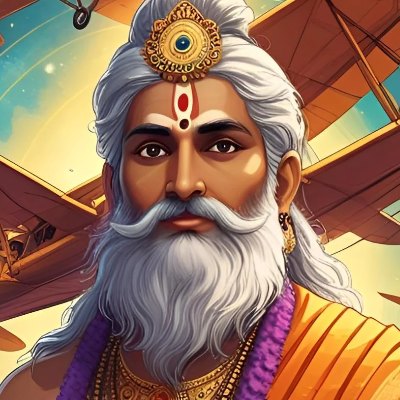
Vitatha is not an independent figure but the royal designation given to the sage Bharadvaja upon his adoption by King Bharata Daushyanti — the celebrated Chakravarti emperor of the Puru-Chandravamsha dynasty after whom the Bharata race and the subcontinent Bharatavarsha take their names. Bharadvaja, born of Brihaspati and abandoned at birth, was taken by the Maruts and given to the childless Bharata, who named him Vitatha. As Vitatha, Bharadvaja entered the royal Puru-Bharata dynastic succession and fathered Bhavanmanyu, also called Manyu, from whom the lineage continues through Garga, Shini, and Gargya to Kalayavana. This profile exists as a structural bridge node in this genealogical reference system to resolve the dual placement of Bharadvaja: as a sage he is profiled under Brihaspati in the brahminical lineage tree; as Vitatha he occupies the position of adopted son and royal heir of Bharata in the Puru-Bharata dynastic tree. The primary sources for Vitatha as a designation are the Vishnu Purana (Book IV, Chapter XIX), the Bhagavata Purana (Skandha IX, Chapters 20–21), the Matsya Purana (Chapter 49, verse 32), the Vayu Purana (Chapter 99, verse 156), the Agni Purana, and the Mahabharata Adi Parva (Sambhava Parva, Section XCIV).
✦ The Name
The name Vitatha is a Sanskrit adjective meaning "without fruit," "unprofitable," "rendered vain," or "that which has come to nothing." The Vishnu Purana (Book IV, Chapter XIX) explicitly glosses the name as an allusion to the unprofitable birth of Bharata's nine biological sons — children whom he rejected for not resembling him, and who were subsequently killed by their own mothers out of fear of being abandoned. The Bhagavata Purana's own commentary tradition, cited in the Wisdomlib primary text edition, states the matter directly: "Vitatha should be regarded as the name of Bharadvaja after his adoption by Bharata." The name therefore does not describe the adopted child himself but encodes the dynastic crisis — the rendering-vain of Bharata's natural progeny — that the adoption resolved. The Agni Purana compresses the entire sequence into a single verse: the son of Brihaspati, being taken by the winds, was transferred through sacrifice and was Vitatha.
✦ The Dual Identity — Brahmin by Birth, King by Adoption
The Vishnu Purana states the consequence of the adoption with unusual explicitness: from Bharadvaja — a Brahmin by birth and a king by adoption — descended both Brahmins and Kshatriyas, described as the children of two fathers. This statement acknowledges that the dual heritage of the figure — his biological paternity by Brihaspati, the divine Brahmin sage, and his adoptive paternity by Bharata, the paramount Kshatriya king — produced a lineage in which both Brahmin and Kshatriya descendants could trace their ancestry. The Garga-Shini-Gargya branch of the descent, which leads to Kalayavana, represents the portion of this dual heritage in which the descendants were Kshatriyas by birth who subsequently adopted Brahmin status — the Vishnu Purana confirming this explicitly for the Gargya and Shainya clans descended from Shini.
In this genealogical reference system, Bharadvaja is profiled in full under his biological father Brihaspati in the brahminical sage lineage tree, where his identity as a Saptarishi, Rigvedic hymn-composer, teacher of Drona, and sage of the ashrama at Prayaga is documented. The present Vitatha node records only his position as adopted royal heir of Bharata and progenitor of the Puru-Bharata continuation through Manyu, Garga, Shini, Gargya, and Kalayavana. The two nodes together constitute the complete picture of a single historical figure whose biography spans two lineage trees simultaneously.
✦ The Circumstances of the Adoption
Bharata Daushyanti — son of Dushyanta and Shakuntala, the Chakravarti emperor of the Puru dynasty — had fathered nine sons by three wives but was not satisfied that any of them genuinely resembled him in quality and character. His wives, fearing rejection and abandonment, killed all nine children. The Mahabharata Adi Parva (Sambhava Parva, Section XCIV, confirmed from the Ganguli translation) records this episode plainly. Bharata then performed great sacrifices directed at the Maruts. The Vishnu Purana narrates that the Maruts, in compassion, brought to him the infant Bharadvaja — the son of Brihaspati who had been abandoned by both his biological father and his mother Mamata — and gave him to Bharata as a son. Bharata named the child Vitatha, and the name of Bharadvaja in the condition of son of Bharata was thus Vitatha.
✦ Lineage
- Biological father: Brihaspati — the divine preceptor of the gods, son of Angiras, one of the seven primordial Saptarishis. Brihaspati is profiled separately in this series under the Angirasa sage lineage. As the biological father, Brihaspati's lineage gives Vitatha-Bharadvaja his brahminical identity, gotra, and Vedic heritage.
- Adoptive father: Bharata Daushyanti — Chakravarti emperor of the Puru-Chandravamsha dynasty, son of Dushyanta and Shakuntala, the king after whom the Bharata race and Bharatavarsha are named. As the adoptive father, Bharata's lineage gives Vitatha his position in the royal Puru-Bharata dynastic succession.
- Son: Bhavanmanyu, also called Manyu — confirmed as the son of Vitatha in the Vishnu Purana (Book IV, Chapter XIX: "The son of Vitatha was Bhavanmanyu") and the Bhagavata Purana (Skandha IX, Chapter 21, verse 1: "He had a son who was named Manyu"). Manyu's sons included Vrihatkshatra, Mahavirya, Nara, and Garga — the last of whom is the direct ancestor of Shini, Gargya, and Kalayavana in this lineage tree.
✦ Textual Variants on the Vitatha-Bhumanyu Relationship
A genuine textual complication exists in the relationship between Vitatha and Bhumanyu across the primary sources, and it must be stated honestly. The Vishnu Purana places Vitatha as the father of Bhavanmanyu. The Bhagavata Purana (Skandha IX) gives the genealogical sequence as Bharata — Bharadvaja — Vitatha, then names Vitatha's son as Manyu — making Bhumanyu and Manyu the same individual under different name forms. The Mahabharata Adi Parva (Section XCIV, Ganguli edition, verse 3710) states that Bharata obtained from Bharadvaja through great sacrifices a son named Bhumanyu, whom he consecrated as heir apparent. One reading of a subsequent passage in the same section states that Bharata had a small son called Vitatha, and that this Vitatha became a son of Bhumanyu — which would make Vitatha Bhumanyu's son rather than his father or alternate name.
Scholarly analysis of the critical edition, as compiled in the Indiaforums Mahabharata Katha discussion drawing on the Poona Critical Edition, establishes that the identification of Bhumanyu and Vitatha as the same person is supported by the fact that Suhotra — son of Vitatha in the Shanti Parva — is also identified as son of Bhumanyu in the Adi Parva (Chapter 90, verse 35). The weight of the principal Puranic sources — the Vishnu Purana, Bhagavata Purana, Matsya Purana, and Vayu Purana — is consistent in placing Vitatha as the adopted name of Bharadvaja in his role as Bharata's heir and the father of Manyu-Bhumanyu. This profile follows that Puranic consensus. The Mahabharata passage that appears to place Vitatha as the son of Bhumanyu is noted here as a genuine textual variant that has not been fully resolved in the primary sources.
✦ Connection to the Wider Genealogy
Vitatha stands at the junction of two major lineage streams in this reference system. Upward through his biological father Brihaspati he connects to the Angirasa sage lineage and the brahminical tradition of the Bharadvaja gotra. Upward through his adoptive father Bharata he connects to the Puru-Chandravamsha royal trunk — Puru — Janamejaya — (further links) — Dushyanta — Bharata — Vitatha. Downward through his son Manyu the sequence continues: Manyu — Garga — Shini — Gargya — Kalayavana, the chain that culminates in the Yavana king whose invasion of Mathura compelled Krishna to found Dvaraka. This node thus bridges the brahminical Angirasa-Brihaspati tree and the royal Puru-Bharata tree at a single person — Bharadvaja-as-Vitatha — whose adoption by Bharata was the structural event enabling that connection.
✦ References
Primary Sources
- Vishnu Purana, Book IV, Chapter XIX (Sacred-texts.com and Wisdomlib primary text): Names Vitatha explicitly as the adopted designation of Bharadvaja given by Bharata, glosses Vitatha as allusion to the unprofitable birth of Bharata's sons, states Vitatha's son was Bhavanmanyu, and records that from Bharadvaja descended both Brahmins and Kshatriyas.
- Bhagavata Purana, Skandha IX, Chapters 20–21 (Wisdomlib primary text): Chapter 20 verse 36 records the adoption of Bharadvaja by Bharata through the Maruts; the genealogical sequence in the same chapter runs Bharata — Bharadvaja — Vitatha with the footnote "Vitatha should be regarded as the name of Bharadvaja after his adoption by Bharata." Chapter 21 verse 1 states "Bharadvaja was delivered by the Marut demigods, he was known as Vitatha. He had a son who was named Manyu."
- Matsya Purana, Chapter 49, verse 32: Attests Vitatha as the name of Bharadvaja after adoption by Bharata and as the father of Manyu, confirmed through the Wisdomlib Vitatha entry.
- Vayu Purana, Chapter 99, verses 140–156: Corroborates the sequence from Brihaspati through Bharadvaja-Vitatha to Manyu in the Puru dynastic genealogy, confirmed through the Wisdomlib Bharadvaja entry.
- Agni Purana: Compresses the adoption narrative into a single verse — the son of Brihaspati, taken by the winds, was transferred through sacrifice and was Vitatha — cited in the Vishnu Purana commentary apparatus.
- Mahabharata, Adi Parva, Sambhava Parva, Section XCIV (Ganguli edition, verses 3710 and 3785): The primary epic source for Bharata's dynastic crisis, the nine sons killed by their mothers, and the obtaining of Bhumanyu through Bharadvaja's sacrifice; contains the variant passage that may place Vitatha as the son of Bhumanyu rather than his alternate name, noted as a genuine textual complexity.
Secondary and Reference Sources
- Wisdomlib.org, "Vitatha: 23 definitions": Aggregates primary source citations from Matsya, Vayu, Vishnu, and Bhagavata Puranas confirming Vitatha as the post-adoption name of Bharadvaja and the father of Manyu in the Puru dynastic sequence.
- Wisdomlib.org, "Bharadvaja: 39 definitions": Records the Bhagavata Purana account of the adoption, the Vayu Purana lineage sequence, and the dual brahmin-Kshatriya heritage descending from Bharadvaja-Vitatha; also records the variant tradition identifying Dirghatamas with Vitatha and distinguishes this from the mainstream identification of Bharadvaja as Vitatha.
- Mahabharata-resources.org, Bharata page: Provides the Sanskrit text and comparative Puranic commentary establishing that the name of Bharadvaja in the condition of son of Bharata was Vitatha, and that Vitatha's son was Bhavanmanyu whose principal sons included Vrihatkshatra, Mahavirya, Nara, and Garga.
- Wikipedia, "Bharata (Mahabharata)": Confirms Bharadvaja as the adopted son of Bharata in its genealogical table, corroborating the primary source consensus.
- Grokipedia, "Bhumanyu": Provides a consolidated analysis of the Bhumanyu birth variants across the Mahabharata, Vishnu Purana, Bhagavata Purana, Matsya Purana, and Vayu Purana, noting the adoption theme and the ritual-yajna variant of Bhumanyu's origin.