
About
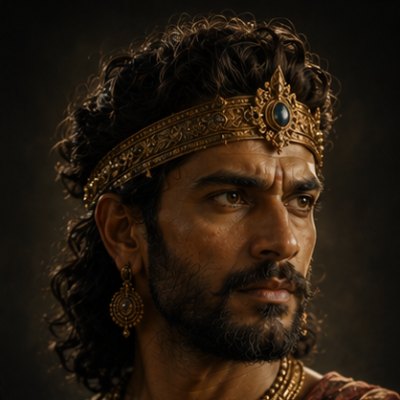
Champa — King of Anga and Founder of Champapuri
Champa · King of Anga · Son of Prithulaksha · Founder of Champapuri
Champa was a king of the Anga dynasty, son of Prithulaksha and father of Haryanga, whose chief distinction in the Puranic and epic tradition is the founding and naming of the great eastern city that became the permanent capital of Anga. The settlement existed before his reign under the name Malini, but it was Champa who transformed and renamed it, giving his own name to both the city and, by later usage, to the kingdom itself. The city of Champa — corresponding to the area near modern Bhagalpur in Bihar — subsequently became one of the six great cities of the Buddhist and Jain traditions and a major centre of commerce and pilgrimage in the ancient eastern Gangetic plain. Champa appears in the Vishnu Purana, the Harivamsha Purana, the Matsya Purana, and the Vayu Purana as a king of the Anga line, though the Bhagavata Purana omits him from its account of the succession.
✦ The Name
The name Champa is most commonly associated in Sanskrit literature with the champaka tree, known for its intensely fragrant yellow and white blossoms, held sacred in Hindu and Buddhist devotional traditions. As a royal name it carries connotations of beauty, fragrance, and auspiciousness. The city founded by this king bore his name — Champapuri, meaning the city of Champa — and in later literary and lexicographic tradition the city was also referred to as Lomapadapuri, linking the capital to the earlier celebrated king Romapada (Lomapada) of the same dynasty. The Jataka literature refers to the city additionally as Kala-Champa, while the Puranic texts consistently identify Malini as its ancient prior name.
✦ Lineage
- Father: Prithulaksha, king of Anga, son of Chaturanga, who was himself born through the blessing of the sage Rishyashringa upon Romapada
- Son: Haryanga, born through the favour of the ascetic Purnabhadra according to the Harivamsha Purana (31.49) — a parallel to the pattern of sacred intercession that marks several births in this dynasty
✦ The Founding of Champapuri
The Harivamsha Purana records directly that Champa's capital was the city of Champa, which in earlier times had borne the name Malini. The act of renaming the city — or more precisely, of transforming an existing settlement named Malini into the great fortified capital Champapuri — is the defining episode of Champa's reign in the textual tradition. The Vishnu Purana (4.18) confirms this, describing Champa as the founder of the city of Champa. This city, identified with the region near modern Bhagalpur in Bihar, sat in the eastern Gangetic plain at the convergence of significant trade and pilgrimage routes and became the administrative, cultural, and religious heart of the Anga kingdom for the centuries that followed.
The city's subsequent prominence extends well beyond the Hindu Puranic tradition. At the time of the Buddha, Champa was counted among the six great cities of the Indian subcontinent, alongside Rajagriha, Shravasti, Saketa, Kaushambi, and Varanasi. The Buddhist Jataka literature preserves numerous references to the city. In the Jain tradition, Champapuri is identified as the birthplace of Vasupujya, the twelfth Tirthankara, and was closely associated with Parshva, the twenty-third Tirthankara. Lord Mahavira is recorded in Jain sources as having spent three rainy seasons at Champapuri. The city thus achieved a significance in Indian religious geography that far outlasted the Anga dynasty itself.
✦ Haryanga's Birth Through Purnabhadra's Favour
The Harivamsha Purana records that Champa's son Haryanga was born through the favour of the ascetic Purnabhadra. Purnabhadra is a name associated in the Puranic and Yaksha traditions with a powerful semi-divine being, and his intercession in Haryanga's birth follows the same pattern seen earlier in the dynasty where Chaturanga was born through Rishyashringa's grace and Romapada's drought was ended through a sage's arrival. The Anga dynasty thus shows a recurring motif in the Harivamsha account of royal births being enabled or blessed through the agency of ascetics or sacred beings, suggesting a deliberate narrative pattern in the text's portrayal of this line.
✦ Textual Variants and Inconsistencies
The most significant textual inconsistency concerning Champa is his omission from the Bhagavata Purana's account of the Anga succession. The Bhagavata Purana (9.23.10–11) moves directly from Prithulaksha to three sons — Brihadratha, Brihatkarman, and Brihadbhanu — without mentioning Champa at any point in the Anga king list. The Vishnu Purana annotator explicitly notes this discrepancy, observing that the Bhagavata Purana omits Champa and assigns those three sons to Prithulaksha rather than to a later generation. The Vishnu Purana (4.18), Harivamsha (31.48–49), Matsya Purana, and Vayu Purana all agree in placing Champa as Prithulaksha's son and the city's founder, making the Bhagavata Purana's omission the minority reading among the primary sources.
✦ Connection to the Wider Genealogy
Champa stands as the eighth king in the Anga dynastic succession reckoning from the founder Anga, following the line: Anga → Para/Khalapana/Dadhivahana → Diviratha → Dharmaratha → Citraratha/Satyaratha → Romapada → Chaturanga → Prithulaksha → Champa. From Champa the line continues through Haryanga, Bhadraratha, Brihatkarman and Brihadratha, Brihadbhanu, Brihanmanas, Jayadratha, and the subsequent kings whose succession ultimately reaches Adhiratha and Karna. The dynasty belongs to the Chandravamsha through the Anu branch, tracing back through Yayati's son Anu, Titikshu, Rushadratha, Homa, Sutapa, and Bali, from whose wife the sage Dirghatama fathered King Anga, the eponymous founder of the dynasty.
✦ References
- Vishnu Purana, Book 4, Chapter 18: Names Champa as son of Prithulaksha and founder of the city of Champa; primary source for his position in the dynastic sequence; annotator notes the Bhagavata Purana's omission of Champa
- Harivamsha Purana, Adi Parva, Chapter 31, verses 48–49: Records that Champa's capital was formerly called Malini and was renamed Champa; states that Haryanga was born as Champa's son through the favour of the ascetic Purnabhadra
- Matsya Purana and Vayu Purana: Corroborate Champa's position as son of Prithulaksha in the Anga king list
- Bhagavata Purana, Canto 9, Chapter 23, verses 10–11: Omits Champa from the Anga succession entirely; names Brihadratha, Brihatkarman, and Brihadbhanu as sons of Prithulaksha directly
- Wikipedia, "Anga" article: Secondary source confirming the identification of Champapuri with the region near modern Bhagalpur, Bihar; notes the city's role as one of six great cities at the time of the Buddha and records its Jain associations including Vasupujya's birthplace and Mahavira's three rainy seasons
- Bihar Darpan (secondary source): Confirms the Puranic tradition that the capital was renamed Champapuri during Champa's reign and notes the city's subsequent Buddhist and Jain significance