
About
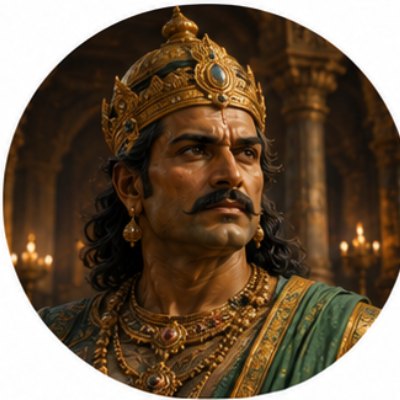
Visvagashva — The Pious Bridge-King of the Solar Dynasty
Visvagashva · Vishvagashva · Visvagasva · Vishvagasva
Visvagashva is a king of the Solar Dynasty, the Surya Vansha, who ruled from the capital of Ayodhya as part of the foundational Ikshvaku lineage. He is the son of King Prithu of Ayodhya — an early descendant of the celebrated emperor Kakutstha, who earned his dynastic name by riding the transformed Indra into battle against the Asura host — and the father of King Ardra, also rendered in some texts as Ardri or Adri, through whom the Solar line continues toward the later legendary emperors of the Ayodhya throne. His position in the dynastic succession is attested across several major primary sources, including the Vishnu Purana, the Harivamsa, the Brahma Purana, and multiple books of the Mahabharata. Beyond his genealogical function, Visvagashva is distinguished in the textual tradition by two specific personal attributes — his practice of vegetarianism as an expression of ahimsa, and his performance of extensive cow-gifting rituals, go-dana, through which the texts record that he accumulated great spiritual merit and attained elevation to higher celestial realms. He occupies the position of a vital generational bridge between the earliest descendants of Ikshvaku and the later imperial figures of the Solar line, most notably the world-conquering emperor Mandhata and, many generations further, Rama, the seventh avatar of Vishnu.
✦ The Name
The name Visvagashva is a Sanskrit compound of two elements: Vishva, meaning all, universal, or the entire world, and Ashva, meaning horse. The compound therefore carries the sense of one whose horses are universal or one possessing horses throughout all the world — a designation of sweeping royal power and dominion appropriate to a monarch of a prestigious dynastic line. The name appears in variant spellings across different manuscript traditions and modern transliteration systems, including Vishvagashva, Visvagasva, and Vishvagasva, all of which refer to the same figure in the same genealogical position. The name carries no recorded mythological secondary meaning beyond its literal compound sense, and no alternative personal names or epithets are assigned to him in the primary sources consulted.
✦ Lineage
- Founding patriarch: Ikshvaku — eldest son of Vaivasvata Manu, the seventh Manu and progenitor of the current human race, founder of the royal house of Ayodhya, and patriarch of the Solar Dynasty from whom all Ikshvaku kings descend.
- Great-great-grandfather: Vikukshi, also known as Shashada — son of Ikshvaku, whose epithet Shashada, meaning the rabbit-eater, was acquired when he consumed a hare from a ritual food offering during a hunting expedition, leading to a temporary banishment by his father on the counsel of the sage Vasishtha before his eventual restoration to the succession.
- Great-grandfather: Kakutstha, born Puranjaya — the emperor whose defining exploit was riding the transformed Indra, king of the gods, in the form of a great white bull into battle against the Asura host, defeating the demons, restoring the heavenly realms to the Devas, and earning the name Kakutstha, meaning he who sat upon the hump, which became the hereditary dynastic epithet borne by all his descendants.
- Grandfather: Anenas — king of Ayodhya, son of Kakutstha, whose name carries the Sanskrit meaning of sinless or blameless; recorded in the Vishnu Purana and the Valmiki Ramayana as a distinct generational figure and immediate successor of Kakutstha, though the Bhagavata Purana presents Anenas as one of three names belonging to Kakutstha himself.
- Father: Prithu of Ayodhya — king of the Solar Dynasty, son of Anenas, to be distinguished from the entirely separate figure of Prithu Vainya, the primordial earth-sovereign of a different Puranic tradition whose exploit of milking the earth in the form of a cow belongs to a lineage unconnected to the Ikshvaku Solar line.
- Son and successor: Ardra — also rendered Ardri or Adri in variant manuscript traditions — king of Ayodhya and the next generational link in the Solar Dynasty succession after Visvagashva.
- Grandson: Yuvanashva I — son of Ardra, king of Ayodhya, and a further generational link in the descent toward the later imperial Solar kings; to be distinguished from the later Yuvanashva whose miraculous circumstances of birth produced the celebrated emperor Mandhata.
- Great-grandson: Shravasta — son of Yuvanashva I, a Solar Dynasty king credited in the tradition with the founding of the ancient city of Shravasti, one of the major cities of early Indian history and a site of enduring religious significance.
No wife or wives of Visvagashva are named in any of the primary sources consulted. The texts record only the patrilineal succession.
✦ Character and Personal Conduct in the Textual Record
Visvagashva is one of the relatively few early Solar Dynasty kings to whom specific personal virtues are attributed in the primary sources beyond their bare genealogical placement. The Mahabharata invokes him in two distinct didactic contexts that together establish his reputation in the tradition. In the Anushasana Parva, he is cited among historical kings who attained elevated celestial stations specifically through their practice of go-dana — the ritual gifting of cows to sages and to those in need. The passage treats his cow-charity not as incidental generosity but as a sustained ritual practice of sufficient spiritual potency to produce measurable posthumous reward. In a separate passage of the same Parva, he is included in a list of ancient sovereigns who observed complete abstention from meat, held up collectively as exemplars of ahimsa, the principle of non-injury to living beings. His vegetarianism is therefore not presented as a personal preference in the texts but as a deliberate ethical and dharmic discipline aligned with the highest standards of royal conduct as understood in the epic tradition.
Puranic dictionary tradition, as represented by Vettam Mani's Puranic Encyclopaedia, summarises his characterisation as one of strict righteousness, piety, and adherence to dharma, drawing on the same Mahabharata passages as their primary evidential base.
✦ Textual Variants and Inconsistencies
The name Visvagashva is shared by at least two distinct figures in the Mahabharata, and the texts themselves take care to differentiate them. The Visvagashva who belongs to the Solar Dynasty and rules from Ayodhya is the figure treated in this profile. A separate king named Visvagashva appears in the Adi Parva and the Sabha Parva of the Mahabharata in connection with the Puru lineage of the Lunar Dynasty, a royal line entirely distinct from the Ikshvaku Solar line. This Lunar Dynasty Visvagashva is referenced in the context of Arjuna's military campaign of conquest, the Digvijaya, and his encounter with various regional kings. The two figures share only their name; their dynasty, genealogy, geographical association, and narrative context are wholly different, and the Mahabharata passages in which the Lunar Dynasty figure appears do not overlap with those in which the Solar Dynasty king is invoked for his piety and cow-charity.
The name of Visvagashva's son presents a minor variant across manuscript traditions. The Vishnu Purana names the son as Ardra, while some texts render the same name as Ardri or Adri. These are treated by commentators as orthographic variants of a single name rather than as evidence of distinct figures, since the genealogical position — son of Visvagashva, father of Yuvanashva I — is consistent across the traditions that preserve the name in any of its forms.
✦ Connection to the Wider Genealogy
Visvagashva stands six generations from the founding patriarch Ikshvaku, counting through Vikukshi, Kakutstha, Anenas, and Prithu before reaching him. Through his son Ardra and grandson Yuvanashva I the line descends to his great-grandson Shravasta, the founder of Shravasti, and continues through further generations of Solar kings toward the celebrated emperor Mandhata — son of a later Yuvanashva whose miraculous birth from his father's abdomen is one of the most extensively narrated episodes in the Puranic accounts of the Solar Dynasty's middle period. The descent continues further still through Trishanku, Harishchandra, Sagara, Bhagiratha, Dilipa, Raghu, Aja, Dasharatha, and finally to Rama, the seventh avatar of Vishnu and the hero of the Valmiki Ramayana. Visvagashva's position as the bridge-generation between the founding era of the Solar Dynasty and its later imperial flowering makes him a structurally significant node in the Puranic genealogical architecture of the Ikshvaku line, even in the absence of any independently narrated royal episode.
✦ References
Primary Sources
- Vishnu Purana, Book 4, Chapter 2: The foundational genealogical source for this profile, recording the explicit succession of Prithu to Visvagashva to Ardra within the Ikshvaku Solar Dynasty king-list.
- Harivamsa and Brahma Purana — Solar Dynasty genealogical chapters: Replicate the succession order of the Vishnu Purana for this portion of the Ikshvaku line, confirming Visvagashva's position between Prithu and Ardra in the pre-Mandhata Solar succession.
- Mahabharata, Vana Parva, Chapter 20, verse 3: Lists Visvagashva within the early dynastic chronicle of the Ikshvaku line, recording him as the son of Prithu and the father of Adri.
- Mahabharata, Anushasana Parva, Chapter 76, verse 25: Invokes Visvagashva as a historical king who attained elevated celestial reward specifically through his devoted practice of cow-gifting to sages and the needy, citing him as an authoritative example in a didactic discourse on the merits of go-dana.
- Mahabharata, Anushasana Parva, Chapter 115, verse 58: Includes Visvagashva in a list of ancient sovereigns who observed complete abstention from meat, presenting him as a model of ahimsa among the royal figures of the Solar tradition.
- Mahabharata, Adi Parva, Chapter 1, verse 172; Sabha Parva, Chapter 27: Cited here solely to establish the existence of a second, distinct figure named Visvagashva belonging to the Puru lineage of the Lunar Dynasty, referenced in the context of Arjuna's Digvijaya and entirely separate from the Solar Dynasty king of this profile.
Secondary and Reference Sources
- Vettam Mani, Puranic Encyclopaedia (1975): Supplies the consolidated reference entry for Visvagashva, summarising his characterisation as a king of dharmic rectitude and cow-charity on the basis of the Mahabharata passages, and confirming his genealogical position in the Ikshvaku Solar line.
- Wisdomlib — definition entry for Vishvagashva: Aggregates cross-references to Visvagashva across multiple texts and identifies the relevant primary passages, useful for confirming the range of sources in which the name appears and for distinguishing the Solar Dynasty figure from his Lunar Dynasty namesake.
- F. E. Pargiter, Ancient Indian Historical Tradition (1922): Provides systematic comparison of Solar Dynasty king-lists across the major Puranas, confirming the consistent placement of Visvagashva between Prithu and Ardra in the early Ikshvaku succession and noting the variant renderings of his son's name across manuscript traditions.
- H. H. Wilson, Translation of the Vishnu Purana (1840): Provides the English rendering of the relevant Vishnu Purana genealogical passage, useful for cross-referencing the succession statement naming Visvagashva as the son of Prithu and the father of Ardra.