
About
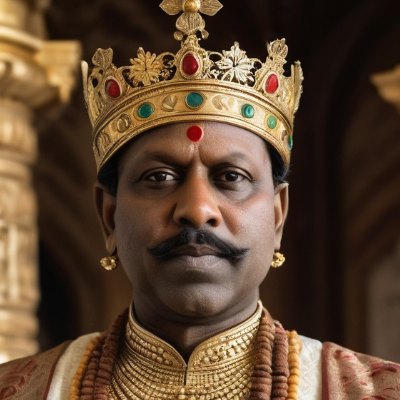
Karusha — Prince of the Solar Dynasty and Founding Ancestor of the Karusha Kshatriyas
Karusha · Karusha · Son of Vaivasvata Manu · Progenitor of the Karushas
Karusha is one of the primary sons of Vaivasvata Manu, the presiding Manu of the current cosmic epoch and the great progenitor-patriarch from whom all present human lineages descend according to the Puranic scheme. Vaivasvata Manu, also called Sraddhadeva, was himself the son of Vivasvat the sun god, placing Karusha within the Solar Dynasty, the Suryavamsha. Karusha is the founding ancestor of the Karusha Kshatriyas, a martial lineage that the Bhagavata Purana explicitly identifies as ruling over northern regions, maintaining cordial relations with Brahmanas, and adhering to righteousness. The Karusha clan founded by his line appears across the Mahabharata and the Puranas as a recognised Kshatriya people with a defined territory. Karusha himself receives no extended narrative treatment in the primary sources, which record him principally in the genealogical lists of Vaivasvata Manu's sons. His significance in the tradition is therefore primarily ancestral: the clan that bears his name and descends from him occupies a consistent and active place in the Itihasa and Puranic literature across multiple epochs.
✦ The Name
The name Karusha and the derived clan name Karusha or Karusha Kshatriyas appear consistently across the primary texts in this form. The primary sources do not offer an internal etymological gloss on the name in the passages where Karusha is listed among the sons of Manu. The clan name Karusha follows the standard Sanskrit formation by which a people or lineage takes its name from its founding ancestor. Both the personal name and the clan name are stable in form across the Bhagavata Purana, Mahabharata, and Vishnu Purana passages consulted.
✦ Lineage
- Father: Vaivasvata Manu, also called Sraddhadeva, the seventh Manu in the Puranic cosmic scheme, son of Vivasvat the sun god, and the progenitor-patriarch of all human lineages in the present epoch.
- Mother: Sraddha, the wife of Vaivasvata Manu, named in the Bhagavata Purana and related genealogical accounts.
- Brothers: Ikshvaku, founder of the Ikshvaku dynasty and the royal line of Ayodhya from which the solar-lineage kings of the epics descend; Dhrishta, ancestor of the Dharstaka clan whose descendants attained Brahmana standing; Nabhanedishta, the seer associated with the Angiras episode and the ancestor of the Vaishali dynastic line; Narishyanta, whose line eventually produced the Agniveshya Brahmana gotra; Nriga, the king whose inadvertent error in charity resulted in his transformation into a lizard and liberation by Krishna; Saryati, founder of his own Puranic lineage; Pranshu; Nabhaga; and Prishadhra, all sons of Vaivasvata Manu recorded in the Puranic genealogical lists.
- Descendants: The Karusha Kshatriyas, a martial lineage identified in the Bhagavata Purana as rulers of northern regions, noted for their righteousness and their friendly disposition toward Brahmanas. Their territory is associated in the geographical sections of the Puranas and in the Valmiki Ramayana with the region near the Vindhya ranges.
✦ The Karusha Kshatriyas in the Puranic Record
The Bhagavata Purana in its ninth canto provides the most direct and theologically framed statement about the Karusha lineage. It records that from Karusha, the son of Manu, arose a sect of Kshatriyas known as the Karushas, that they ruled over northern regions, that they were friendly to Brahmanas, and that they were deeply devoted to righteousness. This characterisation places the Karusha Kshatriyas within the Puranic ideal of the righteous martial lineage: a people whose Kshatriya function is exercised in a manner consonant with the Brahmanical order rather than in opposition to it. The Vishnu Purana similarly records Karusha among the sons of Vaivasvata Manu and notes the martial lineage descended from him.
The Mahabharata's Adi Parva includes Karusha in its enumeration of Manu's sons, placing him within the foundational division of peoples and territories that followed the post-flood reconstitution of the world under Vaivasvata Manu's authority. The Karusha people as a distinct martial group appear again in the Sabha Parva and other sections of the Mahabharata in the context of the political geography of the subcontinent, confirming that the lineage Karusha founded maintained a recognised identity across the epic tradition's historical memory.
✦ The Territory of the Karushas
The geographical sections of the Puranas and references within the Valmiki Ramayana associate the Karusha territory with the region lying near the Vindhya mountain ranges. This location, in the broad area of what the Puranas identify as part of the central and northern reaches of Aryavarta, places the Karusha kingdom in a strategically significant zone that formed a boundary region between the great northern plains and the Vindhyan terrain to the south. The Bhagavata Purana's characterisation of the Karushas as rulers of northern regions is consistent with this geographical placement. Modern historical scholarship has discussed the Karusha territory in connection with the Baghelkhand region, though the Puranic geographical references are understood within a cosmographical rather than a strictly cartographic framework.
✦ The Karushas in the Mahabharata War
The Karusha warriors appear in the Mahabharata as participants in the Kurukshetra war. The text identifies them as a martial people of established Kshatriya lineage who fought on the side of the Pandavas. They are mentioned in the context of the military confederacy that supported the Pandava cause, appearing alongside other central and eastern Kshatriya peoples. Their presence in the war narrative confirms that the lineage founded by Karusha maintained its martial identity and political relevance through the epic period, several generations removed from the founding ancestor.
✦ Dantavakra and the Karusha Kingdom
The later Puranic literature, principally the Bhagavata Purana, associates the Karusha territory with the king Dantavakra, who ruled in the region and was slain by Krishna. Dantavakra is identified in the Bhagavata Purana's narrative of Krishna's encounters with earthly kings as one of the enemies whom Krishna defeated. The theological framework within which Dantavakra appears involves the concept of Jaya and Vijaya, the gatekeepers of Vishnu's divine abode Vaikuntha, who were cursed to take birth as adversaries of Vishnu across successive lives before being restored to their original status through death at the hands of Vishnu or his avatar. Dantavakra is identified in this framework as one of the births taken by Vijaya, the last in the sequence of adversarial incarnations. His connection to the Karusha territory thus links the geographical and dynastic legacy of Karusha's line to one of the major theological narratives of the Bhagavata Purana's tenth canto. The primary texts do not, however, make Dantavakra a direct biological descendant of Karusha in an unbroken named succession; his association with the Karusha kingdom is territorial and political rather than a fully enumerated genealogical descent in the texts consulted.
✦ Textual Variants and Inconsistencies
The roster of Vaivasvata Manu's sons differs modestly across the primary sources. The Mahabharata's Adi Parva enumeration includes a name rendered as Vena among the sons, which does not appear in the Bhagavata Purana or Vishnu Purana lists. The placement and spelling of certain brothers' names also varies between recensions, which is consistent with the general character of Puranic and epic textual transmission. Karusha himself appears consistently across all the major enumerations consulted, and there are no significant contradictions in the primary texts regarding his identity, his position as a son of Vaivasvata Manu, or the martial nature of the lineage descended from him.
✦ Connection to the Wider Genealogy
Karusha belongs to the first post-flood generation of the Solar Dynasty, born of Vaivasvata Manu, the seventh and presiding Manu of the current Manvantara. His brother Ikshvaku founded the principal Ayodhya line of the Solar Dynasty, the branch most extensively narrated in the Ramayana and Mahabharata. Karusha's own line constitutes one of the several collateral branches of the Solar Dynasty's first generation, each of which populated a distinct region and carried a distinct identity within the Puranic and epic geographical imagination. Among the sons of Manu, Karusha's line is distinguished by the Bhagavata Purana's explicit commendation of the Karusha Kshatriyas for their righteousness and their harmonious relationship with the Brahmanical order. The association of the Karusha territory with Dantavakra in the later Puranic narrative further extends the reach of Karusha's ancestral legacy into the Bhagavata Purana's Krishnalila, giving the lineage a presence in the devotional literature that outlasts its purely dynastic genealogical record.
✦ References
Primary Sources
- Bhagavata Purana, Canto 9, Chapter 2, verse 16: The principal Puranic source for Karusha; names him as a son of Vaivasvata Manu and explicitly records that the Karusha Kshatriyas descended from him, that they ruled over northern regions, were friendly to Brahmanas, and were devoted to righteousness.
- Bhagavata Purana, Canto 10 (Dantavakra episode): Records the association of Dantavakra with the Karusha territory and his defeat by Krishna, connecting the lineage founded by Karusha to the devotional narrative of Krishna's earthly activities.
- Vishnu Purana, Book 4, Chapter 1: Lists Karusha among the sons of Vaivasvata Manu and provides parallel genealogical context for his place in the Solar Dynasty's first generation.
- Mahabharata, Adi Parva, Chapter 70: Includes Karusha in the enumeration of Manu's sons within the epic's account of the post-flood division of peoples and territories.
- Mahabharata, Sabha Parva and Kurukshetra war sections: References the Karusha people as a martial lineage participating in the political geography of the subcontinent and as warriors on the Pandava side in the Kurukshetra war.
- Valmiki Ramayana, Bala Kanda, geographical passages: Associates the Karusha territory with the region near the Vindhya ranges, providing the geographical placement of the kingdom founded by Karusha's descendants.
- Harivamsha (appendix to the Mahabharata), genealogical sections: Records Karusha among the sons of Vaivasvata Manu, consistent with the Puranic accounts.
Modern Reference Works
- Mani, Vettam. Puranic Encyclopaedia. Motilal Banarsidass, 1975: Provides a concise entry for Karusha noting his position among Manu's sons and summarising the Bhagavata Purana's characterisation of the Karusha Kshatriyas.
- Wisdomlib, definition entries for Karusha and Karusha Kshatriyas: Aggregates textual references across Puranic and epic sources and provides cross-references to the relevant Bhagavata Purana and Mahabharata passages.