
About
Prishadhra — The Ascetic Outcast of the Solar Dynasty
Prishadhra · Prshadhra · Pushadhra · Prsadhna
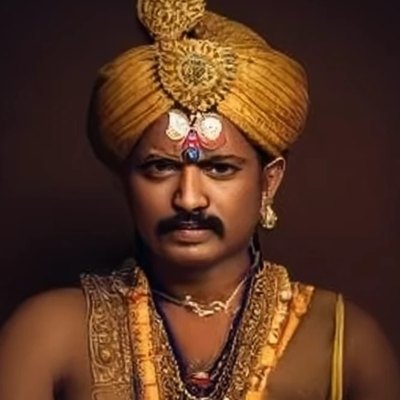
Prishadhra is a prince of the Solar Dynasty, the Surya Vansha, and one of the many sons born to Vaivasvata Manu, also known as Sraddhadeva, the seventh Manu and progenitor of the present human race, and his wife Sraddha. He occupies a singular and sobering place in Puranic genealogical literature as the heir who was stripped of his Kshatriya status and barred from royal succession not through rebellion or vice of character, but through a single catastrophic accident — the unintentional killing of a cow while on guard duty for his spiritual master. The event triggered a brahminical curse that reassigned his varna from the warrior-ruling class to the Shudra, the laboring class, permanently severing his line from the dynastic record. He left no descendants. His subsequent life of renunciation, wandering asceticism, and eventual voluntary self-immolation in a forest fire is presented in the Puranic sources as a model of spiritual fortitude and successful liberation. He appears principally in the Bhagavata Purana, the Vishnu Purana, the Markandeya Purana, and the Shiva Purana.
✦ The Name
The name Prishadhra is derived from Sanskrit roots that have been interpreted in connection with the sense of a speckled or dappled quality, plausibly an allusion to the mixed or mottled nature of his fate — born noble, condemned to a lower station, yet ultimately elevated through spiritual merit. In the Markandeya Purana, the name appears in the alternate form Pushadhra, which may represent a regional or scribal variant rather than a distinct etymological tradition. No special epithets beyond these variant spellings are assigned to him in the primary sources.
✦ Lineage
- Father: Vaivasvata Manu, also called Sraddhadeva — the seventh and current Manu, son of Vivasvat the sun god, progenitor of the present human race and the founding patriarch of both the Solar Dynasty and several collateral royal lines.
- Mother: Sraddha — wife of Vaivasvata Manu, named in the Puranic genealogical lists as the mother of his principal sons.
- Brothers: Ikshvaku — eldest son of Vaivasvata Manu and founder of the Ikshvaku royal line of Ayodhya, the dynasty from which the solar lineage of later Puranic kings descends; Nabhaga; Dhrishta; Sharyati; Narishyanta; Pranshu; Nabhaga Dishta; Karusha; and Ila — the last being described in several Puranic texts as either a son who became a daughter or as a daughter from the outset, the accounts differing across sources.
Prishadhra is recorded as having no spouse and no children. Following the curse of Vasishtha and his consequent renunciation, he observed strict celibacy for the remainder of his life, and his line is therefore absent from all subsequent Puranic dynastic enumerations.
✦ The Night of the Cowshed: The Central Narrative
The entire biographical trajectory of Prishadhra turns on a single night's events, narrated in the Bhagavata Purana and corroborated in its essential structure by the Vishnu Purana and the Shiva Purana. Prishadhra had been placed in the service of the great sage Vasishtha — one of the seven primordial sages, Brahmarshi and family priest of the Solar Dynasty — as a student and attendant. Among his assigned duties was the nightly guarding of the ashram's cowshed. He undertook this responsibility with the gravity befitting a Kshatriya, taking a standing vigil each night, sword in hand.
On the fateful night, a tiger entered the cowshed during a violent storm. The darkness was total, the rain heavy, and the herd fell into panic. The tiger seized a cow. Prishadhra, hearing the sounds of distress, rushed forward in the darkness and swung his sword with full force at what he believed to be the predator. The blow missed the tiger entirely and beheaded the cow. The tiger, receiving only a minor wound — a clipped ear — escaped into the forest. When dawn broke and Prishadhra surveyed the scene, he understood what he had done.
Vasishtha, upon learning of the death of the cow, pronounced judgment. Although the killing was entirely accidental and Prishadhra's intent had been the protection of the herd, the act of go-hatya — the slaying of a cow — was treated in the dharmic framework as a transgression of the gravest order, compounded by the fact that it had occurred in the ashram of a Brahmarshi. Vasishtha cursed Prishadhra, declaring that despite being born a Kshatriya, he would thereafter live as a Shudra. The curse applied not through malice but as a statement of karmic consequence under the dharmic law governing varna and its associated duties and transgressions.
✦ Renunciation, Asceticism, and Liberation
The Bhagavata Purana records that Prishadhra received the curse without protest or anger. He accepted it with folded hands, as an acknowledgment of the consequences set in motion by his action. He then formally relinquished any claim to his father's kingdom and withdrew from household and dynastic life entirely. He entered the forest as a renunciant.
His subsequent spiritual practice is described in the Bhagavata Purana as one of intense and sustained self-discipline — the control of the senses, detachment from material conditions, and absorption in devotional contemplation. He is said to have wandered without fixed abode, indifferent to physical comfort or discomfort, having internalized a state of continuous meditative awareness. The Bhagavata Purana presents him as having attained a condition of jivanmukta-like freedom — liberation within the living body — characterised by total equanimity.
The culmination of his life, as narrated in the Bhagavata Purana, came when a forest fire broke out around him during his wanderings. Rather than flee, Prishadhra entered the fire deliberately, offering his body as the final act of renunciation and thereby attaining liberation — moksha — at that moment. The text presents this as a fully conscious and voluntary act of a yogi who had already severed all internal attachments and for whom the dissolution of the physical body was simply the last remaining formality.
✦ Textual Variants and Inconsistencies
The account in the Markandeya Purana diverges in two notable respects from the Bhagavata Purana's version. First, the name of the figure in the Markandeya Purana appears as Pushadhra rather than Prishadhra, though the genealogical context and the moral structure of the episode are sufficiently identical that the figure is generally understood to be the same person under a variant spelling. Second, and more substantially, the Markandeya Purana locates the fatal act not in an ashram cowshed on a stormy night but during a hunting excursion, where the prince shoots an arrow at what he takes to be a wild animal concealed in undergrowth — described as a gayal or similar creature — only to discover that he has struck a cow. In this version, the curse is delivered not by Vasishtha himself but by the son of a brahmin associated with the animal. The essential structure — accidental killing of a cow, brahminical curse, varna degradation — is preserved across both versions, but the setting, the agent of the curse, and the specific circumstances of the error differ between the two texts.
The Vishnu Purana and the Shiva Purana broadly follow the Bhagavata Purana's framing of the ashram setting and Vasishtha's role, though neither text develops the episode at the same length or with the same narrative detail as the Bhagavata account.
✦ Theological and Philosophical Significance
The narrative of Prishadhra carries a layered theological function within the Puranic framework. At the most immediate level, it serves as an illustration of the severity with which the Puranic texts treat go-hatya: even when the act is wholly unintentional, the transgression is treated as sufficient to disqualify a person from the ritual and social standing of the Kshatriya class. This reflects the broader Puranic and dharmashastra concern with ritual purity and the objective consequences of certain acts independent of intent.
At a deeper level, the narrative is deployed in the Bhagavata Purana as a demonstration that varna degradation is not the same as spiritual degradation. Prishadhra, reduced by curse to the lowest of the four varnas, achieves the highest of spiritual outcomes — moksha — through his own practice. The text thereby makes a pointed argument that social and ritual station, however significant within the worldly order, are not determinative of liberation. The Bhagavata Purana's soteriological scheme consistently privileges jnana, bhakti, and vairagya over hereditary position, and Prishadhra is one of the figures marshaled in support of this teaching.
His acceptance of the curse without bitterness or resistance is also given theological weight. The Bhagavata Purana treats this acceptance itself as evidence of his spiritual maturity — the capacity to receive adverse fate without inner disturbance is presented as both a mark and a cause of his subsequent liberation.
✦ Connection to the Wider Genealogy
Prishadhra stands as one of the ten principal sons of Vaivasvata Manu, the seventh Manu, who is regarded in the Puranic tradition as the progenitor of the current human race and the founding patriarch of the Solar Dynasty. Of Vaivasvata Manu's sons, the most genealogically consequential is Ikshvaku, the eldest, from whom the long succession of Ayodhya kings descends — a line that, in the Ramayana tradition, eventually produces Dasharatha and his son Rama. Prishadhra's own line contributes nothing to this or any other dynastic succession. The curse of Vasishtha and his subsequent celibacy ensured that he left no progeny, and the Puranic king lists accordingly pass over him entirely when tracing the Solar Dynasty forward. His significance in the tradition is entirely spiritual and narrative rather than dynastic.
✦ References
Primary Sources
- Bhagavata Purana, Canto 9, Chapter 2: The principal and most detailed source for the narrative of Prishadhra — the cowshed episode, the curse of Vasishtha, the renunciation, the ascetic wandering, and the final liberation by forest fire are all narrated here.
- Vishnu Purana, Book 4: Provides the genealogical enumeration of the sons of Vaivasvata Manu including Prishadhra, and corroborates the essential facts of the cowshed episode and the curse.
- Markandeya Purana, Chapter 112: Contains the variant account in which the figure is named Pushadhra and the fatal act occurs during a hunt rather than in an ashram cowshed; the curse is attributed to a brahmin's son rather than to Vasishtha directly.
- Shiva Purana, Uma Samhita, Chapter 36: Corroborates the Bhagavata Purana's framing of the episode, placing it in the ashram context with Vasishtha as the agent of the curse.
Secondary and Reference Sources
- Wisdomlib — definition entry for Prishadhra: Aggregates references to Prishadhra across multiple Puranic texts and provides cross-references to relevant passages; useful for identifying the range of primary sources in which the figure appears.
- Vedabase (vedabase.io), Srimad Bhagavatam 9.2: Provides the translated text of the Bhagavata Purana's account with Vaishnava commentarial context, useful for understanding the theological framing of the episode within the Bhagavata tradition.
- Prabhupadabooks.com — Srimad Bhagavatam 9.2 commentary: Supplies the Gaudiya Vaishnava interpretive tradition's reading of Prishadhra's liberation, contextualising his story within the Bhakti-yoga soteriological framework of that school.
- Srimadbhagavatam.org, Canto 9, Chapter 2: Provides an additional translation of the primary Bhagavata Purana episode for cross-reference of narrative details.