
About
Virupa — Son of Ambarisha, Father of Prishadashva
Virupa
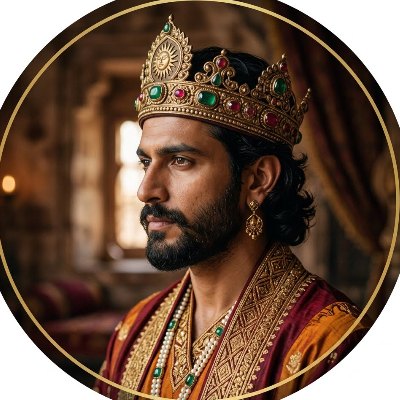
Virupa is the eldest of the three sons of King Ambarisha, a king of the early Solar dynasty descended from Nabhaga, who was himself a son of Manu. He is recorded in the Bhagavata Purana (Canto 9, Chapters 6 and 7), the Vishnu Purana, and the Garuda Purana as the father of Prishadashva, continuing the genealogical line that runs through Rathitara and, by the favour of the sage Angira, into a branch bearing Brahminical rather than Kshatriya qualities. Virupa's significance in the Puranic genealogical tradition lies in his place as the link between Ambarisha, son of Nabhaga, and the later transformation of his own line through Rathitara's descendants.
✦ The Name
The name Virupa does not receive a separate etymological gloss in the primary sources consulted. In Sanskrit usage more broadly, the term virupa carries the sense of altered, deformed, or differing in form, though no primary source attributes this meaning specifically to the figure profiled here, and the name should be treated as a personal name rather than a descriptive epithet on the evidence available.
✦ Lineage
- Father: Ambarisha — son of Nabhaga, who was himself a son of Manu; a king of the early Solar dynasty distinct from the later and more celebrated Ambarisha, son of Mandhata, whose Ekadashi vow and conflict with the sage Durvasa are narrated elsewhere in the Bhagavata Purana
- Brothers: Ketuman and Shambhu (also rendered Sambhu) — the other two sons of Ambarisha, recorded alongside Virupa in the Bhagavata Purana's account of Ambarisha's offspring
- Son: Prishadashva (also rendered Prishadasva) — son of Virupa; father of Rathitara
- Grandson: Rathitara (also Rathinara) — son of Prishadashva; described in the Bhagavata Purana as firmly devoted to Vasudeva; left without sons of his own until the sage Angira, at Rathitara's request, begot several sons through Rathitara's wife, these sons subsequently bearing Brahminical rather than Kshatriya qualities
✦ Connection to the Wider Genealogy
Virupa's place in the wider genealogical structure runs as follows. His father Ambarisha was a son of Nabhaga, who was himself one of the sons of Manu, the primordial progenitor of the human race in this Manvantara. Through this descent Virupa belongs to the early Solar dynasty in a branch distinct from the more celebrated line that produced Ikshvaku and his successors, though both branches share Manu as their common ancestor. Through his son Prishadashva and grandson Rathitara, Virupa's own line undergoes a notable transformation: Rathitara's sons, begotten through the sage Angira's intervention, are recorded as taking on Brahminical qualities rather than continuing in the Kshatriya status of their ancestors, marking Virupa's descent as one of the Puranic tradition's recorded instances of a Kshatriya lineage's line transitioning into a Brahmin one.
✦ References
- Bhagavata Purana, Canto 9, Chapter 6: Primary source recording Ambarisha's three sons Virupa, Ketuman, and Shambhu; traces the descent through Virupa to Prishadashva and Rathitara, and records Rathitara's sons begotten by the sage Angira.
- Vishnu Purana, Book IV: Parallel genealogical register confirming the descent of Ambarisha, son of Nabhaga, through Virupa, Prishadashva, and Rathitara.
- Garuda Purana (Genealogy of royal princes, solar race): Confirms Ambarisha as son of Nabhaga, and records the descent through Virupa to Prishadashva and Rathitara, who is described as firmly devoted to Vasudeva.
- Vettam Mani, Puranic Encyclopaedia. Motilal Banarsidass, 1975: Consulted for cross-verification of the early Solar dynasty genealogy and the distinction between Ambarisha, son of Nabhaga, and Ambarisha, son of Mandhata.