
About
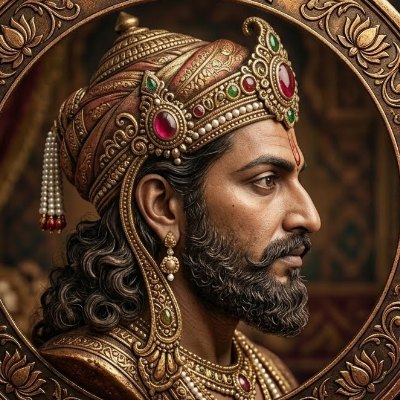
Khaninetra — King of the Dishta Line, Son of Rambha, and Father of Karandhama
Khaninetra · Khaninetra · Suryavanshi
Khaninetra is a king of the Dishta sub-line of the solar dynasty, recorded in the Bhagavata Purana, the Vishnu Purana, and the Markandeya Purana as the son of Rambha and the father of Karandhama. Rambha was the son of Vivimshati, who was the son of Cakshusha, who was the son of Khanitra, who was the son of Pramati, who was the son of Pramshu, who was the son of Vatsapriti, who was the son of Bhalandana, who was the son of Nabhaga — known as Nabhanedishta, the son of Dishta and grandson of Vaivasvata Manu, the seventh Manu and progenitor of the current human race. The Bhagavata Purana describes Khaninetra as most religious, distinguishing him from the purely genealogical figures immediately preceding him in the succession. The Markandeya Purana devotes a full canto to his exploits, recording a narrative of considerable interest involving a hunting episode, two deer who wished to be sacrificed, the favour of Indra, and the birth of his son. Khaninetra is the last of the relatively obscure intermediate kings of the Dishta line before the succession reaches the dramatically narrated reigns of Karandhama, Avikshit, and the celebrated emperor Marutta.
✦ The Name
The name Khaninetra is a Sanskrit compound. Khani or khani derives from a root associated with a mine, a source, or a place of origin — one who is a mine of something, implying inexhaustible abundance or a fountainhead of qualities. Netra means eye, guide, or leader. The compound thus conveys the sense of one who is a guiding light or a source of leadership, or alternatively one whose eyes are like mines — deep, abundant, and revealing. The Bhagavata Purana's epithet for him, most religious, is consistent with a name of this auspicious formation. The dynastic epithets Suryavanshi, meaning one of the solar race, and the broader Dishta sub-line designations apply to Khaninetra by virtue of his descent from Vaivasvata Manu through Dishta and the successive kings of the line.
✦ Lineage
- Paternal line in summary: Vivasvan the sun-god → Vaivasvata Manu → Dishta → Nabhaga (Nabhanedishta) → Bhalandana → Vatsapriti → Pramshu → Pramati → Khanitra → Cakshusha → Vivimshati → Rambha → Khaninetra.
- Father: Rambha — son of Vivimshati and the immediate predecessor of Khaninetra in the Dishta succession; attested solely as a genealogical link in the Bhagavata Purana Skandha IX, Chapter 2, verse 25, with no independent narrative episode in any primary source.
- Son: Karandhama — son of Khaninetra and his successor in the Dishta line; the subject of a full canto in the Markandeya Purana recording his marriage to Princess Veera at a svayamvara and his role in rescuing his son Avikshit from captivity. Karandhama is treated in a separate profile.
- Grandson: Avikshit — son of Karandhama; a king of considerable narrative prominence in the Markandeya Purana, celebrated for performing a hundred horse sacrifices and honoured by Brihaspati; father of the emperor Marutta.
✦ The Hunting Episode and the Birth of Karandhama
The Markandeya Purana devotes Canto CXX to the exploits of Khaninetra. The narrative records that while Khaninetra was engaged in a hunting expedition, he encountered two deer who, in a remarkable reversal of the natural order, presented themselves as willing to be sacrificed rather than fleeing from the hunter. This episode is presented in the Markandeya Purana as a sign of divine favour and extraordinary spiritual circumstance surrounding the king. Through the favour of Indra, the king of the gods, Khaninetra was granted a son as a consequence of this episode. The son born through Indra's favour was named Balasva, who subsequently came to be known as Karandhama — a name explained in the tradition as deriving from a particular context of victory. The episode thus presents Khaninetra not merely as a warrior-king but as a figure of sufficient religious merit and divine favour to receive Indra's blessing directly, consistent with the Bhagavata Purana's characterisation of him as most religious among the kings of his line.
✦ Textual Variants and Inconsistencies
The Bhagavata Purana and the Vishnu Purana name Khaninetra consistently as the son of Rambha and the father of Karandhama, and are in agreement on his position in the succession. The Bhagavata Purana adds the epithet most religious as his sole distinguishing attribute, while the Vishnu Purana confirms his position without additional characterisation. The Markandeya Purana's account diverges from the Bhagavata Purana sequence in the generations immediately preceding Khaninetra — the Markandeya Purana inserts Ksupa and Vira between Khanitra and Vivimshati and does not include Rambha between Vivimshati and Khaninetra, passing directly from Vivimshati to Khaninetra. Despite this divergence in the preceding succession, all three sources are consistent in placing Khaninetra as the father of Karandhama and the grandfather of Avikshit. The Markandeya Purana's name for Karandhama's birth name — Balasva — is a detail not preserved in the Bhagavata Purana or Vishnu Purana, which know the figure only as Karandhama. The name Khaninetra does not appear in other significant narrative contexts in the broader Puranic corpus, so no disambiguation from other figures of the same name is required.
✦ Connection to the Wider Genealogy
Khaninetra stands at the transition point in the Dishta sub-line between the long succession of genealogically significant but narratively obscure intermediate kings and the dramatically narrated reigns of Karandhama, Avikshit, and Marutta. His characterisation as most religious in the Bhagavata Purana and the Markandeya Purana's narrative of divine favour through Indra both signal that the line is entering a phase of heightened royal and spiritual significance. Through his son Karandhama and grandson Avikshit the succession reaches Marutta, whose sacrifice conducted by Samvarta son of Angiras is described across the Bhagavata Purana, Vishnu Purana, Vayu Purana, Markandeya Purana, the Mahabharata, and the Aitareya Brahmana as the most magnificent sacrificial rite ever performed. Through Marutta the line continued through Dama, Rajyavardhana, Sudhriti, Nara, Kevala, Vegavan, Budha, and Trinabindu, whose daughter Ilavila married the sage Vishrava and became the mother of Kubera, lord of wealth. Khaninetra's position in the succession thus makes him the great-great-grandfather of the emperor Marutta and a more distant ancestor of the genealogical branch that ultimately connected to Kubera's parentage.
✦ References
- Bhagavata Purana, Skandha IX, Chapter 2, verse 25: Names Khaninetra as the son of Rambha and describes him as most religious; records Karandhama as his son and confirms his position in the Dishta succession.
- Vishnu Purana, Book IV, Chapter I: Confirms Khaninetra's position in the Dishta succession as son of the figure corresponding to Rambha and father of Karandhama, consistent with the Bhagavata Purana account.
- Markandeya Purana, Canto CXX: Primary narrative source for Khaninetra's hunting episode, the two deer willing to be sacrificed, Indra's favour, and the birth of Balasva who came to be known as Karandhama; provides the most substantive individual treatment of this king in any primary source.
- Wisdomlib, definition of Avikshit: Secondary reference confirming the succession Khaninetra → Karandhama → Avikshit → Marutta and providing cross-references to the Bhagavata Purana and Markandeya Purana passages relevant to each figure.
- Vettam Mani, Puranic Encyclopaedia: Secondary reference compiling the Puranic entries on Khaninetra with citations to primary sources and notes on his position in the Dishta sub-line.
- V. S. Agrawala, Matsya Purana — A Study: Modern secondary work on solar dynasty genealogies; consulted for contextualisation of Khaninetra's position within the broader Dishta sub-line and the variant succession sequences across Puranic sources.