
About
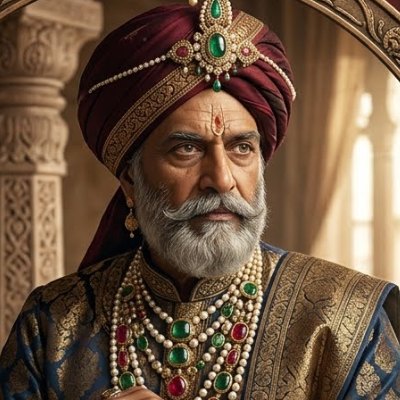
Dyutimat — King of Madra, Father of Vijaya
Dyutimat · Dyutimata · Dyutimata
Dyutimat is a king of the Madra kingdom, identified in the Mahabharata's Adi Parva as the father of Vijaya, the princess who became the wife of Sahadeva, youngest of the five Pandava brothers. He is the only Madra king named in the Adi Parva other than Shalya, the more prominently attested ruler of Madra and the maternal uncle of the Pandava twins Nakula and Sahadeva. Dyutimat's role in the primary text is confined to a single verse: he organised the self-choice ceremony at which his daughter Vijaya selected Sahadeva as her husband. No further episode, genealogical detail, or personal narrative is attached to him in any primary source identified in the sources consulted. His profile is accordingly brief by necessity.
✦ The Name
Dyutimat is a Sanskrit compound from dyuti, meaning radiance, brilliance, or splendour, and the possessive suffix mat, meaning one who possesses or is endowed with. The name therefore carries the sense of one who is radiant or possessed of brilliance. It is an honorific name appropriate to a king, and occurs in variant spellings across secondary sources as Dyutimata and Dyutimata, all representing the same figure.
✦ Lineage and Royal Context
- Dynasty: The Madra royal family, a ruling house of the north-western territories whose capital was Sagala. The Madra kingdom was established by descent from Anu, one of the sons of the Lunar dynasty king Yayati, and was affiliated with the Bahlika cultural group of the far north-west.
- Relationship to Shalya: Shalya, the most prominent king of Madra in the Mahabharata, was the brother of Madri and the maternal uncle of Nakula and Sahadeva. The Mahabharata identifies Madri's father as Madraraja, the king of Madra. Secondary analysis of the epic treats Dyutimat as another son of this same Madraraja and therefore as a brother of both Shalya and Madri — which would make Dyutimat also a maternal uncle of Sahadeva, the very man who married his daughter. The primary text does not state this sibling relationship in any verse identified in the sources consulted; it is a structural inference drawn by secondary readers from the overlapping genealogical data.
- Daughter: Vijaya — princess of Madra who chose Sahadeva in a self-choice ceremony organised by Dyutimat; she bore Sahadeva a son named Suhotra.
✦ The Self-Choice Ceremony
The sole episode in which Dyutimat appears in the primary sources is his organisation of a svayamvara — a self-choice ceremony — for his daughter Vijaya. At this assembly, Vijaya selected Sahadeva as her husband. The Mahabharata records the event in the Adi Parva among the catalogue of the Pandavas' individual marriages, stating that Sahadeva obtained Vijaya, daughter of Dyutimat king of Madra, at such a ceremony, and that their son was Suhotra. Dyutimat is not mentioned by name in any other passage identified in the primary sources.
✦ Textual Variants and the Question of Kinship
The Mahabharata names Madri's father as Madraraja — a title meaning king of Madra rather than a personal name — and identifies Shalya as Madri's brother. If Dyutimat was another son of this same Madraraja, then Shalya, Madri, and Dyutimat were siblings, and Sahadeva's marriage to Vijaya was a marriage to his first cousin on the maternal side. Some secondary retellings of the epic state this cousin relationship explicitly and identify Dyutimat as Shalya's brother. However, the critical text of the Adi Parva does not provide a verse that names this relationship directly; it identifies Dyutimat only by his title as king of Madra and by his fatherhood of Vijaya. The inference of siblinghood rests on combining two separate pieces of information from different sections of the Adi Parva rather than on an explicit statement in any single verse.
✦ Connection to the Wider Genealogy
Through his daughter Vijaya's marriage to Sahadeva, Dyutimat became the father-in-law of the youngest Pandava and the maternal grandfather of Suhotra, who is associated with the continuation of Sahadeva's line in the Madra kingdom after the Kurukshetra War. The marriage he arranged reinforced the existing dynastic bond between the Madra royal house and the Kuru dynasty that had been established a generation earlier through the marriage of his kinswoman Madri to King Pandu. Dyutimat thus represents a secondary Madra royal line running alongside that of Shalya, both branches of the same ruling house, and his family's connection to the Pandavas — through Sahadeva's maternal descent from Madra and his marriage to a Madra princess — is one of the closer kinship bonds documented between the Pandavas and any allied kingdom.
✦ References
- Mahabharata, Adi Parva, Chapter 95, verse 80: The sole primary source naming Dyutimat, identifying him as the king of Madra and the father of Vijaya who became Sahadeva's wife; the foundation of everything known about him from primary texts.
- Mahabharata, Adi Parva, Chapter 112–113: Records the marriage of Madri to Pandu brokered by Bhishma with Shalya; establishes Shalya as Madri's brother and the broader Madra royal family context within which Dyutimat is placed by secondary analysis.
- Wikipedia, article on Madri: Secondary source identifying Madri's father as Madraraja and her brother as Shalya; context for understanding Dyutimat's probable place in the Madra royal family.
- AncientVoice Wikidot, Madra article: Secondary source citing the Mahabharata verse, noting Dyutimat as one of the Madra kings separately named in the epic alongside Shalya.
- Wisdomlib, concept entry for King of Madra: Secondary lexical source confirming Dyutimat's identification as the Madra king in the Adi Parva verse concerning Sahadeva's marriage.