
About
Kapotaroma — Son of Shibi, Named in the Dove-Sacrifice Boon
Kapotaroma · Kapota-roma
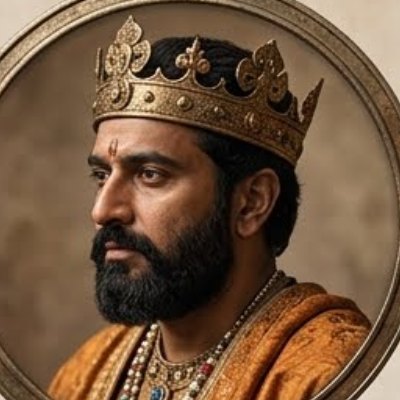
Kapotaroma is a prince of the Anu lineage within the Chandravamsha, the Lunar dynasty, named in connection with the celebrated dove-sacrifice episode of his father Shibi Ausinara. Shibi — son of Ushinara and a king of great renown for his compassion and liberality — submitted to a severe test devised by the gods Indra and Agni, offering his own flesh in exchange for a dove seeking refuge from a hawk. When Shibi ultimately placed himself upon the scale, the gods revealed their true forms and conferred upon him the boon that he would beget a son named Kapotaroma. The name thus derives directly from this episode and is recorded in this narrative context. Kapotaroma's principal attestation is in the account of Shibi's trial, and his position within the broader Shibi genealogy as preserved in the Puranas requires careful qualification in light of the variant source traditions.
✦ The Name
The name Kapotaroma is a compound of kapota (dove or pigeon) and roma (hair, feather, or the fine down of the body), yielding the sense of one whose body hair or down is like that of a dove — a name that commemorates and is inseparable from the episode of the dove's rescue that secured his father's promise of offspring. The name thus carries within itself the memory of Shibi's most celebrated act of sacrifice.
✦ Lineage
- Dynasty: Chandravamsha (Lunar dynasty), Anu lineage, Aushinara branch
- Grandfather: Ushinara — son of Mahamana (son of Mahasala, son of Janamejaya, son of Srnjaya, son of Kalanara, son of Sabhanara, son of Anu, son of Yayati); founder of the Usinara branch and father of the five sons Shibi, Vara, Krmi, Daksa, and (in the Harivamsa account) Nrga, Nava, and Suvrata through different queens
- Father: Shibi Ausinara — son of Ushinara and his queen Drsadvati (Harivamsa); one of the most celebrated kings of ancient India, renowned for the episode of offering his flesh for the sake of a dove; progenitor of the Sibi people and eponym of their kingdom Sivapura
✦ The Boon and Textual Context
The episode that gives Kapotaroma his name occurs when Agni, disguised as a dove, sought refuge in Shibi's lap from Indra, disguised as a hawk. Shibi, committed to the protection of any creature who sought sanctuary with him, refused to surrender the dove. The hawk demanded an equal weight of flesh from Shibi's own body. As Shibi cut flesh from himself, piece by piece, the scale never tipped in the dove's favour. Finally, Shibi himself stepped onto the scale. At this point the gods revealed themselves, praised Shibi's extraordinary virtue, and granted him a boon. Among the blessings conferred was the promise of a son named Kapotaroma.
✦ Textual Variants and Scope of the Record
Kapotaroma's position in the genealogical tradition requires an honest note. The primary dynastic sources — the Bhagavata Purana (9.23.3–4) and the Harivamsa (I.31.29) — enumerate Shibi's sons as a group of four, and neither list includes the name Kapotaroma. The Bhagavata names Vrsadarbha, Sudhira, Madra, and Kekaya. The Harivamsa names Vrsadarbha, Suvira, Madraka, and Kaikaya. Kapotaroma appears in the narrative context of the boon episode rather than in these genealogical king-lists. Whether Kapotaroma is to be understood as an additional fifth son, as an alternate name for one of the four listed sons, or as a son known only from the narrative tradition and not incorporated into the formal dynastic lists, cannot be determined from the available primary sources. The profile is accordingly limited to what the texts directly state.
✦ References
- Primary Sources:
- Mahabharata, Vana Parva (narrative of Shibi's dove-sacrifice): The principal source for the episode in which the boon of a son named Kapotaroma is conferred on Shibi; the name is tied to the kapota (dove) episode throughout
- Bhagavata Purana, Skandha 9, Adhyaya 23, verses 3–4: Enumerates Shibi's four sons as Vrsadarbha, Sudhira, Madra, and Kekaya; Kapotaroma does not appear in this genealogical list
- Harivamsa, Adi Parva, Chapter 31, verse 29: Enumerates Shibi's four sons as Vrsadarbha, Suvira, Madraka, and Kaikaya; Kapotaroma does not appear in this list
- Secondary Sources:
- Wikipedia, article on Shibi (king): Records the narrative boon episode and names Kapotaroma as the son promised to Shibi; notes the genealogical context