
About
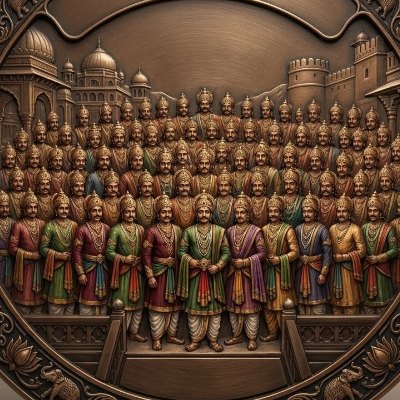
The Ninety-Seven Sons of Dhritarashtra — The Kaurava Brothers (Grouped Profile)
Kauravas · Sons of Gandhari · Sons of Dhritarashtra · Brothers of Duryodhana
This profile covers the ninety-seven sons of King Dhritarashtra and Queen Gandhari who are not treated individually elsewhere in this series. The four sons who receive individual profiles are Duryodhana (the eldest), Dushasana (the second), Vikarna (notable for his moral stand during the dice game), and Yuyutsu (born of a different mother and the sole survivor among Dhritarashtra's sons). The remaining ninety-seven are collectively known as the Kaurava brothers. They are enumerated by name in the Adi Parva of the Mahabharata and appear as warriors on the Kaurava side throughout the Kurukshetra war. With very few exceptions, they receive no individual narrative treatment in any primary source and are not distinguished by deed, character, or episode beyond their participation in the war and their deaths, nearly all of them at the hands of Bhimasena, the second Pandava. The primary source for their names is the Adi Parva (Adhyaya 117 in the Ganguli translation); their deaths are recorded across the Bhishma Parva, Drona Parva, Karna Parva, and Shalya Parva.
✦ Birth and Origin
Gandhari, princess of the Gandhara kingdom and wife of the blind Kuru king Dhritarashtra, carried her pregnancy for an extraordinary period of two years. When she heard that Kunti had given birth to Yudhishthira, Gandhari struck her womb in grief and frustration. A hardened mass of flesh emerged. The sage Vyasa — who was Dhritarashtra's biological father and thus the grandfather of these children — intervened. He directed that the mass be divided into one hundred and one portions and each placed in a pot of clarified butter to develop. From this process were born one hundred sons and one daughter. The first pot to be opened yielded Duryodhana. The remaining sons followed in succession. The daughter, Duhsala, born last, is not included in this profile. This account is given in the Adi Parva of the Mahabharata.
✦ The Names
The Adi Parva (Adhyaya 117) records the names of Dhritarashtra's sons in order of birth. Excluding Duryodhana (first), Yuyutsu (second, born of a different mother), Dushasana (third), and Vikarna (nineteenth), the remaining names from the list are given below. The list as transmitted contains two anomalies that scholars have noted: the name Karna appears twice, and the name Mahavahu appears twice. These are treated here as scribal duplications rather than references to four distinct individuals. The name Duhsala in the list refers to the daughter and is excluded. The names are reproduced as given in the Ganguli translation:
- Duhsaha · Jalasandha · Sama · Saha · Vinda · Anuvinda · Durdharsha · Suvahu · Dushpradharshana · Durmarshana · Durmukha · Dushkarna · Karna (Kaurava) · Vivinsati · Sala · Satwa · Sulochana · Chitra · Upachitra · Chitraksha · Charuchitra · Sarasana · Durmada · Durvigaha · Vivitsu · Vikatanana · Urnanabha · Sunabha · Nandaka · Upanandaka · Chitravana · Chitravarman · Suvarman · Durvimochana · Ayovahu · Mahavahu · Chitranga · Chitrakundala · Bhimavega · Bhimavala · Balaki · Balavardhana · Ugrayudha · Bhima (Kaurava) · Kanakaya · Dridhayudha · Dridhavarman · Dridhakshatra · Somakitri · Anudara · Dridhasandha · Jarasandha · Satyasandha · Sada · Suvak · Ugrasravas · Ugrasena · Senani · Dushparajaya · Aparajita · Kundasayin · Visalaksha · Duradhara · Dridhahasta · Suhasta · Vatavega · Suvarchas · Adityaketu · Vahvashin · Nagadatta · Agrayayin · Kavachin · Krathana · Kunda · Kundadhara · Dhanurdhara · Ugra · Bhimaratha · Viravahu · Alolupa · Abhaya · Raudrakarman · Dridharatha · Anadhriti · Kundabhedin · Viravi · Dirghalochana · Pramatha · Pramathi · Dhirgharoma · Dirghavahu · Vyudhoru · Kanakadhvaja · Kundasi · Virajas
The Adi Parva list as transmitted contains approximately one hundred and two names inclusive of Yuyutsu and Duhsala, creating a discrepancy with the canonical statement that Gandhari bore one hundred sons. This inconsistency is unresolved in the primary text and is noted across modern scholarship on the Mahabharata.
✦ Collective Characterisation in the Text
The Adi Parva describes all of Dhritarashtra's sons as skilled warriors, versed in the Vedas and in all forms of weaponry. Dhritarashtra is said to have arranged suitable marriages for each of them. Beyond this general characterisation, the overwhelming majority of the ninety-seven receive no individual narrative treatment in any primary source consulted. They function in the epic principally as part of the collective Kaurava host, as supporters of Duryodhana, and as the objects of Bhimasena's oath — sworn at the time of the dice game — to kill every one of Dhritarashtra's sons.
One partial exception is Vivinsati, who is noted in the Bhishma Parva as a formidable warrior. He is described as having killed hundreds of soldiers of the Anarta forces and as having fought Bhimasena to a standstill on the eleventh day, an achievement that drew remark in the text.
✦ Deaths in the Kurukshetra War — Day by Day
Bhimasena is the agent of death for virtually all of the Kaurava brothers, fulfilling the oath he had sworn. The war books record named deaths on several specific days. Where the primary text (Ganguli translation) names the slain explicitly, those names are given below. Where the text records only a number or a collective, that is stated accordingly.
Day 4 (Bhishma Parva, Adhyaya 64): Bhimasena killed eight sons of Dhritarashtra on this day. The Bhishma Parva names the fourteen brothers who attacked him collectively, and then names eight who were slain: Senapati (beheaded with a horseshoe-headed arrow), Jalasandha (pierced with three arrows), Sushena (struck down), Ugra (beheaded with a broad-headed arrow), Viravahu (killed with seventy shafts together with his charioteer and horses), Bhima (a Kaurava brother of that name, killed with a single arrow), Bhimaratha (killed with a single arrow), and Sulochana (beheaded with a crescent-headed arrow). The remaining brothers present fled the field.
Day 8 (Bhishma Parva, Adhyayas 89 and 97): Bhimasena killed approximately sixteen sons of Dhritarashtra on the eighth day. Named among the slain are: Aparajita (beheaded), Kundadhara (dispatched with a broad-headed arrow), Panditaka (killed by arrow), Visalaksha (beheaded with three arrows), Mahodara (struck in the chest with a long shaft), Adityaketu (umbrella cut off, then beheaded), Vahvashin (dispatched with a straight shaft), Vyudoroska (killed with a horseshoe-headed arrow), Kundalin (felled with a broad-headed arrow), Anadhriti, Kundabhedin, Virata (a Kaurava brother of that name), Dirghalochana, Dirghavahu, Suvahu, and Kanakadhvaja — these last several named together in the text as falling like mango trees in a storm.
Day 14 (Drona Parva, Adhyaya 123 and adjacent chapters): The fourteenth day saw the largest single-day toll among the Kaurava brothers. During one encounter, Bhimasena killed three brothers together — Kundabhedin, Sushena, and Dirghanetra — with three shafts. He then killed Vrindaraka with a single shaft, and immediately after killed Abhaya, Raudrakarman, and Durvimochana together with three more arrows. In a separate engagement the same day, during the encounter between Bhimasena and Karna, seven brothers who came to Karna's aid were killed by Bhima in rapid succession: Chitra, Upachitra, Chitraksha, Charuchitra, Sarasana, Chitrayudha, and Chitravarman. The text compares their simultaneous fall to seven trees swept away in a typhoon. Also killed on the fourteenth day were Vinda, Anuvinda, Suvarman, Sudarsana, and Durjaya.
Day 16 (Karna Parva): The Karna Parva records that Durmukha was killed by Bhimasena on the sixteenth day, dispatched with his mace.
Day 18 (Shalya Parva): The surviving Kaurava brothers were killed collectively on the final day of the war. The Shalya Parva names eight additional brothers not found in the Adi Parva list — Srutanta, Jaitra, Bhurivala, Ravi, Jayatsena, Sujata, Durvishaha, and Srutarvan — among those who fell on this day. Their absence from the Adi Parva enumeration is a textual inconsistency that cannot be resolved from the primary sources.
Brothers named in the Adi Parva list for whom no individual death account appears in the war books include: Sama, Saha, Durdharsha, Dushpradharshana, Durmarshana, Dushkarna, Karna (the Kaurava brother), Sala, Satwa, Durmada, Durvigaha, Vivitsu, Vikatanana, Urnanabha, Sunabha, Nandaka, Upanandaka, Chitravana, Ayovahu, Mahavahu, Chitranga, Chitrakundala, Bhimavega, Bhimavala, Balaki, Balavardhana, Ugrayudha, Kanakaya, Dridhayudha, Dridhavarman, Dridhakshatra, Somakitri, Anudara, Dridhasandha, Jarasandha, Satyasandha, Sada, Suvak, Ugrasravas, Ugrasena, Senani, Dushparajaya, Kundasayin, Duradhara, Dridhahasta, Suhasta, Vatavega, Suvarchas, Nagadatta, Agrayayin, Kavachin, Krathana, Kunda, Dhanurdhara, Alolupa, Dridharatha, Viravi, Pramatha, Pramathi, Dhirgharoma, Vyudhoru, Kundasi, and Virajas. All are understood to have died in the Kurukshetra war, since no son of Dhritarashtra other than Yuyutsu is recorded as surviving it.
✦ Textual Variants and Inconsistencies
Several textual problems attend the transmission of this group and are noted here for scholarly completeness.
The name-count problem: The Adi Parva list as transmitted in the Ganguli translation yields approximately one hundred and two names inclusive of Yuyutsu and Duhsala, not one hundred as stated in the narrative frame. This discrepancy has been noted by multiple scholars and remains unresolved. It is likely the result of accumulated scribal additions over the text's long transmission history.
Duplicate names: The name Karna appears twice in the Adi Parva list. This creates an obvious confusion with Karna son of Kunti, the most celebrated warrior of the epic. The name Mahavahu similarly appears twice. These are generally treated as scribal errors. At least one secondary source has suggested the duplication of "Karna" was introduced by later redactors who confused the list entry with the celebrated half-brother of the Pandavas.
The Shalya Parva additions: Eight names appearing in death accounts within the Shalya Parva — Srutanta, Jaitra, Bhurivala, Ravi, Jayatsena, Sujata, Durvishaha, and Srutarvan — are not found in the Adi Parva name-list. Whether these represent interpolated names added to glorify Bhimasena's toll, or genuine names that dropped from the Adi Parva list during transmission, cannot be determined from the primary sources.
Post-death appearances: Several brothers whose deaths are narrated on one day of the war are subsequently mentioned as fighting on later days. Senapati, described as killed on Day 4, appears to be referenced in combat on Day 11. Sushena, killed on Day 4 in the Bhishma Parva account, is named again among those killed on Day 14 in the Drona Parva. Kundabhedin is similarly named as killed on both Day 8 and Day 14. These contradictions are irresolvable within the text and are consistent with the view that the war books underwent extensive interpolation and expansion. The day-of-death attributions given in this profile follow the earlier textual reference in each case.
Names exclusive to non-Adi Parva passages: Several names — including Sumukha (mentioned in Drona Parva but absent from Adi Parva), and Vayuvega, Sukundala, Vahusali, and Tuhunda (mentioned in the Swayamvara Parva passage of Adi Parva but not in the birth-order list) — appear only in isolated passages. Their status as distinct individuals rather than variant names or scribal insertions cannot be confirmed.
✦ Connection to the Wider Genealogy
These ninety-seven sons of Dhritarashtra belong to the Kuru dynasty, descended from the lunar lineage through Shantanu, Vichitravirya, and then — by the practice of niyoga — through the sage Vyasa, who fathered Dhritarashtra upon Vichitravirya's widow Ambika. Their mother Gandhari was a princess of the Gandhara kingdom, daughter of King Subala. Their paternal half-brother Yuyutsu, son of Dhritarashtra by a Vaishya attendant named Sauvali, survived the war and subsequently served as regent of Hastinapura during the reign of Parikshit, grandson of Arjuna. Among the ninety-seven profiled here, no children are individually recorded in the primary sources, though the Mahabharata notes in general terms that Dhritarashtra arranged marriages for all his sons.
✦ References
- Mahabharata, Adi Parva, Adhyaya 114–115 (Ganguli translation): Narrates the birth of the Kaurava brothers from Gandhari's divided mass of flesh, Vyasa's intervention, and the jar-gestation process.
- Mahabharata, Adi Parva, Adhyaya 117 (Ganguli translation): Provides the complete birth-order name-list of all sons of Dhritarashtra, the primary source for the names used in this profile.
- Mahabharata, Bhishma Parva, Adhyaya 64 (Ganguli translation): Records Bhimasena's killing of eight Kaurava brothers on the fourth day of the war, naming each of the slain.
- Mahabharata, Bhishma Parva, Adhyayas 89 and 97 (Ganguli translation): Records Bhimasena's killing of approximately sixteen Kaurava brothers on the eighth day, naming each of the slain.
- Mahabharata, Drona Parva, Adhyaya 123 and adjacent chapters (Ganguli translation): Records Bhimasena's killing of multiple Kaurava brothers on the fourteenth day, including the seven killed during the Bhima-Karna encounter.
- Mahabharata, Karna Parva (Ganguli translation): Records the death of Durmukha on the sixteenth day at Bhimasena's hands.
- Mahabharata, Shalya Parva (Ganguli translation): Records the deaths of the remaining Kaurava brothers on the eighteenth day, including eight names not found in the Adi Parva list.
- Mahabharata, Stri Parva (Ganguli translation): Gandhari's lament over her fallen sons provides a secondary enumeration of the dead, partially corroborating the war-book accounts.
- V. S. Apte, The Student's Sanskrit-English Dictionary: Used for name-etymology checks where relevant.
- Vettam Mani, Puranic Encyclopaedia (Motilal Banarsidass, 1975): Secondary reference for cross-checking individual name entries and death attributions.