
About
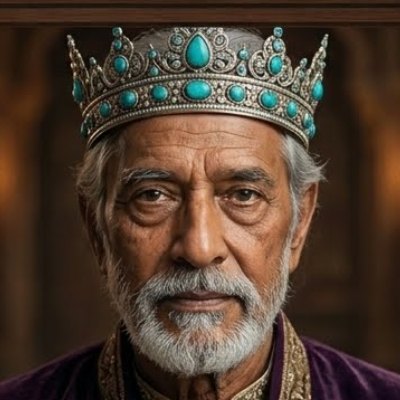
Sanjaya — Prince of Panchala, Son of Bharmyashva
Sanjaya · Sañjaya · Srinjaya · Sṛñjaya · Krimilashva (in some Puranic lists)
Sanjaya is a prince of the Panchala kingdom of the Lunar dynasty and one of the five sons of Bharmyashva, a Panchala king descended from Ajamidha of the Puru line. He is the brother of Mudgala, Yavinara, Brihadvishu, and Kampilya. According to the Bhagavata Purana, Bharmyashva charged his five sons with ruling his five territories, and their collective sufficiency to govern these regions gave rise to the designation Panchala for the kingdom and its people. Sanjaya's name admits a significant variant — Srinjaya — that is widely attested across parallel Puranic traditions, and this variant carries additional importance because Srinjaya is also the name of a major Panchala tribal grouping of the Mahabharata era, raising the question of whether the tribal name derives from this prince. His personal textual record beyond the genealogical statement is confined to king-lists; no independent narrative, episode, wife, or progeny is attributed to him in any primary source consulted.
✦ The Name
The name Sanjaya is a Sanskrit compound of the prefix sam, meaning completely or fully, and jaya, meaning victory or conquest. The compound therefore means completely victorious or one who has achieved total victory — a straightforward royal epithet of a kind common across the Kshatriya naming tradition. The Bhagavata Purana at 9.21.32 reads sañjayaḥ. The variant name Srinjaya — Sanskrit sṛñjaya — is attested in the Garuda Purana, the Harivamsha, and certain segments of the Mahabharata as the name of this same figure in Bharmyashva's lineage. The etymology of Srinjaya is less transparent than Sanjaya; one reading connects sṛñ to a root associated with flowing or releasing, yielding a sense related to the release of victory, though this is not universally accepted. The two names are phonetically and structurally distinct enough that their identification as a single figure rests on their consistent positional equivalence in the genealogical lists rather than on phonetic similarity.
A further variant, Krimilashva, appears in some Puranic lists in the fifth position among Bharmyashva's sons. This name — a compound of krimila, of uncertain meaning, and ashva, horse — is the most divergent of the attested variants and may represent an independent local tradition or a more heavily corrupted manuscript reading.
✦ Lineage
- Remote patrilineal ancestor: Ajamidha — a king of the Puru lineage and son of Riksha, identified in the Puranas as the progenitor of both the Panchala and Kuru dynastic branches.
- Father: Bharmyashva — also recorded as Haryyashva; a king of Panchala from whom the Bharmyashva sub-line takes its name. He assigned each of his five sons the governance of one of his five territories according to the Bhagavata Purana.
- Mother: Not named in any primary source.
- Brothers: Mudgala — the eldest and most celebrated of the five, a rajarishi celebrated in the Mahabharata's Vana Parva for his ascetic hospitality and his renunciation of heaven, and the eponymous patriarch of the Maudgalya brahmin gotra; Yavinara — also recorded as Yuvanira; Brihadvishu — also recorded as Vrihadbhanu and Brihadishnu; and Kampilya — whose name became associated with the city of Kampilya, the capital of Southern Panchala.
✦ Textual Variants and Inconsistencies
The most significant variant affecting this profile is the Sanjaya-Srinjaya divergence across primary sources. The Bhagavata Purana names the fifth son Sanjaya. The Garuda Purana, the Harivamsha, and certain Mahabharata passages name the corresponding figure Srinjaya. Since both sources place this figure in the same genealogical position — the fifth son of Bharmyashva, brother of Mudgala — the two names are treated here as variant designations for the same person rather than as references to distinct individuals. The positional consistency across all sources is the determining factor in this identification.
The name Srinjaya also designates a major Panchala tribal grouping prominent in the Mahabharata — the Srinjayas are repeatedly mentioned as the principal fighting force of the Panchala kingdom allied with the Pandavas at Kurukshetra. Whether this tribal name derives from the prince Sanjaya-Srinjaya, son of Bharmyashva, or whether it reflects an independent ethnonym that became secondarily attached to his name in the genealogical tradition, is not addressed in the primary sources and cannot be determined from the available evidence.
✦ Connection to the Wider Genealogy
Sanjaya belongs to the Bharmyashva branch of the Panchala kings within the Lunar dynasty. Through his brother Mudgala and the subsequent line of Bahvashva, Divodasa, Mitrayu, and the Panchala succession, he is a collateral ancestor of Drupada, Draupadi, and Dhrishtadyumna of the Mahabharata. The five brothers together are identified in the Bhagavata Purana as the founders of the five territorial divisions constituting the Panchala kingdom, and it is through this division that the Srinjaya tribal identity — whether or not it derives directly from this prince — became the dominant ethnonym for the Panchala people in the epic tradition.
✦ References
- Bhagavata Purana, Book IX, Chapter 21, verses 31–33: The primary source naming Sañjaya as the fifth of the five sons of Bharmyashva; the Sanskrit text reads sañjayaḥ at verse 32.
- Garuda Purana, Chapter 140: Records the variant name Srinjaya for the fifth son of Bharmyashva in the parallel genealogical list; the primary source for the Srinjaya form of this figure's name.
- Harivamsha, Adi Parva: Attests the Srinjaya variant and records the five sons of Bharmyashva and the Panchala territorial division.
- Mahabharata, Adi Parva: Contains genealogical passages on the Panchala kingdom; also extensively uses Srinjaya as the tribal designation for the Panchala people throughout the epic narrative.
- Vishnu Purana, Book IV: Supplementary Puranic source for the Bharmyashva branch of the Panchala lineage.
- Pargiter, F. E. Ancient Indian Historical Tradition. Oxford University Press, 1922: Examines the Panchala royal lineage and the five sons of Bharmyashva; the standard reference work for reconciling the variant name-forms across the Puranic sources for this lineage segment.