
About
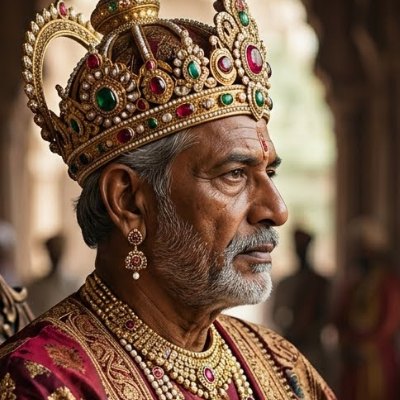
Senajit — King of the Brihadishu-Panchala Line, Son of Vishvajit, Father of Four Sons
Senajit · Senajit of the Panchala line · Senajit son of Vishvajit
Senajit is a king of the Paurava-Panchala lineage, son of Vishvajit — who was son of Jayadratha, Vrihatkarman, Vrihadvasu, and Vrihadishu in succession, all descending from Ajamidha son of Hastin son of Suhotra son of Bhumanyu son of Bharata Daushyanti — and the father of four sons: Ruchirashva, Kashya, Dridhadhanush, and Vasahanu. He is attested in the Vishnu Purana (Book IV, chapter 19), the Bhagavata Purana (Canto IX, chapter 21, verse 23), the Vayu Purana, and the Matsya Purana. His significance in the genealogical tree lies in the fact that he is the branching point of the Brihadishu sub-line: where all prior generations in this sequence are strictly linear, Senajit has four named sons from whom distinct sub-branches extend. The principal continuing line runs through his eldest son Ruchirashva. Beyond his genealogical position and the names of his sons, the Mahabharata (Shanti Parva, chapter 26) attributes to Senajit the authorship of a treatise on the duties of kings — making him one of the few figures in this sub-line to have any attestation beyond a bare genealogical name. A further passage in the Mahabharata (Shanti Parva, chapters 25 and 179) records a king named Senajit who lived in grief over the loss of his son and who attained peace of mind through the advice of a Brahmin; whether this is the same Panchala Senajit or a separate figure of the same name is not resolved by the primary sources. The name Senajit is shared by multiple distinct figures across the tradition and the qualifier son of Vishvajit is essential for identifying the Panchala king treated in this profile.
✦ The Name
The name Senajit is a Sanskrit compound of sena — army or military force — and jit — conqueror or victor — yielding the sense of one who conquers armies or the vanquisher of forces. The Vājasaneyi Samhita uses senajit as an adjectival epithet meaning defeating armies, establishing its use as a martial designation predating its application as a personal name. The Monier-Williams dictionary confirms this adjectival meaning and lists the Panchala king among several distinct bearers of the name.
✦ Lineage
- Father: Vishvajit — king of the Brihadishu-Panchala line, son of Jayadratha; his name means conqueror of all; variant names in parallel sources are Ashvajit (Matsya Purana) and Vishada (Bhagavata Purana)
- Son: Ruchirashva — eldest son of Senajit; father of Prithusena; the principal continuing line of this sub-branch runs through him; his name means he of the bright or beautiful horse; the Harivamsha gives the variant Ruchira
- Son: Kashya — second son of Senajit; the Matsya Purana makes Samara the son of Kashya rather than tracing him through Ruchirashva, inserting Kashya's line as the one that produces the ruler of Kampilya; in the Vishnu Purana this line is traced through Ruchirashva instead
- Son: Dridhadhanush — third son of Senajit; his name means one of firm bow or the steadfast archer; the Bhagavata Purana gives the variant Dridhahanu, meaning firm jaw; the Matsya Purana gives Dridhashrva
- Son: Vasahanu — fourth son of Senajit; the Bhagavata Purana gives the variant Vatsa — a name meaning calf or beloved; the Matsya Purana and Harivamsha also record Vatsa as king of Avanti, suggesting this branch of Senajit's line became associated with the Avanti realm
✦ The Treatise on Kingly Duties
The Puranic Encyclopaedia, citing Mahabharata Shanti Parva chapter 26, records that Senajit wrote a treatise on justice dealing with the duties of a king. This attribution — if it applies to the Panchala Senajit rather than to one of the other figures of the same name in the tradition — would make him a figure of some intellectual distinction beyond his dynastic role. The Shanti Parva passage itself occurs in the context of Bhishma's great discourse on Rajadharma and Mokshadharma to Yudhishthira following the Kurukshetra War; several ancient kings and sages are cited as authorities on royal conduct within these chapters. The attribution of a Rajadharma treatise to Senajit in this context places him within a tradition of Kshatriya wisdom literature, though the passage does not identify which Senajit is intended and the connection to the Panchala dynastic figure specifically is not confirmed by explicit primary text statement.
✦ Textual Variants
The Vishnu Purana (IV.19) names Senajit as son of Vishvajit with four sons: Ruchirashva, Kashya, Dridhadhanush, and Vasahanu. The Bhagavata Purana (IX.21.23) names him as son of Vishada — the Bhagavata's variant name for Vishvajit — with sons Ruchirashva, Kashya, Dridhahanu, and Vatsa, confirming the same four sons under slightly variant names. The Vayu Purana gives Vishvajit as his father, consistent with the Vishnu Purana. The Matsya Purana gives Ashvajit as his father — the Matsya's variant for Vishvajit — and records the same four sons with further name variants. Wilson's footnote 31 to Vishnu Purana IV.19 tabulates the four sons' names across the Bhagavata, Matsya, and Harivamsha traditions in a comparative table, noting that the Harivamsha substitutes Shvetaketu for Kashya and Mahimnara for Dridhadhanush while retaining Ruchira and Vatsa.
The Matsya Purana's variant making Samara the son of Kashya rather than a descendant of Ruchirashva is a significant structural variant: it would make Kampilya's first named ruler a grandson of Senajit through his second son rather than a later descendant through his first. The Vishnu Purana's more extended lineage through Ruchirashva is the mainstream tradition. The Bhagavata Purana, notably, omits all descents subsequent to Nipa and jumps directly to Brahmadatta as the son of Nipa by Sukriti — effectively compressing the entire Ruchirashva-through-Vibhratra sequence into silence, which Wilson's footnote 34 records explicitly.
✦ Disambiguation
The name Senajit is borne by multiple entirely distinct figures in the scriptural tradition. A Senajit who is son of Krishashva appears in the Ikshvaku solar dynasty at Bhagavata Purana IX.6.25 as the father of Yuvanashva — an entirely different lineage with no connection to the Panchala line. A Senajit who is son of Brihatkarman appears in the Vishnu Purana at page 465 in the context of the Brihadratha dynasty, also a distinct figure. A Senajit son of Krishna appears in the Harivamsha as a Yadava prince. A Senajit named as a Marut of the second gana appears in the Brahmanda Purana and Vayu Purana. An Apsara named Senajit presiding over the month of Tapasya appears in the Bhagavata Purana XII.11.40. None of these figures has any connection to the Panchala king treated in this profile.
✦ Connection to the Wider Genealogy
Senajit stands in the Brihadishu sub-line at the position: Ajamidha → Vrihadishu → Vrihadvasu → Vrihatkarman → Jayadratha → Vishvajit → Senajit. He is the last strictly linear king in this sequence; from him the line branches into four. The principal continuation through Ruchirashva leads downstream through Prithusena, Para, Nipa, Samara (ruler of Kampilya), and further to Anuha and Brahmadatta. The Vasahanu-Vatsa branch in several sources becomes associated with the Avanti kingdom, creating a geographical extension of the Panchala royal family's reach into central India. The Kashya branch in the Matsya Purana's alternative tradition produces Samara and thus the Kampilya line through a different generational route.
✦ References
Primary Sources
- Vishnu Purana, Book IV, chapter 19, verse 35–36 — Names Senajit as son of Vishvajit with four sons Ruchirashva, Kashya, Dridhadhanush, and Vasahanu; the principal genealogical source; Wilson's footnote 31 tabulates variant names across parallel texts.
- Bhagavata Purana, Canto IX, chapter 21, verse 23 — Names Senajit as son of Vishada (variant for Vishvajit) with four sons; gives variant names Dridhahanu and Vatsa.
- Vayu Purana, 99.172 — Confirms Senajit as son of Vishvajit; records his four sons.
- Matsya Purana, chapter 49, verses 49–50 — Names Senajit as son of Ashvajit (variant for Vishvajit); records four sons with variant names including Shvetaketu and Mahimnara in the Harivamsha tradition.
- Mahabharata, Shanti Parva, chapter 26 — Cited in the Puranic Encyclopaedia as the source attributing a treatise on kingly duties to Senajit.
- Mahabharata, Shanti Parva, chapters 25 and 179 — Records a king named Senajit who grieved over the loss of a son and attained peace through a Brahmin's counsel; possibly a distinct figure from the Panchala genealogical Senajit.
- Mahabharata, Udyoga Parva, chapter 4, verse 13 — Names a Senajit among those to whom the Pandavas decided to send a letter of invitation before the Bharata battle; identity with the Panchala dynastic Senajit is not confirmed.
Secondary Sources
- Vishnu Purana, tr. H. H. Wilson (1840), Book IV, chapter 19, footnote 31 — Comparative table of Senajit's four sons' names across the Bhagavata, Matsya, and Harivamsha traditions; records the Matsya Purana's structural variant making Samara a descendant of Kashya rather than Ruchirashva.
- Puranic Encyclopaedia, Vettam Mani, entry "Senajit" — Enumerates all distinct figures named Senajit in the tradition; records the Shanti Parva treatise attribution and the grief narrative; cites the Bhagavata Purana IX.21.23 for the Panchala genealogical position.
- Wisdomlib.org, "Senajit" definition entry — Collates all seven distinct Senajit figures from the Purana Index with individual Bhagavata, Vishnu Purana, Matsya Purana, and Brahmanda Purana citations; confirms the disambiguation of the Panchala king from the solar dynasty and Yadava figures of the same name.