
About
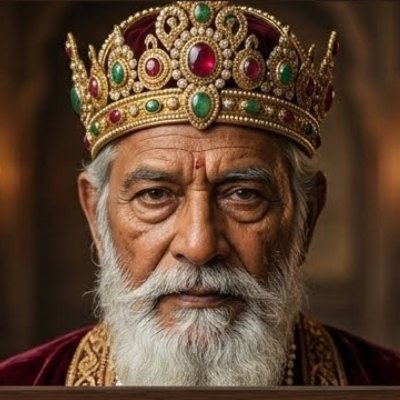
Nipa — King of the Brihadishu-Panchala Line, Father of a Hundred Sons, Ancestor of the Kampilya Royal Lineage
Nipa · Nipa of the Panchala line · Nipa son of Para
Nipa is a king of the Paurava-Panchala lineage, son of Para — who was son of Prithusena son of Ruchirashva son of Senajit, descending from Vrihadishu son of Ajamidha son of Hastin son of Suhotra son of Bhumanyu son of Bharata Daushyanti — and father of a hundred sons of whom Samara was the principal and the first named king of Kampilya, the principal city of the southern Panchala realm. Nipa is attested in the Vishnu Purana (Book IV, chapter 19) as the primary source. He is a branching-point figure in the Brihadishu sub-line: where all prior generations in this sequence are strictly linear with a single attested son, Nipa is credited with a hundred sons, of whom Samara and his line carry the genealogical tradition forward. The Bhagavata Purana records a significant structural variant that compresses the entire downstream sequence beginning from Nipa's generation in a materially different way from the Vishnu Purana. The Harivamsha contains a further remarkable variant identifying Nipa as the grandfather of Prishata and placing his death at the hands of Ugrayudha — a claim that, if accurate, would place Nipa several generations closer to the Mahabharata war period than the Vishnu Purana's extended sequence implies. Nipa has no independent narrative episode beyond the statement of his hundred sons and the conflicting textual traditions concerning his genealogical position.
✦ The Name
The name Nipa is Sanskrit for one who protects from below or the guardian at the base — derived from ni, a prefix denoting downward motion or foundation, and pa, from the root pa meaning to protect or guard. An alternative derivation connects it to nipa as a tree name — the Nipa palm or a fragrant flowering tree — used as a personal name in the Kshatriya convention of naming children after auspicious plants and natural objects. The name is shared by a class of Kshatriya descendants collectively called the Nipas or Nipa clan after this figure, as Wilson's footnote to the Matsya Purana passage notes — the race of the Nipas is exterminated by Ugrayudha in the Matsya Purana tradition, giving the name a collective dynastic resonance beyond its individual bearer.
✦ Lineage
- Father: Para (Para I) — son of Prithusena son of Ruchirashva son of Senajit; a bare genealogical name with no independent narrative
- Sons: One hundred sons in the Vishnu Purana tradition; of these, Samara is named as the principal and as the first king specifically identified as ruling Kampilya — the capital of the southern Panchala realm, identified with present-day Kampil in Uttar Pradesh; the other ninety-nine sons are unnamed in any consulted source
- Principal son: Samara — ruler of Kampilya; father of Para (Para II), Sampara, and Sadashrva; warrants a separate node as the first named ruler of Kampilya and a further branching point
✦ Textual Variants and Inconsistencies
The Vishnu Purana (IV.19) gives Nipa a hundred sons of whom Samara is principal and ruler of Kampilya, and then continues the lineage through Samara's son Para (Para II) for several more generations to Anuha and Brahmadatta before reaching Bhallata — a total of approximately eight more generations after Nipa. This is the mainstream tradition and the most detailed account.
The Bhagavata Purana adopts a dramatically compressed version: Wilson's footnote 34 to Vishnu Purana IV.19 records that the Bhagavata omits all descents subsequent to Nipa and makes Brahmadatta the son of Nipa by Sukriti — collapsing the entire intervening sequence of Samara, Para II, Prithu, Sukriti, Vibhratra, and Anuha into a direct Nipa-to-Brahmadatta parentage. This is not merely a name variant but a structural compression of seven or eight generations into one. The Bhagavata Purana's version also makes Sukriti the mother of Brahmadatta rather than a male ancestor in the intervening chain — a further divergence from the Vishnu Purana's account.
The Harivamsha contains the most dramatic variant. Wilson's footnote 41 records that the Harivamsha states Ugrayudha killed Nipa, the grandfather of Prishata — which would make Nipa approximately three generations before Drupada rather than the many generations before him that the Vishnu Purana's extended lineage implies. This Harivamsha statement places Nipa in the same time-period as the events leading up to the Mahabharata war, with his death at Ugrayudha's hands precipitating the loss of Kampilya for the Panchala royal family until Prishata's own eventual recovery of it. The Harivamsha itself is internally inconsistent on this point: it had previously stated that it was the son of Bhallata — several descents after Nipa in the Vishnu Purana sequence — who was killed by Ugrayudha; the same text then in chapter 32 presents Prishata as the father of Drupada in the family of Srinjaya, which is the Nila sub-line entirely. Wilson's footnote notes this confusion explicitly and it cannot be resolved from the Harivamsha text itself.
The Matsya Purana introduces a separate variant by making Samara the son of Kashya — Senajit's second son — rather than the son of Nipa, bypassing Nipa's position in the main line entirely and placing Samara one collateral branch over. In this tradition Nipa's position as the ancestor of Kampilya's first named ruler is transferred to the Kashya sub-branch. Wilson's footnote 32 records this Matsya Purana variant. These irreconcilable accounts across the Vishnu Purana, Bhagavata Purana, Harivamsha, and Matsya Purana represent the most textually unstable section of the entire Brihadishu sub-line, centered on Nipa's node and what follows from it.
✦ The Nipa Clan
The Matsya Purana's reference to the race of the Nipas being exterminated by Ugrayudha — recorded in Wilson's footnote 41 in connection with the Harivamsha passage on Ugrayudha — indicates that Nipa's descendants through his hundred sons came to be collectively known as the Nipas, forming a distinct Kshatriya clan within the broader Panchala tradition. The extinction of this clan by Ugrayudha and the subsequent recovery of Kampilya by Prishata — and by implication Drupada after him — represents a dynastic rupture in the Panchala royal lineage that the Harivamsha and Matsya Purana preserve in their war narratives though with the inconsistencies noted above.
✦ Connection to the Wider Genealogy
Nipa stands in the Brihadishu sub-line at the position: Ajamidha → Vrihadishu → Vrihadvasu → Vrihatkarman → Jayadratha → Vishvajit → Senajit → Ruchirashva → Prithusena → Para I → Nipa. In the Vishnu Purana tradition he is followed by Samara and a further seven generations before Bhallata, making him a mid-sequence figure well removed from the Mahabharata war period. In the Harivamsha tradition he is compressed to the grandfather of Prishata and thus only three generations from Drupada. The Bhagavata Purana removes all intermediate kings entirely and jumps from Nipa to Brahmadatta in a single generation. In all three traditions he is the last figure in the Brihadishu sub-line before the genealogical focus narrows to the Kampilya royal succession — making him, regardless of the specific variant followed, the structural transition point between the extended Panchala dynastic sequence and the specifically Kampilya-centred royal history.
✦ References
Primary Sources
- Vishnu Purana, Book IV, chapter 19 — The principal source; names Nipa as son of Para with a hundred sons of whom Samara was principal and ruler of Kampilya; continues the lineage through Samara and seven further generations to Bhallata; Wilson's footnotes 32, 34, and 41 record all variant traditions.
- Bhagavata Purana, Canto IX, chapter 21 — Compresses the entire post-Nipa sequence; makes Brahmadatta the son of Nipa by Sukriti, bypassing all intermediate generations including Samara recorded in the Vishnu Purana; Wilson's footnote 34 records this compression explicitly.
- Harivamsha, chapters 31–32 — Records Nipa as the grandfather of Prishata; states Ugrayudha killed Nipa; records the destruction of Ugrayudha by Bhishma and the recovery of Kampilya by Prishata; internally inconsistent with the same text's earlier statement that the son of Bhallata was the figure killed by Ugrayudha.
- Matsya Purana, chapter 49 — Makes Samara the son of Kashya rather than of Nipa; removes Nipa from the Kampilya royal lineage by routing that succession through the Kashya branch of Senajit's sons instead; records the race of the Nipas as exterminated by Ugrayudha.
Secondary Sources
- Vishnu Purana, tr. H. H. Wilson (1840), Book IV, chapter 19, footnotes 32, 34, and 41 — The essential collation of all variant traditions for Nipa's position and descendants; records the Bhagavata Purana compression, the Matsya Purana's Kashya-branch variant, and the Harivamsha's internally inconsistent identification of Nipa as the grandfather of Prishata killed by Ugrayudha.
- Sacred-texts.com and Jatland Wiki, Vishnu Purana Book IV Chapter XIX transcriptions — Reproduce the primary text and Wilson's footnotes confirming all variants cited in this profile.