
About
Samara — Ruler of Kampilya, Son of Nipa, First Named King of the Southern Panchala Capital
Samara · Samara of Kampilya · Samara son of Nipa
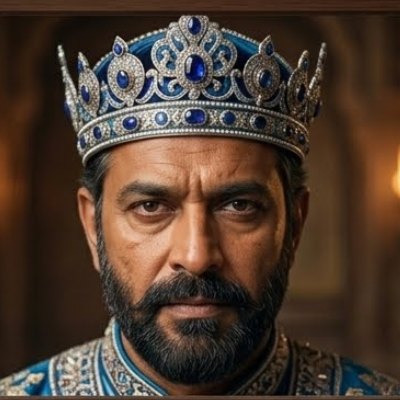
Samara is a king of the Paurava-Panchala lineage and the first figure in the Brihadishu sub-line to be explicitly identified as the ruler of a named capital city. He is the principal son of Nipa — who had a hundred sons of whom Samara was foremost — Nipa himself being son of Para son of Prithusena son of Ruchirashva son of Senajit, descending from Vrihadishu son of Ajamidha son of Hastin son of Suhotra son of Bhumanyu son of Bharata Daushyanti. The Vishnu Purana (Book IV, chapter 19) identifies him as the ruler of Kampilya — the capital of the southern Panchala realm, identified with present-day Kampil in Uttar Pradesh in the Doab between the Ganga and Yamuna rivers — making him a figure of genuine dynastic significance beyond his genealogical position as a link in the sequence. He is a branching node with three named sons: Para (Para II), Sampara, and Sadashrva. The principal continuing line runs through Para II. No independent narrative episode is attested for Samara himself; his significance is constituted through his role as first named Kampilya ruler and through the three-son branching that occurs at his node. He is attested in the Vishnu Purana (Book IV, chapter 19), in Wilson's index at page 452, and in the Matsya Purana tradition — the latter as a variant placing him in a different sub-branch of Senajit's sons.
✦ The Name
The name Samara is Sanskrit for battle, conflict, or war — one of several common Sanskrit words for armed contest — derived from the root sam with ara, the coming together of forces. As a Kshatriya royal name it belongs to the extensive class of martial epithets celebrating the warrior's sphere, entirely appropriate for the lineage context in which it appears. The name is also used in philosophical contexts as a word for the turmoil of worldly existence, carrying connotations beyond the purely martial in the broader Sanskrit literary tradition; neither of these usages has any bearing on the royal figure treated here. The name Samara is shared by several other figures in the broader tradition and the qualifiers son of Nipa and ruler of Kampilya are essential for identifying this specific individual.
✦ Lineage
- Father: Nipa — king of the Panchala line, son of Para I son of Prithusena son of Ruchirashva son of Senajit; described in the Vishnu Purana as having a hundred sons of whom Samara was the principal; the Matsya Purana gives a variant in which Samara is the son of Kashya — Senajit's second son — rather than of Nipa
- Son: Para (Para II) — principal son of Samara and the figure through whom the continuing line descends toward Prithu, Sukriti, Vibhratra, Anuha, and Brahmadatta; designated Para II in this tree to distinguish him from Para I who was the father of Nipa
- Son: Sampara — second son of Samara; confirmed in the Vishnu Purana index at page 452 as son of Samara; no independent narrative is attested and no descendants are named in any consulted source
- Son: Sadashrva — third son of Samara; confirmed in the Vishnu Purana index at page 452 as son of Samara; no independent narrative is attested and no descendants are named in any consulted source
✦ Kampilya: The First Named Capital of the Southern Panchala Realm
The Vishnu Purana's identification of Samara as the ruler of Kampilya is the earliest point in the Brihadishu sub-line at which a specific royal capital is named. Kampilya was the pre-eminent city of the southern Panchala kingdom — Wilson's footnote 32 to Vishnu Purana IV.19 identifies it with the Kampil of the medieval Islamic period, situated in the Doab between the Ganga and Yamuna rivers and included within southern Panchala's territory. It is the same city that in the Mahabharata period is ruled by Drupada and is the scene of Draupadi's svayamvara and the Pandavas' encounter with the Panchala royal house. The identification of Samara as its first named ruler in the Puranic genealogical tradition places him at the head of the specifically Kampilya-centred royal lineage that runs forward through Para II, Prithu, Sukriti, Vibhratra, Anuha, Brahmadatta, Vishvaksena, Udaksena-Dandасена, and Bhallata before the city passes out of this dynastic line entirely.
✦ Textual Variants
The primary variant concerns Samara's parentage. The Vishnu Purana (IV.19) places him as the son of Nipa — who was the son of Para I, Prithusena, Ruchirashva, and Senajit in succession. The Matsya Purana gives a materially different account, making Samara the son of Kashya — Senajit's second son — rather than of Nipa. This would mean Samara was not a descendant of Ruchirashva at all but a descendant of Kashya, placing the Kampilya royal line in an entirely different sub-branch of Senajit's four sons. Wilson's footnote 32 records this Matsya variant explicitly. The two traditions cannot be reconciled; the Vishnu Purana's more extended lineage through Ruchirashva, Para I, and Nipa is the mainstream and most detailed account, but the Matsya Purana's variant represents a genuine alternative tradition for the origin of the Kampilya dynasty. The Bhagavata Purana bypasses Samara entirely in its compressed account, moving from Nipa directly to Brahmadatta.
On his three sons' names: the Vishnu Purana gives Para, Sampara, and Sadashrva. No parallel text offers variant names for these three sons specifically — they are attested only in the Vishnu Purana and Wilson's index entries at page 452. The Bhagavata Purana and Matsya Purana do not name Samara's sons, the former because it compresses the sequence and the latter because its variant routing through Kashya does not continue to name Samara's children.
✦ Connection to the Wider Genealogy
Samara stands in the Brihadishu sub-line at the position: Ajamidha → Vrihadishu → Vrihadvasu → Vrihatkarman → Jayadratha → Vishvajit → Senajit → Ruchirashva → Prithusena → Para I → Nipa → Samara. He is the first figure in this sequence to be associated with a specific geographic seat of power — Kampilya — and his three sons represent the last branching point within the sub-line before the single continuing line runs through Para II toward Anuha, Brahmadatta, and Bhallata. Through his son Para II the Kampilya royal dynasty continues for seven more generations in the Vishnu Purana's account before ending with Bhallata's death and the eventual recovery of Kampilya by Prishata of the Srinjaya-Nila line as recorded in the Harivamsha. Samara's collateral sons Sampara and Sadashrva head branches that are genealogically terminal in the primary sources — no descendants of either are named in any consulted text.
✦ References
Primary Sources
- Vishnu Purana, Book IV, chapter 19 — The principal source; names Samara as the principal son of Nipa and the ruler of Kampilya; gives his three sons as Para, Sampara, and Sadashrva; continues the lineage through Para II to Bhallata; Wilson's footnote 32 records the Matsya Purana variant.
- Vishnu Purana, tr. H. H. Wilson (1840), Index, page 452 — Confirms Samara as son of Nipa with individual index entries for both Sampara and Sadashrva as sons of Samara.
- Matsya Purana, chapter 49 — Records the variant placing Samara as the son of Kashya rather than of Nipa; routes the Kampilya royal lineage through Senajit's second son instead of the Ruchirashva line.
- Bhagavata Purana, Canto IX, chapter 21 — Bypasses Samara entirely in its compressed account; makes Brahmadatta the direct son of Nipa by Sukriti without naming any intermediate kings.
Secondary Sources
- Vishnu Purana, tr. H. H. Wilson (1840), Book IV, chapter 19, footnote 32 — Records the Matsya Purana variant making Samara the son of Kashya; identifies Kampilya with Kampil in the Doab; confirms Samara's position as the first named ruler of that capital in the Puranic genealogical tradition.
- Wikipedia, "Kampilya" article — Confirms Kampilya as the capital of southern Panchala, identified with present-day Kampil in Uttar Pradesh; records it as Drupada's capital in the Mahabharata period; contextualises Samara's role as its first genealogically named ruler in the Puranic sequence.
- Sacred-texts.com and Jatland Wiki, Vishnu Purana Book IV Chapter XIX transcriptions — Reproduce the primary text passage naming Samara as ruler of Kampilya with his three sons; confirm Wilson's footnote references.