
About
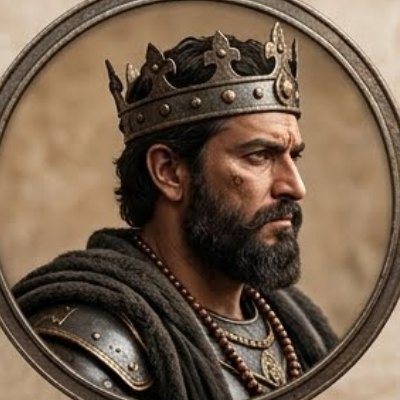
Ugrayudha — Paurava Conqueror of Panchala, Slain by Bhishma
Ugrayudha · Udgrayudha · Ugrayudha Paurava · Panchaladhipati
Ugrayudha is a king of the Dvimidha branch of the Puru lineage within the Chandravamsha, the Lunar dynasty of ancient India. He is placed in the line descending from Dvimidha through Yavinara, Dhritiman, Satyadhrti, Dridhanemi, Suparshva, Sumati, Sannati, and Krita — the last of whom the Bhagavata Purana distinguishes as a compiler of Sama Veda samhitas. Ugrayudha is the most narratively prominent king in the Dvimidha branch, distinguished by two major episodes preserved in the primary sources: his violent conquest of the Panchala kingdom through the destruction of the Nipa line of kings, and his subsequent death at the hands of Bhishma — the great Kuru patriarch and son of Shantanu — after he demanded the widowed Satyavati as his wife. His story is narrated at length in the Harivamsa (Adi Parva, Chapter 20) and corroborated in outline by the Vishnu Purana, the Bhagavata Purana, the Matsya Purana, and the Mahabharata itself.
✦ The Name
The name Ugrayudha is a compound of ugra (fierce, terrible, powerful) and ayudha (weapon), yielding the meaning one whose weapon is terrible or one who bears fearsome arms. It is an apt martial epithet for a king defined in the texts by his possession of a devastating chakra and his reputation for violent conquest. The variant spelling Udgrayudha, found in the Bhagavata Purana, represents a common scribal or dialectal variation without any difference in meaning. The epithet Paurava attached to his name in the Harivamsa narrative situates him clearly within the Puru dynastic clan.
✦ Lineage
- Dynasty: Chandravamsha (Lunar dynasty), Puru lineage, Dvimidha branch
- Dvimidha: Remote ancestor and branch-founder; son of Hastin, who founded Hastinapura, and a great-great-grandson of the emperor Bharata
- Father: Nipa (son of Krita) according to the Bhagavata Purana (9.21.29); Krita directly according to the Vishnu Purana (IV.19) and the Harivamsa (I.20.44) — see Variants section
- Son: Kshemya — next in the Dvimidha succession; confirmed in the Bhagavata Purana (9.21.29), the Vishnu Purana (IV.19), and the Harivamsa (I.20.46)
✦ The Chakra and the Conquest of Panchala
The Harivamsa records that Ugrayudha came into possession of a blazing, all-destroying discus — a chakra of exceptional and invincible power, whose force could not be pacified once released. Armed with this weapon, he became effectively unconquerable in battle. He deployed it in a campaign against the Nipa dynasty, the ruling line of the Panchala kingdom centred on the city of Kampilya. The Harivamsa (I.20.44–48) states that Ugrayudha slew Nipa, described as the grandfather of Prishata — Prishata being the father of Drupada, the future king of Panchala and father-in-law of the Pandavas. Through this conquest Ugrayudha exterminated the Nipa line of kshatriyas and seized control of the Panchala territory, becoming its king by force. The Harivamsa describes him in this passage as one who grew highly vicious, burning down all the Nipas and slaying other kings in pride. The Vishnu Purana (IV.19) confirms in its own genealogical summary that it was by Ugrayudha's prowess that the Nipa race of kshatriyas was destroyed.
During this campaign, the Harivamsa records, Ugrayudha forced Prishata — heir to the Panchala throne — to flee and seek shelter at Kampilya. Only three survivors of the Panchala line are mentioned in the aftermath of his conquest: Somaka, Prishata himself, and Durmukha.
✦ The Demand for Satyavati and Death at the Hands of Bhishma
The Harivamsa preserves this episode in the form of a narrative recounted by Bhishma to Yudhishthira (I.20.49–73). Following the death of king Shantanu of Hastinapura, while the Kuru court was still in the period of royal mourning, Ugrayudha saw an opportunity to extend his power. He sent a message to Bhishma — who was acting as regent for the young princes — demanding that Satyavati, Shantanu's widow and mother of the Kuru heirs, be handed over to him as his wife, offering wealth and dominion in exchange.
Bhishma, bound by his vow to protect the Kuru throne and the interests of Satyavati's sons, was outraged. His ministers, aware that Ugrayudha's chakra made him militarily invincible, counselled restraint during the mourning period and attempted diplomatic delay. The crucial turn in the narrative is a moral-cosmological detail: the Harivamsa states that because Ugrayudha harboured lustful desire for another man's wife, his chakra — which could only retain its power as long as its wielder observed moral conduct — gradually lost its divine force. By the time the mourning period had ended and Bhishma was free to act, the weapon had been rendered ineffective. Bhishma then attacked Ugrayudha in battle and killed him.
Following Ugrayudha's death, the Harivamsa records that Prishata — who had been dispossessed — marched to reclaim his ancestral territory and recovered his kingdom of Ahichatra. The Harivamsa (I.20.72–73) states explicitly that on the slaying of both Nipa and Ugrayudha, Prishata obtained his ancestral realm. This restored succession is significant for the wider epic tradition, since it is from Prishata's son Drupada that the Pandava alliance and the arc of the Mahabharata war ultimately proceed. The Mahabharata itself (Shanti Parva, Chapter 27, verse 10) records the killing of Ugrayudha by Bhishma, identifying him as an emperor.
✦ Textual Variants and Inconsistencies
The primary inconsistency concerns Ugrayudha's father. The Bhagavata Purana (9.21.29) gives his father as Nipa, son of Krita, placing an additional generation between Krita and Ugrayudha. The Vishnu Purana (IV.19) states directly that the son of Krita was Ugrayudha, with no Nipa intermediate. The Harivamsa (I.20.44) similarly calls Ugrayudha the son of Krita. The Bhagavata's Nipa is thus either a figure omitted from or not recognised by the Vishnu Purana and Harivamsa accounts. This is a standard generational discrepancy of the kind common across Puranic genealogical lists.
A second textual complication is internal to the Harivamsa itself, noted by H.H. Wilson in his Vishnu Purana commentary (note 41). The Harivamsa states that Ugrayudha killed Nipa, the grandfather of Prishata; yet elsewhere in the same text it had previously identified the son of Bhallata — a figure several descents later in the Nipa dynastic line — as the one killed by Ugrayudha. The Harivamsa thus contains an internal contradiction regarding which member of the Nipa line was Ugrayudha's victim. The Matsya Purana, cited in the same note, names Janamejaya (son of Bhallata and last of the Nipa line) as the king whose death ended the dynasty. These variants reflect layered or inconsistent redaction within the Harivamsa's own dynastic account. The name Nipa in the Bhagavata Purana's genealogical line (as Ugrayudha's father) may further reflect a scribal or traditional confusion between the Nipa dynastic name and an individual figure in the Dvimidha line.
There are also several figures named Ugrayudha in the broader Mahabharata tradition who are entirely unrelated to this king: a son of Dhritarashtra present at the Panchali svayamvara (Adi Parva, Chapter 67 and 185), a Panchala partisan of the Pandavas wounded by Karna (Karna Parva, Chapter 56), and a figure on the Kaurava side (Shalya Parva, Chapter 2). These are to be distinguished from the Dvimidha-lineage Ugrayudha who is the subject of this profile.
✦ Connection to the Wider Genealogy
Ugrayudha's position in the Dvimidha line makes him a collateral kinsman of Bhishma and the Kuru house, both branches descending from Hastin and the common Puru stock — Dvimidha and Ajamidha being brothers. The episode of Bhishma killing Ugrayudha is therefore, in dynastic terms, a conflict between two Paurava sub-branches, with the Kuru main line prevailing over the Dvimidha branch's most powerful representative. Ugrayudha's death does not end the Dvimidha line: it continues through his son Kshemya, then Suvira, Nripanjaya (Ripunjaya), and finally Bahuratha, the last king named in this branch in the Bhagavata Purana's account. His conquest of Panchala and its reversal by Bhishma also sets the conditions for the subsequent history of the Panchala kingdom under Prishata and Drupada, and thus contributes indirectly to the circumstances that produce Draupadi and the Pandava alliance.
✦ References
- Primary Sources:
- Harivamsa, Adi Parva (Harivamsa Parva), Chapter 20, verses 44–73: The principal narrative source; narrated by Bhishma to Yudhishthira; records Ugrayudha's lineage, his possession of the chakra, his destruction of the Nipa line, his demand for Satyavati, the loss of his weapon's power through moral transgression, his death at Bhishma's hands, and the restoration of Ahichatra to Prishata
- Bhagavata Purana, Skandha 9, Adhyaya 21, verse 29: Places Ugrayudha (as Udgrayudha) as son of Nipa, himself son of Krita; records his son as Kshemya
- Vishnu Purana, Book IV, Chapter 19 (H.H. Wilson translation): Names Ugrayudha as direct son of Krita and records the destruction of the Nipa kshatriyas by his prowess; Wilson's note 41 documents the internal Harivamsa inconsistency regarding which Nipa-line king Ugrayudha actually killed
- Mahabharata, Shanti Parva, Chapter 27, verse 10: Briefly records Ugrayudha as an emperor killed by Bhishma
- Matsya Purana (as cited in Vishnu Purana, Wilson note 41): Names Janamejaya, son of Bhallata, as the last king of the Nipa line exterminated by Ugrayudha
- Secondary Sources:
- Wisdomlib, definition entry for Ugrayudha: Consolidates references across the Bhagavata Purana, Vishnu Purana, Matsya Purana, and Mahabharata; distinguishes the multiple figures of this name
- Wisdomlib, definition entry for Kshemya: Confirms Kshemya as son of Ugrayudha with references to both Bhagavata Purana 9.21.29 and Vishnu Purana IV.19
- Vettam Mani, Puranic Encyclopaedia: General reference for disambiguation and cross-referencing of the Ugrayudha entries across Puranic and epic contexts