
About
Vishvaksena — King of Panchala and Royal Ascetic of the Nipa Line
Vishvaksena · Visvaksena · Vishwaksena
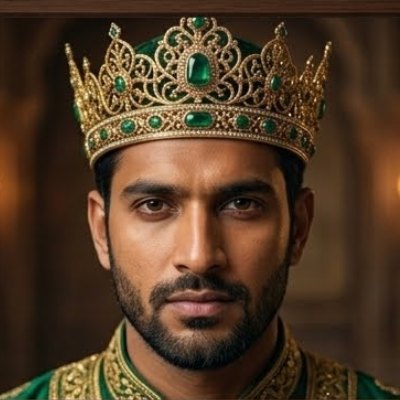
Vishvaksena is a king of Panchala belonging to the Nipa branch of the Puru lineage within the Lunar dynasty. He is the son of Brahmadatta, the celebrated royal sage and king of Panchala, and is recorded in the Bhagavata Purana, the Vishnu Purana, and the Harivamsha Purana as a link in the genealogical succession of the Panchala kings. His principal significance in the tradition is his position within this royal lineage — as the son of the eminent Brahmadatta and as the father of a successor king — and he is additionally described as an ascetic and a subduer of enemies. The Bhagavata Purana records him briefly in its ninth book while enumerating the dynasties descended from Puru, and the Harivamsha Purana supplies further genealogical and epithet detail within the same lineage.
✦ The Name
The name Vishvaksena is formed from the Sanskrit elements vishva, meaning "all" or "the entire universe," and sena, meaning "army" or "forces." The compound conveys the sense of one whose army encompasses all directions, or one who commands forces throughout the world. The name is shared by the celebrated divine general and chamberlain of Vishnu, who bears the same name in an entirely distinct theological context; the Panchala king Vishvaksena is a separate human figure with no documented connection to that divine being beyond the shared name.
✦ Lineage
- Paternal grandfather: Anuha — king of Panchala, son of Vibhraja; he married Kritvi, the daughter of the sage Shuka, and by her fathered Brahmadatta. The Vishnu Purana and Harivamsha Purana both record Anuha as the immediate father of Brahmadatta and hence the paternal grandfather of Vishvaksena.
- Paternal great-grandfather: Vibhraja — king of Panchala, father of Anuha, recorded in the Harivamsha Purana as part of the dynastic succession leading to Brahmadatta.
- Paternal grandmother: Kritvi — daughter of the sage Shuka, son of the sage Vyasa, and his wife Pivari; she is also known by the names Kirtimatī and Go in variant sources. She was a yogini of notable accomplishment. The Matsya Purana records her as a yogini and identifies her as the wife of a Panchala king and mother of Brahmadatta. The Vishnu Purana and Harivamsha both name her as wife of Anuha.
- Father: Brahmadatta — king of Panchala, ruling from the city of Kampilya; renowned as a royal sage, a great yogi, and a knower of the speech of all creatures. He is described in the Harivamsha as a contemporary of Pratipa, the grandfather of Bhishma. He composed a treatise on yoga and is celebrated in the Puranas and epics as an exemplary king-ascetic. After installing Vishvaksena as king, Brahmadatta himself departed for the practice of yoga.
- Mother: Sarasvati — named in the Bhagavata Purana as the mother through whom Brahmadatta fathered Vishvaksena. The Purana Index, drawing on the Brahmanda Purana, gives her name as Go. These two names reflect variant traditions recorded in different Puranic texts.
- Son: Udaksena — named in the Bhagavata Purana as the son of Vishvaksena and his successor in the Panchala line. The Harivamsha Purana names this successor as Dandasena. Both records agree that Vishvaksena was followed by a son who continued the Panchala succession; the divergence is one of name across two distinct primary sources.
✦ Role in the Panchala Succession
Vishvaksena's position in the Panchala royal succession is primarily genealogical. His father Brahmadatta, after a reign distinguished by yogic attainment and learning, consecrated Vishvaksena as king of Panchala and then withdrew to pursue ascetic practice. The Harivamsha Purana describes Vishvaksena with the epithet "subduer of foes" and characterises him as an ascetic in the same mould as his father, indicating that the family tradition of combining royal rule with contemplative discipline continued into his generation. After Vishvaksena, the line passed to his son, recorded as Udaksena in the Bhagavata Purana and as Dandasena in the Harivamsha. The Harivamsha further continues the genealogy through Dandasena's son Bhallata, who is described as having been slain by Karna, after which the Nipa line eventually came to ruin at the hands of Ugrayudha.
✦ Appearance in the Mahabharata
The Mahabharata, in the Sabha Parva according to the southern recension, mentions a figure named Vishvaksena in the context of Indra's celestial palace, where he is said to shine among the assembled sages and distinguished beings. This reference is brief and does not elaborate on his earthly lineage or deeds; it places him among ancient sages and hermits honoured in the divine court.
✦ Textual Variants and Inconsistencies
Several significant variants affect this profile. First, the identity of Vishvaksena's immediate grandfather differs between texts. The Vishnu Purana and the Harivamsha Purana place Anuha, son of Vibhraja, as the father of Brahmadatta and hence the paternal grandfather of Vishvaksena. The Bhagavata Purana, by contrast, names King Nipa as the father of Brahmadatta, making Nipa the grandfather in that account and setting aside the Vibhraja–Anuha generation. These two accounts represent genuinely distinct genealogical reckonings of the same dynastic position across different Puranic traditions, and Nipa appears as a more distant ancestor in the fuller lineage supplied by the Vishnu Purana and Harivamsha.
Second, the identity of Vishvaksena's mother differs between texts: the Bhagavata Purana gives the name Sarasvati, while sources drawing on the Brahmanda Purana record the name as Go. These may be distinct names for the same individual or may reflect genuinely different local traditions. Third, the name of Vishvaksena's son differs between the Bhagavata Purana, which records Udaksena, and the Harivamsha Purana, which records Dandasena. The two traditions are otherwise consistent in placing a single son as Vishvaksena's successor in the Panchala line.
✦ Connection to the Wider Genealogy
Vishvaksena belongs to the Puru branch of the Lunar dynasty. The Panchala line to which he belongs descends ultimately from Puru, the youngest son of the lunar king Yayati. Within the Panchala kings, the succession runs through Vibhraja to his son Anuha, who by marrying Kritvi — daughter of the sage Shuka, son of the sage Vyasa — united the royal line with the most distinguished sage lineage of the tradition. Through this connection, Vishvaksena is the great-grandson of Shuka and the great-great-grandson of Vyasa on the paternal grandmother's side. After Vishvaksena, the Panchala succession continued through his son and then to Bhallata, in whose generation the Nipa line was extinguished.
✦ References
- Primary Sources
- Bhagavata Purana, Book IX, Chapter 21, verses 25–26: Names Brahmadatta as son of Nipa and his wife Kritvi, daughter of Shuka; names Vishvaksena as the son of Brahmadatta by his wife Sarasvati; records Udaksena as Vishvaksena's son.
- Harivamsha Purana, Adi Parva, Chapter 20: Supplies the genealogical sequence Vibhraja–Anuha–Brahmadatta–Vishvaksena; describes Vishvaksena as an ascetic and subduer of foes; names his son as Dandasena and continues the line to Bhallata and the eventual destruction of the Nipa race by Ugrayudha.
- Vishnu Purana, Book IV, Chapter XIX: Records Anuha as son of Vibhraja and husband of Kritvi, daughter of Shuka son of Vyasa, and their son Brahmadatta; provides the genealogical framework within which Vishvaksena's position is established.
- Matsya Purana, 15.8–9; 49.57: Records Kritvi as daughter of Shuka and Pivari and identifies her as a yogini and wife of King Anuha; provides contextual lineage for Vishvaksena's paternal grandmother.
- Mahabharata, Sabha Parva, Dakshinatya recension, Chapter 7: Brief mention of a Vishvaksena shining in Indra's palace among assembled sages; contributes the name in an epic context.
- Secondary Sources
- Wisdomlib.org, "Vishvaksena: 21 definitions": Aggregates definitions and references from the Purana Index and Cologne Digital Sanskrit Dictionaries; identifies the Bhagavata Purana and Brahmanda Purana variants for the mother's name and notes the Udaksena and Dandasena variants for the son.
- Wisdomlib.org, "Kritvi: 6 definitions": Aggregates references from the Bhagavata Purana, Matsya Purana, and Purana Index regarding Kritvi's identity, parentage, and marriages; essential for establishing the variant accounts of Brahmadatta's parentage and Vishvaksena's paternal grandmother.
- Wisdomlib.org, "Brahmadatta: 20 definitions": Aggregates Puranic references for Brahmadatta across the Bhagavata, Matsya, Brahmanda, Vayu, and Vishnu Puranas; essential for contextualising Vishvaksena's father and the divergent genealogical accounts.
- Sacred-texts.com, Vishnu Purana Book IV Chapter XIX (H. H. Wilson translation): Translation and footnotes clarifying variant readings between the Bhagavata, Harivamsha, and Vishnu Purana accounts of the Brahmadatta–Vishvaksena generation.