
About
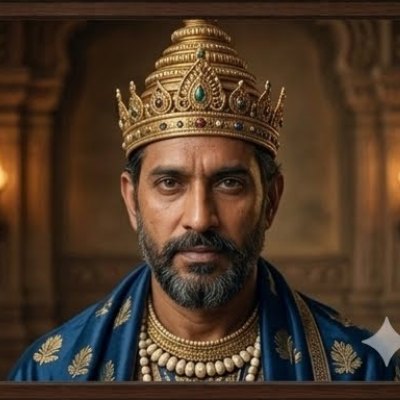
Dvimidha — Patriarch of the Dvimidha Sub-Branch of the Puru Dynasty
Dvimidha · Dvimidha · Dwijmirh (regional variant) · son of Hasti · brother of Ajamidha and Purumidha
Dvimidha is a king of Hastinapura in the Puru branch of the Lunar dynasty and the founding patriarch of the genealogical sub-line that bears his name. He is one of three sons born to Hasti — the king who founded the city of Hastinapura and gave it its name — and is the brother of Ajamidha and Purumidha. Through his son Yavinara, Dvimidha initiated a collateral line of Paurava kings running parallel to the main Kuru trunk descended from Ajamidha. This line extends across at least sixteen generations, culminating in Bahuratha, and passes through figures of notable distinction including Sarvabhauma, a lord paramount, Krita, a Sama Veda scholar, and Ugrayudha, whose destruction at the hands of the warrior Bhishma connects the Dvimidha branch directly to the central narrative of the Mahabharata. Dvimidha is attested in the Bhagavata Purana, the Vishnu Purana, the Matsya Purana, the Vayu Purana, the Agni Purana, and the Harivamsha.
✦ The Name
The name Dvimidha is a Sanskrit compound. The element dvi means two, and midha derives from a root associated with contest, prize, or abundance — in Vedic usage, often the reward or bounty of a competitive encounter, sacrificial gift, or martial victory. The compound therefore carries the sense of one who has doubled or excelled in the winning of prizes or in martial contests. The three brothers — Ajamidha, Dvimidha, and Purumidha — carry names built on the same root, the prefixes indicating none (a-), two (dvi-), and many or full (puru-) respectively, suggesting a naming convention that distinguished the brothers by degree. The Matsya Purana and the Vayu Purana render the name consistently as Dvimidha; a regional Jatland tradition preserves a contracted variant, Dwijmirh, reflecting phonological shifts in the later folk transmission of the genealogy. No other textual source gives a meaningfully different form of the name.
✦ Lineage
- Father: Hasti — king of Hastinapura and founder of the city, son of Suhotra (son of Bhumanyu, son of Bharata the Chakravarti). The Mahabharata's Adi Parva records that Hasti founded the city and that it was named Hastinapura after him. He married Yasodhara, the princess of the Trigarta kingdom.
- Mother: Yasodhara — princess of Trigarta, wife of Hasti; named in the Mahabharata's Adi Parva genealogical section as the mother of Hasti's children, of whom Vikunthana is also named in that passage. The Puranic texts do not independently confirm her as the mother of all three sons; the Vishnu Purana names the three sons without specifying a mother.
- Brothers:
- Ajamidha — the eldest and most celebrated of Hasti's three sons; continued the primary Paurava succession at Hastinapura and is the founding ancestor of the Kuru main line through his son Riksha, as well as of the Panchala royal houses through other sons. The Mahabharata's Adi Parva and numerous Puranas treat him as the principal heir of Hasti's line.
- Purumidha — the third son of Hasti; attested in the same sources as Dvimidha but with a shorter recorded descendant line. The Agni Purana and the Vishnu Purana name him without elaborating his genealogy beyond the first generation.
- Son: Yavinara — the sole recorded son of Dvimidha; named in the Bhagavata Purana, the Matsya Purana, the Vayu Purana, and the Vishnu Purana as Dvimidha's heir and the next link in the collateral Paurava sub-branch. His son was Dhritiman (also called Kritiman in the Bhagavata Purana), from whom the line continued.
✦ Position in the Paurava Succession
The genealogical significance of Dvimidha lies in his position as the branching point of a distinct collateral line within the Paurava dynasty. The main line of Hastinapura descended from Hasti through Ajamidha and then through Ajamidha's son Riksha to Samvarana, Kuru, and eventually to the Pandavas and Kauravas. Dvimidha's line ran parallel to this main trunk, retaining Paurava identity and the designation of its kings as Pauravas — as the Vishnu Purana explicitly states at the close of its enumeration of the Dvimidha succession. The line appears to have constituted a regional branch of the Paurava royal house rather than the throne-holders of Hastinapura itself, since Ajamidha's descendants held the main succession. The Harivamsha's extensive account of Ugrayudha — the most prominent king of the Dvimidha line — confirms this collateral status: Ugrayudha is presented as a powerful independent king with his own territory and army, descended from the Paurava stock but not seated at Hastinapura.
The Bhagavata Purana situates Dvimidha's birth in Skandha 9, Chapter 21, within the genealogical account of the Race of Bharata. The same chapter records his son Yavinara, and Chapter 22 of the same Skandha gives the full succession of his line through to Bahuratha. The Vishnu Purana's Book IV, Chapter XIX gives the sequence identically through most of the line, with minor name variants for individual kings, and closes with the same designation of the kings as Pauravas.
✦ The Three Brothers and the Branching of the Paurava Line
The Vishnu Purana's account of Hasti's three sons marks a structural moment in the Paurava genealogy. Prior to Hasti, the Bharata-Paurava succession had passed in a single line from Bharata through Bhumanyu, Suhotra, and Hasti. With Hasti's three sons, the dynasty branched into at least three streams. The Ajamidha stream produced the main Kuru line and the Panchala lines. The Dvimidha stream produced the collateral Paurava line traced through Ugrayudha to Bahuratha. The Purumidha stream is the shortest recorded, with only one subsequent generation named in the available sources. The Bhagavata Purana's observation that the descendants of Ajamidha, headed by Priyamedha, eventually achieved the status of Brahmanas — stated in the same passage where the three sons are named — illustrates that even within the Ajamidha line there were further complex branchings of social function and dynastic identity. Dvimidha's line, by contrast, remained a Kshatriya ruling line throughout its recorded length.
✦ Textual Variants and Inconsistencies
The name and position of Dvimidha are consistent across all primary sources consulted: the Bhagavata Purana, Vishnu Purana, Matsya Purana, Vayu Purana, and Agni Purana all place him as the second son of Hasti and the father of Yavinara without contradiction. The only notable variant concerns whether Dvimidha and his brothers are sons of Hasti alone or whether a specific mother is named. The Mahabharata's Adi Parva, Chapter 90, records that Hasti married Yasodhara of Trigarta but then names only Vikunthana (the father of Ajamidha) as the son born of her in that passage; the other sons Dvimidha and Purumidha are named without a specific mother in the same text's chapter 95 genealogical list.
A more structural variant appears in the Matsya Purana's own account of Hasti's sons, where the Matsya Purana renders the three brothers as Midha, Dvimidha, and Purumidha — replacing Ajamidha with simply Midha. The Mahabharata and the other Puranas consistently use Ajamidha for the elder brother. This discrepancy is noted by scholars of the Matsya Purana and is likely a scribal variant in the Matsya tradition rather than an independent genealogical tradition.
Within the Dvimidha line itself, the most significant inter-Puranic variant occurs between the Bhagavata Purana and the Vishnu Purana on one side, and the Brahma Purana, Vayu Purana, and Harivamsha on the other. The Bhagavata and Vishnu Purana move directly from Dridhanemi to Suparsva in the succession; the Brahma Purana inserts Sudharman, Sarvabhauma, Mahat, and Rukmaratha between these two kings; the Harivamsha's account — given in Bhishma's own speech to Yudhishthira — explicitly names Sudharma and Sarvabhauma as successive kings descended from Dvimidha. This is the most authoritative narrative attestation of the expanded sequence and carries significant weight as a primary epic source.
✦ Connection to the Wider Genealogy
Dvimidha stands approximately six generations below the dynasty's founding ancestor Puru — the youngest son of the Lunar dynasty king Yayati who gave his youth to his father and received the kingdom in return — and approximately twenty generations above the Pandavas and Kauravas. Through his father Hasti and grandfather Suhotra, Dvimidha is a great-grandson of Bhumanyu and great-great-grandson of the emperor Bharata, the figure from whom the land of Bharatavarsha takes its traditional name. Through his brother Ajamidha, Dvimidha is collaterally connected to the entire main Kuru line including Riksha, Samvarana, Kuru, Viduratha, Anashvan, Parikshita I, Bhimasena, Pratisravas, and Pratipa. His own line terminates in Bahuratha, the last named Paurava of his branch, by which time the main Kuru line had already reached Bhishma and was approaching the generation of the Pandavas.
✦ References
- Bhagavata Purana, Skandha 9, Chapters 21–22 (Tagare translation, Motilal Banarsidass): Names Dvimidha as a son of Hasti and father of Yavinara (9.21.21, 9.21.27), and gives the full succession of his line through to Bahuratha in Chapter 22.
- Vishnu Purana, Book IV, Chapter XIX (H.H. Wilson translation, Sacred Texts Archive): Primary genealogical source naming the three sons of Hasti and giving the Dvimidha succession from Yavinara through Bahuratha, closing with the designation of all these kings as Pauravas.
- Harivamsha Purana, Chapter 20 — Account of Brahmadatta (M.N. Dutt translation, Wisdomlib): The most narratively detailed primary source; presents the Dvimidha succession in Bhishma's own speech to Yudhishthira in response to the question of Ugrayudha's lineage, and explicitly includes Sudharma and Sarvabhauma as successive kings in the line.
- Matsya Purana, Chapter 49, verse 43: Attests Dvimidha as son of Hasti and father of Yavinara; renders the eldest brother as Midha rather than Ajamidha — the principal name variant in the Matsya recension.
- Vayu Purana, Chapter 99, verse 166: Attests Dvimidha as son of Hasti and father of Yavinara, consistent with Bhagavata and Matsya attestations.
- Agni Purana, Chapter 278 (N. Gangadharan translation): Names Dvimidha as a king of the Puru dynasty and brother of Ajamidha and Purumidha within the description of the Puru lineage.
- Mahabharata, Adi Parva, Chapter 90 (K.M. Ganguli translation, Sacred Texts Archive): Names Hasti as founder of Hastinapura and records that Hasti married Yasodhara of Trigarta; the genealogical passage in Chapter 95 names Dvimidha among Hasti's sons.
- Wisdomlib, definition of Dvimidha: Secondary compilation cross-referencing the Bhagavata Purana, Matsya Purana, Vayu Purana, and Agni Purana attestations of the name.
- Jatland Wiki, Hasti and Ajamidha entries: Secondary genealogical compilations reproducing the Mahabharata Adi Parva passages on Hasti's three sons and the regional variant Dwijmirh.