
About
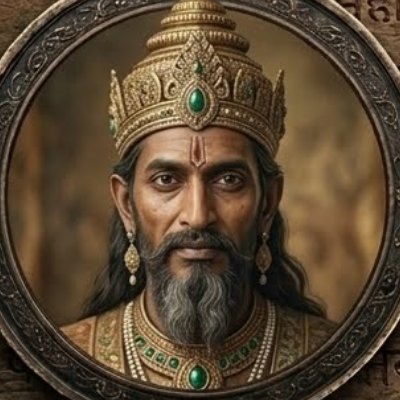
Setu — Son of Babhru, Druhyu Lineage
Setu · Setu Druhyava
Setu is a king of the Druhyu lineage within the Chandravamsha, the Lunar dynasty. In the principal genealogical sources — the Bhagavata Purana (9.23.14–15), the Vishnu Purana (IV.17), the Brahmanda Purana, and the Vayu Purana — he is the son of Babhru, who is himself the son of Druhyu, and the father of Aradwat (Arabdha). He stands as the third figure in the Druhyu line's descent from Yayati toward the Gandhara kingdom. The Wisdomlib Puranic Encyclopaedia notes him as a king of the family of Bharata whose father was Babhru and whose son was Anarabdha — a variant name for Aradwat. No narrative episode, personal attribute, or individual act is recorded for him in any primary source beyond this genealogical position.
✦ The Name
The name Setu carries a range of meanings in Sanskrit: a causeway, embankment, or bridge; a boundary or limit; and in philosophical usage, a support or means that enables crossing over — as in the Chandogya Upanishad's description of the Atman as a setu (bridge) between the human and the divine. In the Ramayana tradition the name is most prominently associated with the bridge built by Rama across the sea to Lanka. As a personal dynastic name for this Druhyu-lineage king, it carries the straightforward connotation of a bridge or connection — apt for a figure who links generations in the ancestral chain.
✦ Lineage
- Dynasty: Chandravamsha (Lunar dynasty), Druhyu lineage
- Father: Babhru — son of Druhyu, son of Yayati and Sharmishtha; in the main tradition (Bhagavata, Vishnu, Brahmanda, Vayu); see Variants section for the Harivamsa's alternate account
- Son: Aradwat (Arabdha) — next in the descent toward Gandhara and the Gandhara kingdom
✦ Textual Variants
The Harivamsa, as noted in the Monier-Williams Sanskrit dictionary entry citing the Harivamsa directly, lists Setu as a son of Druhyu and a brother of Babhru, placing him in the same generation as Babhru rather than the subsequent one. Under this account, both Babhru and Setu are direct sons of Druhyu, and the chain from Druhyu toward Aradwat proceeds through Setu without the Babhru intermediate generation. All four other primary sources — the Bhagavata Purana, Vishnu Purana, Brahmanda Purana, and Vayu Purana — give the sequence Druhyu → Babhru → Setu, making Babhru and Setu father and son, not brothers. The Brahmanda Purana (III.74.7) uses the name Ripu for Setu's son rather than Aradwat or Arabdha, which is a further minor variant.
✦ References
- Primary Sources:
- Bhagavata Purana, Skandha 9, Adhyaya 23, verses 14–15: Names Setu as son of Babhru and father of Arabdha in the Druhyu genealogical sequence
- Vishnu Purana, Book IV, Chapter 17 (H.H. Wilson translation): Gives Setu as son of Babhru and father of Aradwat
- Harivamsa (as cited in Monier-Williams and Wisdomlib): Names Setu as a son of Druhyu and brother of Babhru, a divergent account from the main tradition
- Brahmanda Purana, III.74.7 (as cited in Wisdomlib): Confirms Setu in this position; gives Ripu as the name of his son rather than Aradwat/Arabdha
- Secondary Sources:
- Wisdomlib, definition entry for Setu (Puranic context): Records Setu as a king of the family of Bharata, son of Babhru, father of Anarabdha, citing Bhagavata Skandha 9; notes the Harivamsa variant making him brother of Babhru