
About
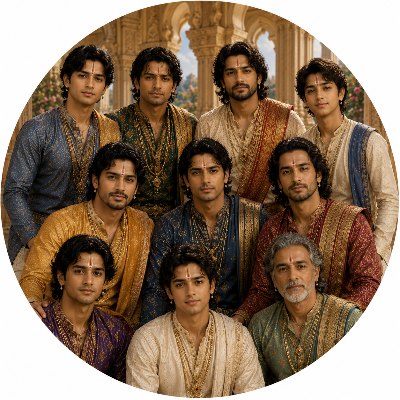
Sons of Mitravinda and Krishna — Princes of Dwarka Born of the Princess of Avanti
Vrika · Harsha · Anila · Gridhra · Vardhana · Unnada · Mahamsa · Pavana · Vahni · Kshudhi · Sons of Mitravinda · Princes of Dwarka
The ten sons of Mitravinda — the princess of Avanti, third of Krishna's eight principal queen-consorts at Dwarka — are named in the Bhagavata Purana (Canto 10, Chapter 61, verse 16) as Vrika, Harsha, Anila, Gridhra, Vardhana, Unnada, Mahamsa, Pavana, Vahni, and Kshudhi. They were princes of Dwarka, members of the Yadava dynasty through their father Krishna, and grandsons of King Jayasena of Avanti through their mother. Through their mother's paternal line they were also the nephews of Vasudeva — Krishna's own father — making them simultaneously Krishna's sons and his first cousins once removed through the maternal side. No individual narrative episodes are recorded for any of these ten sons in the Bhagavata Purana, the Vishnu Purana, the Harivamsha, or the Mahabharata. Their attestation in the primary sources is confined to the genealogical list in BhP 10.61.16, and the profile is proportionate to that evidential base.
✦ Lineage
- Father: Krishna, the eighth avatar of Vishnu, son of Vasudeva and Devaki, king of Dwarka; of the Yadava dynasty of the Chandravamsha
- Mother: Mitravinda, also known as Shaibya and as Sudatta in the Harivamsha, daughter of King Jayasena of Avanti and Rajadhidevi; Rajadhidevi was the sister of Vasudeva, making Mitravinda Krishna's first cousin on the paternal side; she chose Krishna as her husband at a swayamvara arranged by her father, from which Krishna eloped with her against the wishes of her brothers Vinda and Anuvinda who were allies of Duryodhana
- Paternal grandfather: Vasudeva, king of Mathura, son of Shurasena of the Yadava dynasty
- Maternal grandfather: Jayasena, king of Avanti, whose kingdom corresponded to the region of modern Madhya Pradesh
- Maternal uncles: Vinda and Anuvinda, princes of Avanti who ruled as co-regents and who were comrades of Duryodhana; they opposed Mitravinda's marriage to Krishna and fought against him at Kurukshetra on the Kaurava side, where both were eventually slain by Arjuna
- Paternal great-uncle through mother: Vasudeva — who was both their paternal grandfather and their mother's maternal uncle — creating the close-kinship structure characteristic of several of Krishna's marriages within the extended Yadava-allied network
✦ The Names
Vrika means wolf in Sanskrit — a name carrying connotations of fierce independence, predatory swiftness, and untamed power; it is a name found across several distinct figures in the Puranic tradition and here designates the eldest of Mitravinda's sons, listed first in BhP 10.61.16. Harsha means joy, delight, or exhilaration — one of the most warmly auspicious names in the Sanskrit tradition, connoting happiness and the vitality of a vigorous spirit; it is a widely used royal name. Anila means wind or the wind god Vayu — a name carrying connotations of speed, invisibility, and all-pervading power; it is shared with one of the eight Vasus of the Vedic tradition, the elemental deity of the wind. Gridhra means vulture — a name that in the Vedic tradition carries connotations of keen perception and far-sightedness rather than the negative associations of carrion-feeding; the vulture's circling and visionary gaze made it a symbol of aerial sovereignty and sharp intelligence. Vardhana means one who increases, nourishes, or causes growth — from the root vridh meaning to grow or thrive; a name of prosperous and nurturing connotation, associated with abundance and the flourishing of kingdoms. Unnada means one who cries out or makes a loud sound — from un (upward) and nada (sound or resonance) — carrying the sense of one whose voice or war-cry rises powerfully; a martial name connoting the battle shout of a fearless warrior. Mahamsa combines maha (great) with hamsa (swan or goose), yielding the great swan — the hamsa being one of the most sacred symbols in the Hindu tradition, associated with Brahma, the soul, and discerning wisdom, as the swan is said to be able to separate milk from water; the name thus carries both regal and philosophical resonance. Pavana means the purifier, the wind, or that which cleanses — a direct synonym for Vayu, the wind god, and an epithet used for fire as well; a name of elemental purifying power shared with Hanuman's father in the Ramayana tradition. Vahni means fire, the bearer, or the one who carries oblations — fire being the divine carrier of sacrificial offerings to the gods in the Vedic tradition; a name of sacred elemental significance connoting the transformative power of agni. Kshudhi derives from kshudha meaning hunger or desire — a name less common in the royal register but carrying the connotation of intense appetite, drive, or the consuming energy of ambition; it completes the list of ten as the last-named son.
✦ The Elemental Character of the Names
A notable feature of Mitravinda's ten sons' names is the concentration of elemental and natural-world references within the list. Anila is wind, Vahni is fire, Pavana is the purifying wind, Gridhra evokes the aerial domain, and Mahamsa invokes the sacred swan of the celestial waters. This concentration of elemental names — wind, fire, air, sky, water — is more pronounced in this list than in the comparable lists for the sons of Kalindi, Satya, or Lakshmana, and may reflect a thematic resonance with Mitravinda's own lineage from Avanti — a kingdom strongly associated in the Puranic tradition with the solar and elemental traditions of western India.
✦ Textual Variants and Inconsistencies
The Bhagavata Purana (10.61.16) provides the sole complete list of the ten sons. The Vishnu Purana corroborates the existence of sons from Mitravinda but does not provide an independent named list. No variant ordering or alternative names for these ten sons appear in the sources consulted. The name Unnada appears as Unnada in the Bhagavata Purana transliteration but is recorded as Annad or Aanand in certain popular secondary compilations — a minor transliteration variant without substantive genealogical consequence. Similarly Mahamsa appears as Mahasa or Mahash in some secondary sources, reflecting variant phonological renderings of the same Sanskrit name.
✦ Connection to the Wider Genealogy
The ten sons of Mitravinda and Krishna belong to the generation of Krishna's children at Dwarka. Through their father they are part of the Yadava dynasty of the Chandravamsha, connected upward through Krishna to Vasudeva, Shurasena, and the long Vrishni-Satvata line. Through their mother they connect to the Avanti kingdom of the Haihaya branch and to the broader network of Yadava-allied western Indian dynasties. The particular kinship structure of their parentage — their mother being Krishna's first cousin — places them in an unusually close genealogical relationship to both the Yadava dynasty and the Avanti royal house simultaneously, a closeness that is characteristic of the endogamous marriage patterns of the extended Yadava-allied network in the Puranic tradition.
✦ References
- Bhagavata Purana, Canto 10, Chapter 61, verse 16: The sole primary source naming all ten sons — Vrika, Harsha, Anila, Gridhra, Vardhana, Unnada, Mahamsa, Pavana, Vahni, and Kshudhi; the foundational genealogical attestation for this group
- Bhagavata Purana, Canto 10, Chapter 58: Records Mitravinda's marriage to Krishna; describes her choice of Krishna at the swayamvara and Krishna's elopement with her against her brothers' opposition
- Vishnu Purana, Book 5: Corroborates Mitravinda as one of Krishna's principal queens and the existence of sons from their union; does not provide an independent list of the ten sons
- Wikipedia, "Mitravinda" article: Secondary source confirming Mitravinda's parentage as daughter of Jayasena of Avanti and Rajadhidevi, sister of Vasudeva; confirms the ten sons from BhP 10.61.16; notes the Harivamsha's use of the name Sudatta and Ratnagarbha's commentary identifying her with Kalindi
- Wikipedia, "Vinda and Anuvinda of Avanti" article: Secondary source confirming the brothers' opposition to the marriage, their alliance with Duryodhana, and their deaths at Kurukshetra
- Puranic Encyclopaedia (Vettam Mani), "Mitravinda" entry: Secondary source providing consolidated narrative and genealogical details