
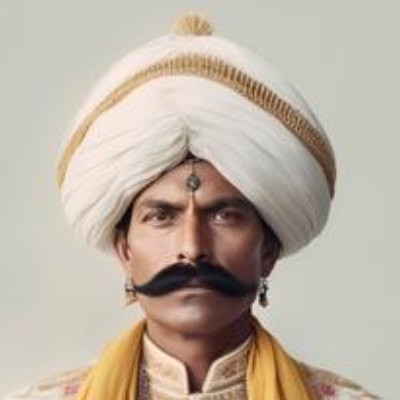
About
Vrika — Father-in-Law of Radha and Ananga Manjari
Vrika · Vrika Gopa
Vrika, also known as Vrika Gopa, is identified in the Vraja narrative tradition as a cowherd elder of the village of Javat and the head of the household into which Radha, the eternal consort of Krishna, and her younger sister Ananga Manjari were given in marriage according to the social structure of Vraja set out in Rupa Goswami's Shri Radha-Krishna-Ganoddesha-Dipika. Vrika is the husband of Jatila and the father of two sons, Abhimanyu — also known by the Bengali vernacular name Ayan Ghosh — to whom Radha is socially wedded, and Durmada, the younger brother to whom Ananga Manjari is wedded, as well as a daughter, Kutila. Vrika's textual presence is confined to this position as patriarch of the household; no episode, deed, or independent action is attributed to him in the sources consulted, and the narrative attention given to his household in the dramatic Vraja literature is directed principally toward his wife Jatila and daughter Kutila, whose vigilant and suspicious dispositions shape much of the household's role in the wider Radha-Krishna narrative.
✦ The Name
The name Vrika is a Sanskrit word meaning wolf, used in classical literature both as a common noun for the animal and, by extension, as a personal name conveying associations of fierceness, vigilance, or sharpness of character. The appended term Gopa, meaning cowherd or protector of cattle, is a common designation applied to male figures of the pastoral community of Vraja, identifying Vrika by his occupation and social standing as the head of a cowherd household rather than functioning as a distinct personal name in its own right.
✦ Lineage
- Spouse: Jatila — wife of Vrika and mother of Abhimanyu, Durmada, and Kutila. Jatila is recorded in Rupa Goswami's Vidagdha Madhava and in the wider Vraja dramatic tradition as a figure of habitual suspicion and vigilance, particularly toward any contact between Radha, her daughter-in-law, and Krishna.
- Son: Abhimanyu (also known as Ayan Ghosh) — the elder of Vrika's two sons, identified in the Shri Radha-Krishna-Ganoddesha-Dipika as the cowherd to whom Radha is socially wedded within the structure of Vraja. Gaudiya Vaishnava theology holds this marriage to be a social designation, or Maya, that does not reflect the deeper spiritual reality of Radha's eternal relationship with Krishna.
- Son: Durmada — the younger of Vrika's two sons, identified in the Shri Radha-Krishna-Ganoddesha-Dipika as the cowherd to whom Ananga Manjari, Radha's younger sister, is socially wedded. Durmada is described as proud, haughty, and protective in temperament.
- Daughter: Kutila — sister of Abhimanyu and Durmada, recorded in the Vraja dramatic tradition alongside her mother Jatila as a watchful and suspicious figure within the household, alert to any irregularity in Radha's conduct.
- Daughter-in-law: Radha — venerated across the Brahma Vaivarta Purana, the Padma Purana's Uttara Khanda, the Garga Samhita, and the wider Gaudiya Vaishnava tradition as the foremost of the gopis of Vraja and as the eternal consort of Krishna, identified theologically as his Hladini Shakti, the personification of Krishna's own potency of divine bliss.
- Daughter-in-law: Ananga Manjari — younger sister of Radha and daughter of Vrishabhanu and Kirtida Devi, recorded in the Brahma Vaivarta Purana and in Gaudiya Vaishnava devotional literature as a close attendant and confidante within Radha's intimate circle.
✦ Connection to the Wider Genealogy
Vrika stands as the patriarch of the household at Javat into which both daughters of Vrishabhanu and Kirtida Devi — Radha and Ananga Manjari — were given in marriage according to the social structure of Vraja, a pairing in which two sisters of one household married two brothers of another. Through his son Abhimanyu's marriage to Radha, Vrika's household is connected, in its social rather than spiritual aspect, to the central relationship of Gaudiya Vaishnava theology — that of Radha and Krishna as the Hladini Shakti and its possessor — though the tradition holds that this connection operates entirely at the level of worldly appearance, the deeper spiritual reality of Radha's relationship with Krishna remaining independent of her social marriage into Vrika's family.
✦ References
- Primary Sources
- Shri Radha-Krishna-Ganoddesha-Dipika of Rupa Goswami — Primary source for Vrika's identification as the father of Abhimanyu and Durmada, and for the social structure of the marriages of Radha and Ananga Manjari into his household.
- Vidagdha Madhava of Rupa Goswami — Primary dramatic source for the household at Javat headed by Vrika, and for the characterisation of Jatila and Kutila within it.
- Secondary Sources
- The Harmonist, "Ananga Manjari: A Historical and Theological Perspective" — Secondary source for the characterisation of Vrika's household and the social pairing of the two brothers with the two sisters of Vrishabhanu's house.
- Isvara.org Archive, "Radha-Krishna-Ganoddesa-Dipika English Edition: Srimati Radharani and Her Friends" — Secondary translation consolidating the Ganoddesha-Dipika's account of the social household into which Radha and Ananga Manjari married.