
About
Narmada — Gandharvi, Mother of Sundari, Ketumati, and Vasudha
Narmada · Narmada Gandharvi · mother of the three Rakshasa queens
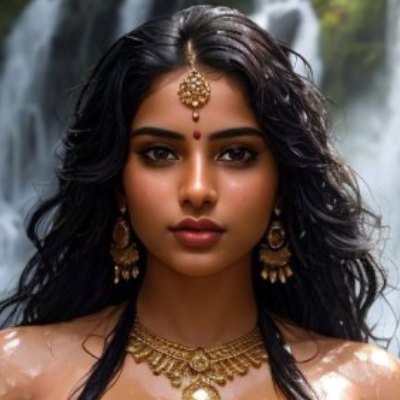
Narmada is a figure in the Hindu epic tradition, identified in the Valmiki Ramayana's Uttara Kanda as a Gandharvi — a female being of the Gandharva order of semi-divine celestial musicians associated with beauty, the atmospheric realm, and sacred music — and as the mother of three exceptionally beautiful daughters who became the wives of the three great Rakshasa brothers Malyavan, Sumali, and Mali. Her attestation rests on a single passage: Uttara Kanda Sarga 5, verses 35 to 43 depending on the recension, in which the sage Agastya narrates the primordial history of Lanka and the Rakshasa lineage to Rama. The Sanskrit text names her directly — narmada nama gandharvi, "there was a Gandharvi named Narmada" — and records that she had three daughters. Beyond her name, her identity as a Gandharvi, and her maternity of the three daughters, nothing further is recorded in the primary sources regarding her own parentage, her position within the Gandharva order, or any narrative episodes of her own. She is entirely distinct from the sacred river Narmada — one of the seven holy rivers of the Hindu tradition, flowing westward across the Indian subcontinent and venerated as a river goddess — with whom she shares only a name.
✦ The Name
The name Narmada derives from the Sanskrit root narm — meaning pleasure, delight, or joy — with the suffix da meaning "she who gives," producing the sense of "she who gives delight" or "the bestower of joy." It is a name of great beauty and positive resonance in the Sanskrit tradition, entirely consistent with the Gandharva association with aesthetic splendour and celestial music. The same name belongs to one of the most sacred rivers of the Indian subcontinent — the Narmada river, which flows westward through the Vindhya and Satpura ranges and is regarded as a goddess of purifying power in the Hindu devotional tradition. The Uttara Kanda passage is explicit in identifying this Narmada as a Gandharvi rather than as the river deity, and the two figures are genealogically and narratively unconnected.
✦ Lineage
- Order: Gandharva — the semi-divine celestial order associated with music, beauty, and the atmospheric realm between earth and heaven; Gandharvis are the female members of this order, described across Vedic and Puranic literature as beings of extraordinary physical beauty and celestial refinement.
- Daughter: Sundari — the eldest of the three daughters, given in marriage to Malyavan, the eldest of the three great Rakshasa brothers and a figure of great power and learning.
- Daughter: Ketumati — the second daughter, given in marriage to Sumali, the second of the three Rakshasa brothers and the most genealogically consequential; through Ketumati's daughter Kaikasi, Narmada became the maternal great-grandmother of Ravana, the ten-headed demon king of Lanka.
- Daughter: Vasudha — the third daughter, given in marriage to Mali, the youngest of the three Rakshasa brothers.
✦ Textual Variants and Inconsistencies
The conflation of Narmada the Gandharvi with the river goddess Narmada is the principal source of confusion in secondary treatments of this figure. The Uttara Kanda text is unambiguous in its designation of this Narmada as a Gandharvi, and no primary source equates her with the river deity. The conflation appears to arise from the shared name and from the regional and secondary traditions that elaborate the Rakshasa genealogy beyond what the primary text establishes. The Uttara Kanda's textual status as a potentially later addition to the core Ramayana — regarded with caution by the critical edition of the Oriental Institute, Baroda — affects the evidential weight of this entire genealogical passage, though its internal consistency is not in dispute.
✦ Connection to the Wider Genealogy
Through her three daughters' simultaneous marriages to the three Rakshasa brothers, Narmada stands as the single maternal source of the Gandharvi heritage running through all three of the great founding lines of the Rakshasa aristocracy as narrated in the Uttara Kanda. Through Ketumati and Sumali she is the maternal great-grandmother of Ravana — the most celebrated and complex figure of the Rakshasa tradition — as well as of Kumbhakarna, Vibhishana, and Shurpanakha. Through Sundari and Malyavan she is the ancestral mother of the Malyavan branch of the Rakshasa lineage. Through Vasudha and Mali she is the ancestral mother of Mali's line. Her position as the common maternal origin of all three branches gives her a foundational though minimally elaborated place in the Rakshasa genealogical structure.
✦ References
- Valmiki Ramayana, Uttara Kanda, Sarga 5, verses 35–43 (verse numbering varies by recension): The sole primary source for Narmada's identity; names her as a Gandharvi with three daughters and records their simultaneous marriage to the three Rakshasa brothers; narrated by the sage Agastya to Rama; the textual status of the Uttara Kanda as a potentially later addition is noted.
- Vettam Mani, Puranic Encyclopaedia (1975): Secondary reference consolidating the Uttara Kanda data on the three Rakshasa brothers and their wives; notes the Gandharvi identity of Narmada and distinguishes her from the river goddess of the same name.